

Archive · 26 Aug 2026
India’s Central Asia Strategy and Supreme Court Labour Ruling
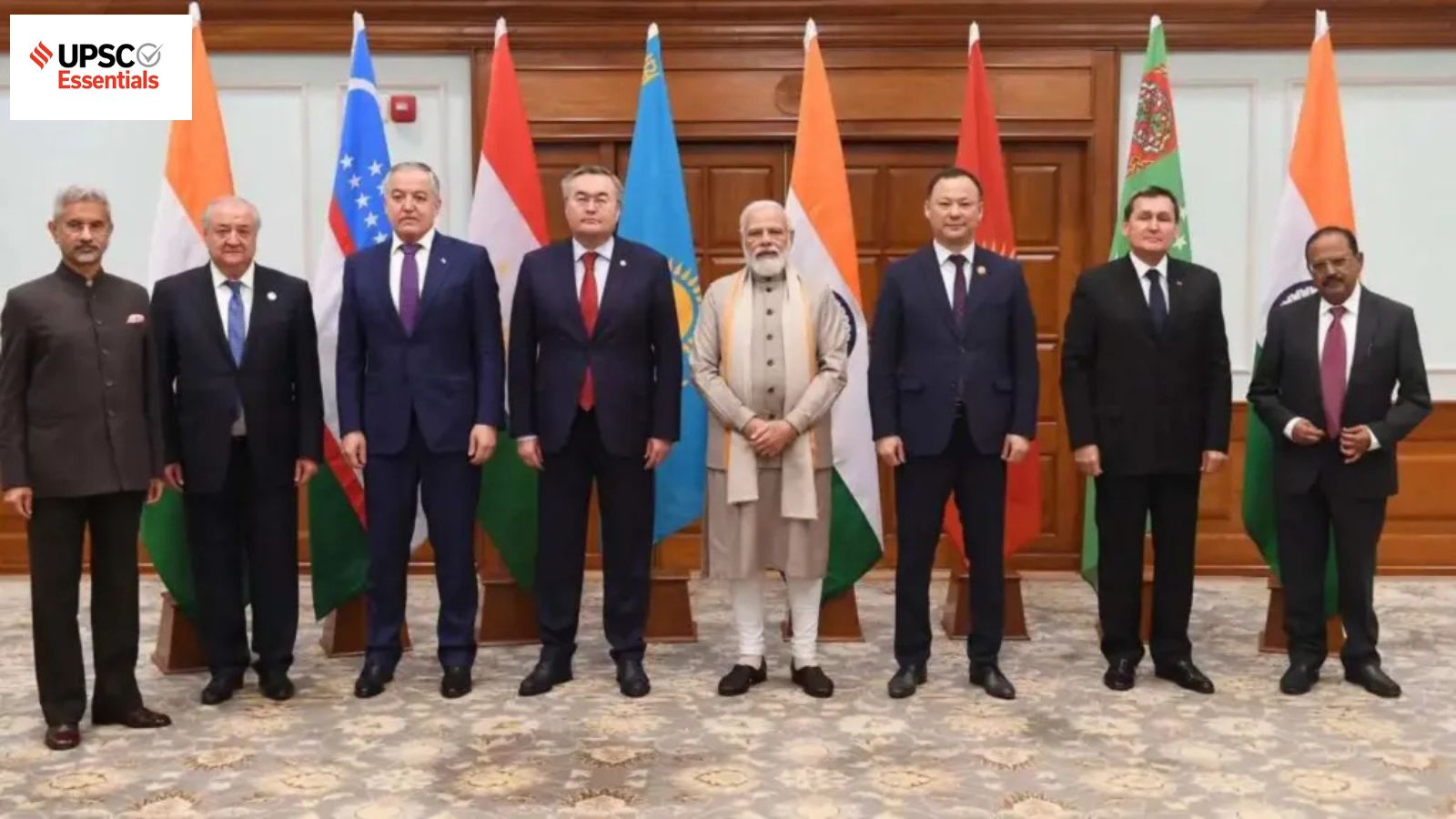
The article discusses India’s ties with Central Asia and a Supreme Court labour-law decision.
India has old cultural and historical connections with Central Asian countries.
However, the article says India should focus more on practical goals such as trade, security, energy and transport links.
China and Russia are already important players in the region.
India can improve access through Chabahar Port and the International North-South Transport Corridor.
The article also explains a Supreme Court case about which organisations count as an “industry.”
The Court kept much of an earlier 1978 rule but tried to adjust it for today’s economy.
Some judges worried that a commercial requirement could reduce protections for workers in places such as hospitals and schools.
The overall message is that economic changes should not leave workers without legal protection.

India is urged to supplement its historical Central Asian ties with pragmatic, interest-based engagement.
China and Russia have strong regional roles, while India faces limited overland access through Pakistan and Afghanistan.
Chabahar Port, the INSTC, trade, energy cooperation and India’s strengths in technology and healthcare are identified as priorities.
The Supreme Court revisited the definition of “industry” under labour law through a nine-judge Constitution Bench verdict.
The ruling retained the core of the 1978 framework but sought to account for commercial characteristics and changing economic activity.
- Who
- India, the Central Asian Republics, the Supreme Court of India, workers and employers covered by labour legislation.
- What
- The article presents UPSC answer practice on India’s Central Asia engagement and the Supreme Court’s interpretation of “industry” under labour law.
- When
- The material is identified as Week 169; it also refers to the 1978 Bangalore Water Supply ruling and the Industrial Relations Code of 2020.
- Where
- Central Asia and India; the labour-law issue concerns establishments and activities covered by Indian industrial law.
- Why
- India needs stronger practical engagement amid regional competition and limited connectivity, while the Court examined how labour protections should apply to changing economic activity.
Historical Affinity and Broad Worker Protection
Pragmatic Engagement and Evolving Labour Definitions
India’s Central Asia approach
Historical Affinity and Broad Worker Protection
India can draw on its longstanding historical and civilisational links with Central Asia as a diplomatic advantage.
Pragmatic Engagement and Evolving Labour Definitions
Historical affinity should be supplemented by practical, interest-based cooperation focused on connectivity, trade, energy, security and areas where India has competitive strengths.
How India should compete regionally
Historical Affinity and Broad Worker Protection
India’s established political relationships provide a basis for engagement with the region.
Pragmatic Engagement and Evolving Labour Definitions
India cannot replicate China’s infrastructure spending or Russia’s security role and should instead offer flexible partnerships in digital infrastructure, healthcare, pharmaceuticals, information technology, education and capacity building.
Meaning of “industry” under labour law
Historical Affinity and Broad Worker Protection
A broad definition protects workers in institutions such as hospitals, educational institutions and non-profit organisations, regardless of whether employers seek profits.
Pragmatic Engagement and Evolving Labour Definitions
The majority sought to recognise a detectable commercial character and adapt the 1978 framework to an economy shaped by liberalisation, privatisation and globalisation; dissenting judges warned this could weaken worker protection.
- India–Central Asia trade
- Commerce with the region is stated to be approximately US$2 billion.
- Regional powers
- China has expanded its economic and infrastructure presence, while Russia remains a significant security and economic player.
- Connectivity
- Chabahar Port and the International North-South Transport Corridor are identified as important routes for India’s access.
- Potential cooperation
- Areas mentioned include uranium, oil, gas, minerals, coal, fertilisers and rare-earth deposits.
- Earlier labour precedent
- In Bangalore Water Supply and Sewerage Board v. A. Rajappa (1978), the Court established a three-part test for identifying an industry.
- Recent Supreme Court ruling
- A nine-judge Constitution Bench retained the essential framework of the 1978 interpretation but modified it to reflect contemporary economic conditions.
- Industrial Relations Code
- The Industrial Relations Code, 2020 excludes charitable and philanthropic institutions, domestic services and sovereign government duties, according to the article.