

Archive · 15 Nov 2025
Indian Army Deploys Indigenous Monorail System in Arunachal Pradesh

Imagine soldiers stationed very high up on cold, steep mountains where it's hard to bring them supplies, especially when the weather is bad.
The Indian Army has created a special small train track called a monorail that goes up these mountains.
This monorail can carry heavy things like food, medicine, and equipment, even during storms or snow.
It works all day and all night, making sure the soldiers always get what they need.
It's also strong enough to help injured soldiers get down safely when helicopters can't fly there or when walking is too dangerous.
This helps the army stay ready for anything in a tough place.

The Indian Army's Gajraj Corps has developed and deployed an indigenous mono rail system in Arunachal Pradesh's Kameng sector at nearly 16,000 feet.
The system is designed to overcome the challenges of supplying troops in the harsh, weather-prone high-altitude frontier along the LAC.
It can carry over 300 kg of essential stores, ammunition, and equipment in a single trip, operating 24/7 in all weather conditions.
The monorail system is robust and can function over steep gradients and unstable surfaces where traditional transport methods are difficult or risky.
Beyond logistics, the system also shows potential for rapid and safer casualty evacuation in challenging terrain where helicopters cannot operate.
- Who
- Indian Army's Gajraj Corps
- What
- Developed and deployed an indigenous high-altitude mono rail system
- When
- Recently operationalized (statement made on Friday)
- Where
- Kameng Sector, Arunachal Pradesh at nearly 16,000 feet
- Why
- To overcome challenges of supplying troops in harsh, weather-prone high-altitude frontier and aid in casualty evacuation
Army's Perspective
Operational Challenges
Reliability of Supply Lines
Army's Perspective
The indigenous monorail system ensures timely delivery of essential stores to forward posts, overcoming weather disruptions and providing a reliable lifeline.
Operational Challenges
Harsh weather, extreme altitudes, and rugged terrain in the Kameng Himalayas routinely sever vital supply lines, making traditional transport methods difficult.
Versatility of the System
Army's Perspective
The monorail can transport over 300 kg of mission-critical stores, ammunition, rations, and equipment day or night, in all weather conditions, across steep, unstable gradients.
Operational Challenges
Steep gradients and unstable surfaces pose significant difficulties for conventional transport, highlighting the need for innovative solutions like the monorail.
Casualty Evacuation
Army's Perspective
The system offers a potential for rapid and safe casualty evacuation in difficult terrains where helicopters cannot operate and foot evacuation is slow and dangerous.
Operational Challenges
Helicopter evacuation may be impossible and foot evacuation is slow and dangerous in the challenging terrain, emphasizing the importance of the monorail for emergency medical transport.
- Developer
- Indian Army's Gajraj Corps
- System Type
- Indigenous High Altitude Mono Rail System
- Location
- Kameng Sector, Arunachal Pradesh
- Altitude
- 16,000 feet
- Load Capacity
- Over 300 kg per trip
- Operational Capability
- 24/7, all weather conditions
- Purpose
- Enhance logistics, supply to forward posts, and casualty evacuation
Sources
Army engineers build indigenous Mono Rail System at 16,000 ft to keep Kameng frontier supplied
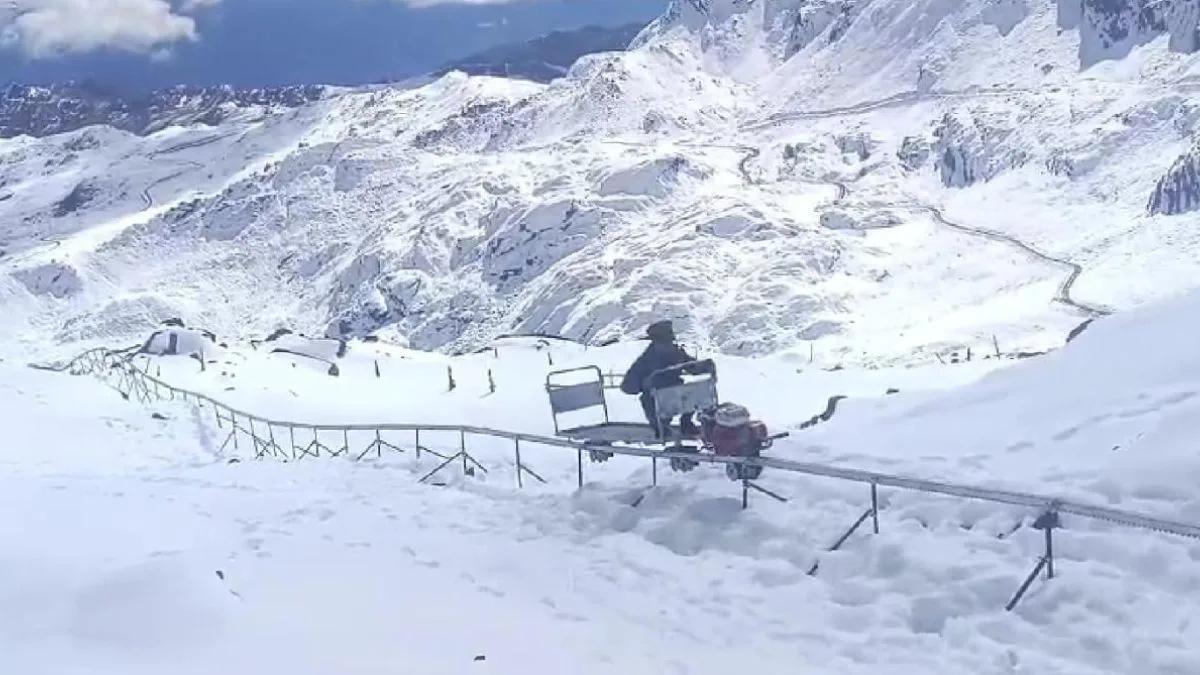
Indian Army’s high-sltitude mono rail enhances supply, evacuation capabilities in Kameng Sector
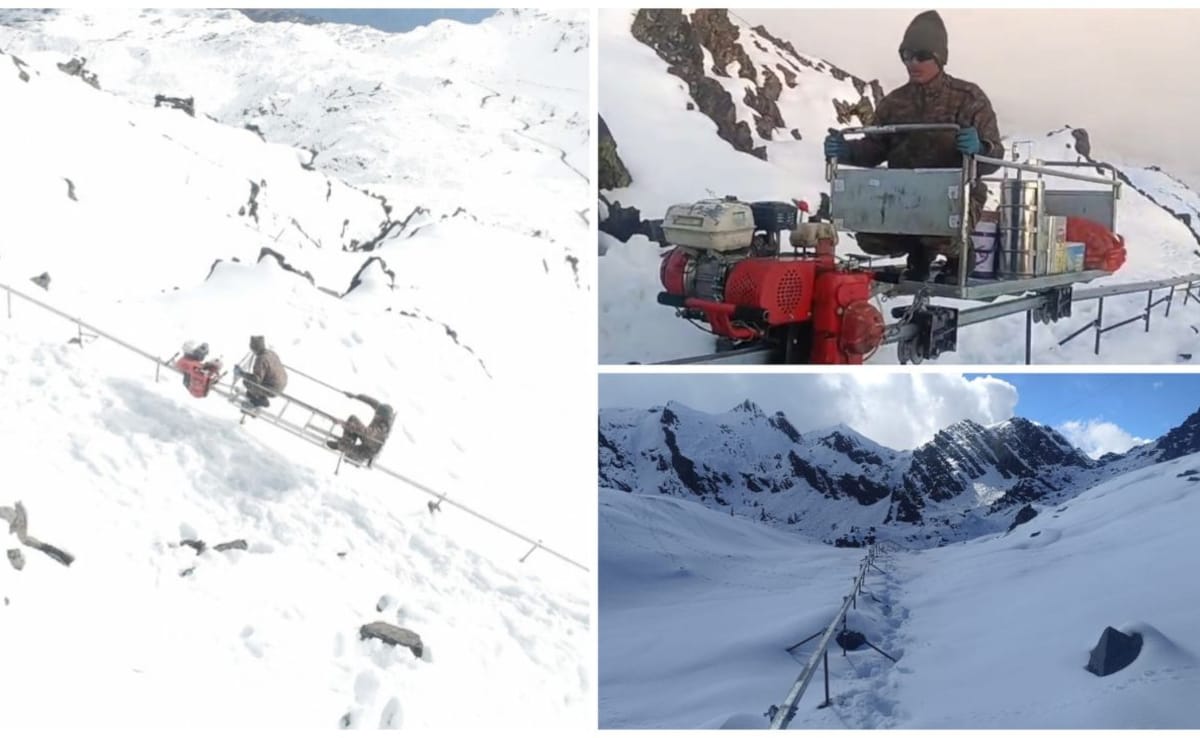
Army Deploys Indigenous High-Altitude Mono Rail System In Arunachal Pradesh
