

Archive · 19 Jan 2026
Chang'e-6 Mission Reveals Moon's Far Side History
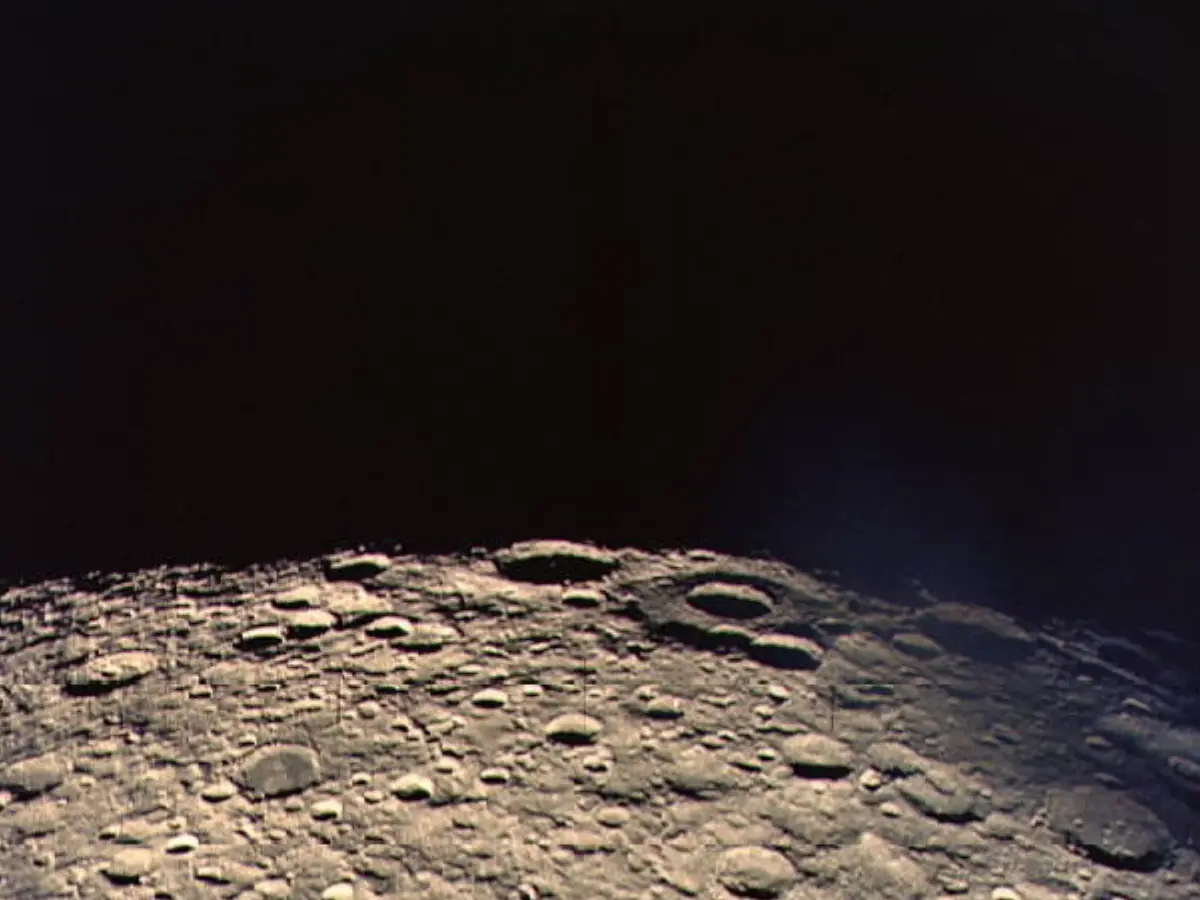
China's Chang'e-6 mission brought back some moon dirt in 2024.
Scientists studied this dirt and found out that a huge crash happened on the moon about 4.25 billion years ago.
This crash made a big dent called the South Pole-Aitken Basin.
The crash was so strong that it made some special things inside the moon, like potassium, zinc, and gallium, disappear.
This also stopped volcanoes from erupting on the far side of the moon.
Scientists think this information can help them learn more about the moon and maybe even build things there in the future because there's water ice in that area.

Chang'e-6 mission returned 1,935.3 grams of lunar soil in June 2024.
Analysis reveals a massive impact 4.25 billion years ago in the South Pole-Aitken Basin.
The impact caused the loss of volatile elements like potassium, zinc, and gallium.
The event altered the potassium isotope composition in the lunar mantle.
The impact suppressed volcanic activity on the Moon's far side.
- Who
- Chinese scientists from the Institute of Geology and Geophysics (IGG) of the Chinese Academy of Sciences (CAS)
- What
- Analysis of lunar samples from the Chang'e-6 mission
- When
- Impact occurred 4.25 billion years ago; samples returned in June 2024
- Where
- South Pole-Aitken Basin on the Moon's far side
- Why
- To understand the Moon's composition and geological history, and the impact's effects on the lunar surface and interior
- Mission
- Chang'e-6
- Samples Collected
- 1,935.3 grams
- Impact Age
- 4.25 billion years ago
- Impact Location
- South Pole-Aitken Basin
- Key Elements Studied
- Potassium, Zinc, Gallium
- Organizations Involved
- CAS, NASA, ESA
- Key Findings
- Impact caused loss of volatile elements and suppressed volcanic activity