

Archive · 25 Sep 2025
Punjab Farmers Embrace Water-Saving Irrigation Method
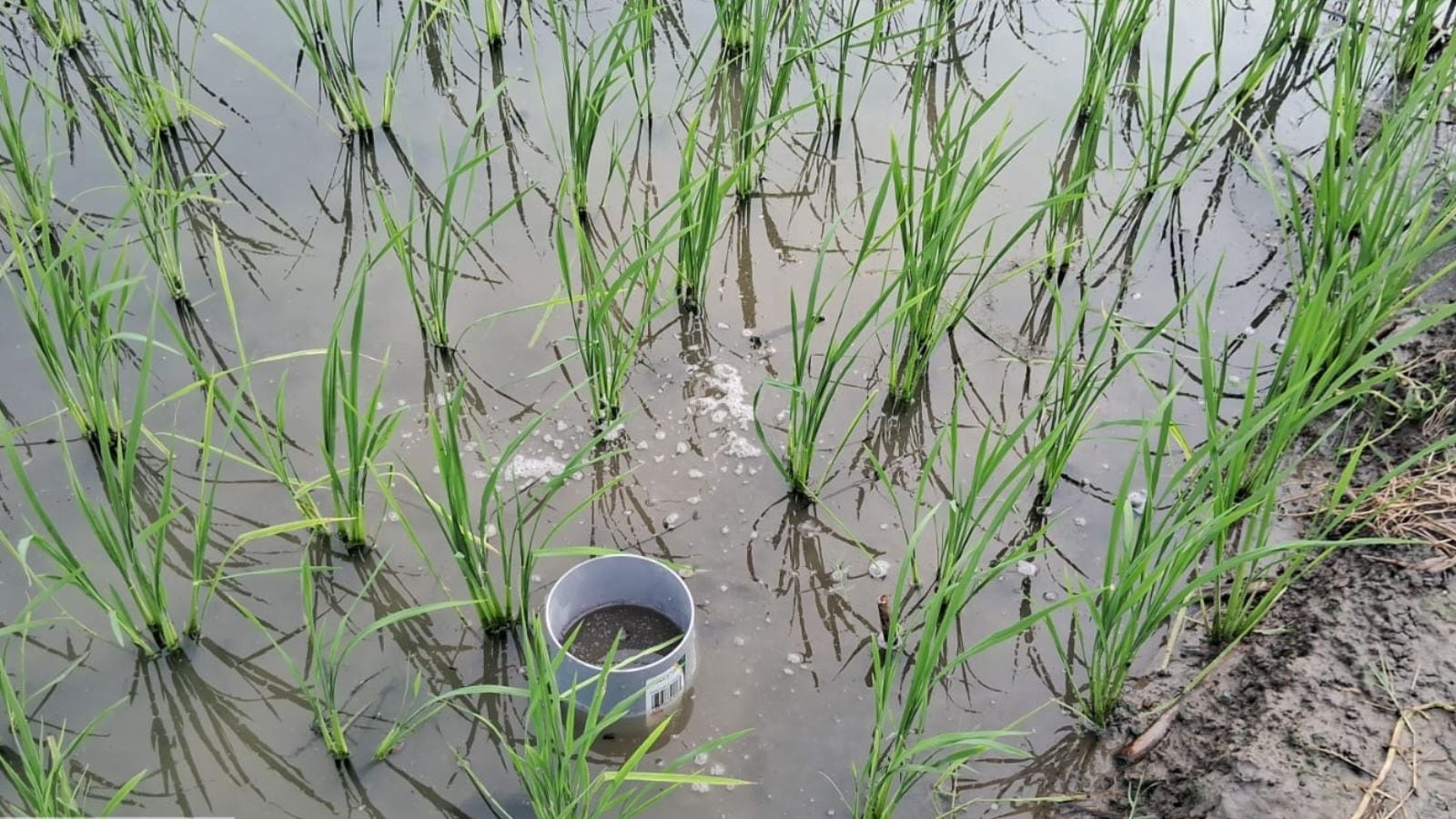
Imagine rice fields that get flooded, but now, farmers in Punjab are trying a new way!
Instead of flooding the fields all the time, they use a special pipe to see when the ground is dry.
This method is called AWD, which means 'watering after allowing the field to dry'.
It's like checking if your plants are thirsty before giving them a drink.
This helps them save a lot of water, like 20-40%!
Also, this technique is being used in over 75,000 acres across different districts.
The farmers are using it on large areas now to save on water and reduce the need for pesticides.
This helps save water and keeps the environment safe.
It is a free method provided by an organization, which is helping save water to address the water crisis in Punjab.

Farmers in Punjab are adopting Alternate Wetting and Drying (AWD) to save water in rice cultivation.
The AWD method involves monitoring the soil to determine when irrigation is needed, rather than continuous flooding.
Farmers using AWD have reported water savings of 20% to 40%.
The initiative is part of a broader project to promote sustainable agriculture and reduce methane emissions.
Over 75,000 acres of paddy fields in Punjab are currently utilizing AWD.
- Who
- Farmers in Punjab, India, and organizations like Manav Vikas Sansthan (MVS).
- What
- Farmers are adopting the Alternate Wetting and Drying (AWD) method for rice cultivation to conserve water.
- When
- The initiative is currently being implemented, with many farmers starting in the recent season.
- Where
- Punjab, India, specifically in districts like Ludhiana, Moga, Fatehgarh Sahib, Jalandhar, and Malerkotla.
- Why
- To conserve water, reduce methane emissions, and promote sustainable agriculture amidst water scarcity and climate change challenges.
- Technique Name
- Alternate Wetting and Drying (AWD)
- AWD Usage
- Paddy/Rice fields
- Water Savings
- 20-40%
- Regions of Implementation
- Punjab, India
- Total Area Using AWD
- Over 75,000 acres
- Project Name
- PRANA (Promoting Regenerative And No-burn Agriculture)