Archive · 12 Dec 2025
Himalayan Snow Droughts Threaten Water Security
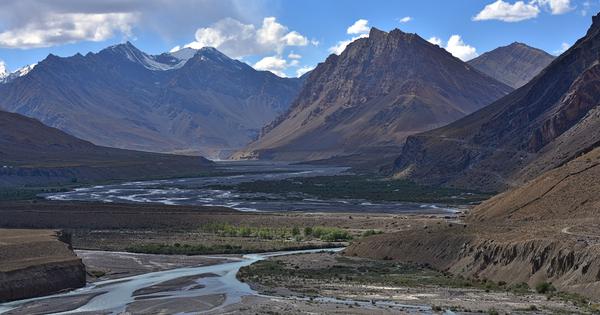
Scientists are worried about the Himalayas because there is much less snow and rain than usual.
This is called a snow drought.
In places like Jammu & Kashmir, the lack of snow and rain is causing rivers to dry up, making it hard for people to get drinking water and for farmers to grow crops.
The snow is also important for keeping the soil fertile and preventing forest fires.
Experts say this is happening because of changes in the weather patterns and climate change.
They are studying old trees to understand how these changes affect the environment and to predict future problems.
They recommend better water management and farming practices to deal with these issues.

Jammu & Kashmir is experiencing an 86% rainfall deficit and a 46.6% decline in snowfall since November, leading to water shortages and ecological concerns.
Rivers like the Jhelum are at critically low levels, with tributaries drying up, affecting drinking water supply and irrigation.
Temperature anomalies, with below-average night temperatures, are contributing to the snow drought phenomenon.
Scientists attribute the dry phase to weak western disturbances and broader climate variability, indicating a larger pattern of erratic precipitation.
A study on deodar trees in Kinnaur district reveals a shift to drier conditions since 1757 AD, with increased spring drought years affecting geohazards like rock falls.
- Who
- Scientists, meteorologists, environmentalists, agroecologists, residents of Jammu & Kashmir, researchers from Birbal Sahni Institute of Palaeosciences
- What
- Snow droughts and reduced precipitation in the Himalayas threatening water security, agriculture, and ecosystems
- When
- Observations from November to December 2023, with historical data and projections
- Where
- Hindu Kush Himalayas, Jammu & Kashmir, Kinnaur district in Himachal Pradesh
- Why
- Due to weak western disturbances, climate variability, and warming temperatures leading to reduced snowfall and precipitation
- Region
- Hindu Kush Himalayas, Jammu & Kashmir, Kinnaur district
- Rainfall Deficit
- 86% in Jammu & Kashmir (Nov 1 - Dec 9)
- Snowfall Decline
- 46.6% since November in the Himalayan belt
- Temperature Anomalies
- Below-average temperatures in Srinagar, Kupwara, Pulwama, Shopian, Gulmarg, Ladakh, Zojila
- Impacted Areas
- Kashmir division (Shopian, Kulgam, Baramulla, etc.), Jammu division (Kathua, Kishtwar, Doda, etc.)
- River Levels
- Jhelum River at -0.59 ft below zero-gauge level
- Study Focus
- Dendroclimatology and dendrogeomorphology in Kinnaur's deodar trees
- Geohazard Events
- 53 rock fall events, 8 of high intensity, linked to dry spring conditions
Sources
Snow droughts in the Himalayas could have a disastrous cascading effect in downstream river basins

Study on Kinnaur’s deodar trees offers insights into past climatic, geohazard events
Snow Drought In The Himalayas: Scientists Warn Of Ecological Crisis In Jammu & Kashmir
Light snowfall likely in higher reaches of Himachal over weekend