Archive · 6 Nov 2025
Most Kharif Crops Sold Below MSP in October Amid Low State Intervention

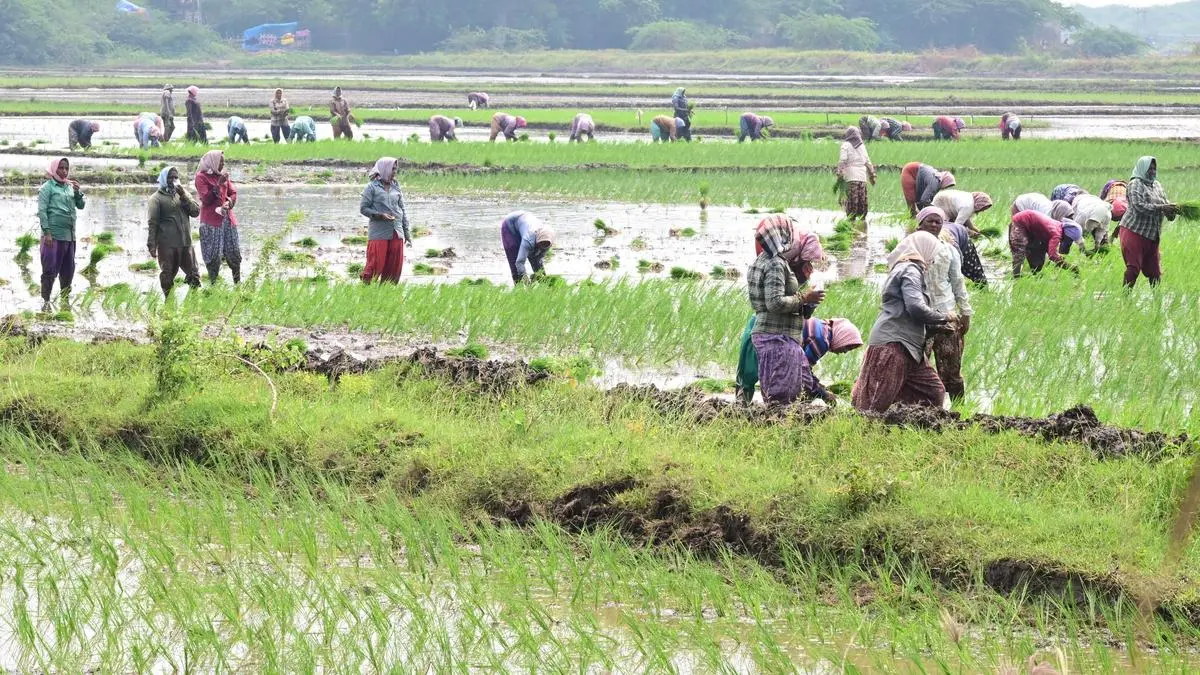
Farmers in India recently sold most of their harvested rice, pulses, and oilseeds for less money than the government's guaranteed minimum price (MSP).
This happened in October because there was a lot of these crops available, partly due to good harvests and imports.
Only a few farmers, mostly those who sold rice to government buyers, got the MSP.
Prices for some crops were much lower than last year.
Experts think prices for pulses might go up later because of less supply, but only if the government limits cheap imports.
Prices for oilseeds are not expected to reach the MSP level until farmers have sold almost all of their crops.
While the government bought more rice than usual, more support is needed for other crops to help farmers get fair prices.

Most major Kharif crops were sold below their Minimum Support Prices (MSPs) in October.
Paddy and Jowar were among the few crops where prices were higher than the previous year, though still below MSP for Jowar.
Significant price differences were observed, with oilseeds about 26% below MSP and pulses 17-25% below.
Limited state intervention meant only a small number of farmers benefited from MSPs, despite increased paddy procurement.
Experts predict potential price increases for pulses due to supply issues, but only if cheaper imports are restricted.
- Who
- Farmers of major Kharif crops, government procurement agencies, economists, and market analysts.
- What
- Most major Kharif crops were sold in agricultural market yards (mandis) below their Minimum Support Prices (MSPs) during October, the first month of the harvest season.
- When
- October 2025, with outlooks for December and March 2026.
- Where
- Agriculture market yards (mandis) across India, with specific mention of paddy, oilseeds, and pulses producing states.
- Why
- Oversupply due to good production and high imports, coupled with limited state intervention and procurement, led to market prices falling below MSPs.
Farmer's Challenges
Economic Factors & Government Policy
Crop Prices vs. MSP
Farmer's Challenges
Farmers are experiencing price distress as major kharif crops like urad, tur, moong, soybean, groundnut, maize, bajra, and jowar were sold below their Minimum Support Prices (MSPs) in October. Some prices were significantly lower (3-32%) than the previous year.
Economic Factors & Government Policy
Low crop prices are influenced by factors such as oversupply due to good production (aided by above-normal rainfall) and significant imports of pulses with very low duties. Experts suggest that without increased import duties, market prices are unlikely to meet MSP levels until farmers have sold most of their produce.
State Intervention and Procurement
Farmer's Challenges
Limited state intervention and procurement by government agencies meant that only a small fraction of farmers, particularly paddy farmers, benefited from MSPs. The government's actual purchase quantities for oilseeds and pulses remain unclear.
Economic Factors & Government Policy
While the government has bought more paddy than last year, this robust procurement system is a reason why paddy prices were only slightly below MSP. The government's policy on import duties and its approach to procuring oilseeds and pulses are critical in determining market prices.
Impact on Specific Crops
Farmer's Challenges
Crops like soybean and groundnut were sold about 26% below MSP, and pulses (tur, moong, urad) were 17-25% lower. Maize was 24% below its MSP, and bajra was 23% below. Jowar was 9% below its MSP, though its price was higher than the previous year.
Economic Factors & Government Policy
Future prices for some commodities like tur may improve due to supply issues, contingent on the government restricting cheaper imports. Oilseeds prices are not expected to reach MSP levels until December. For maize, despite government ethanol purchases based on MSP, there's no statutory obligation for manufacturers to adhere to MSP.
- Kharif Crops Sold Below MSP in October
- Urad, Tur, Moong, Soybean, Groundnut, Maize, Bajra, Jowar, Paddy (average realization 1.8% below MSP)
- Price Difference from Previous Year (October)
- Seven out of nine crops were 3-32% lower; Bajra was 14% less, Jowar was 19% higher.
- Oilseeds (Soybean, Groundnut) Below MSP
- Approximately 26%
- Pulses (Tur, Moong, Urad) Below MSP
- 17-25%
- Maize Below MSP
- 24% (MSP ₹2,400/quintal)
- Bajra Below MSP
- 23% (MSP ₹2,775/quintal)
- Jowar Below MSP
- 9% (MSP ₹3,699/quintal)
- Paddy Procurement (October 31)
- Over 119 lakh tonnes (in terms of rice), 46% higher than the previous season