

Archive · 21 Aug 2025
MRI vs. CT Scans: Understanding the Key Differences
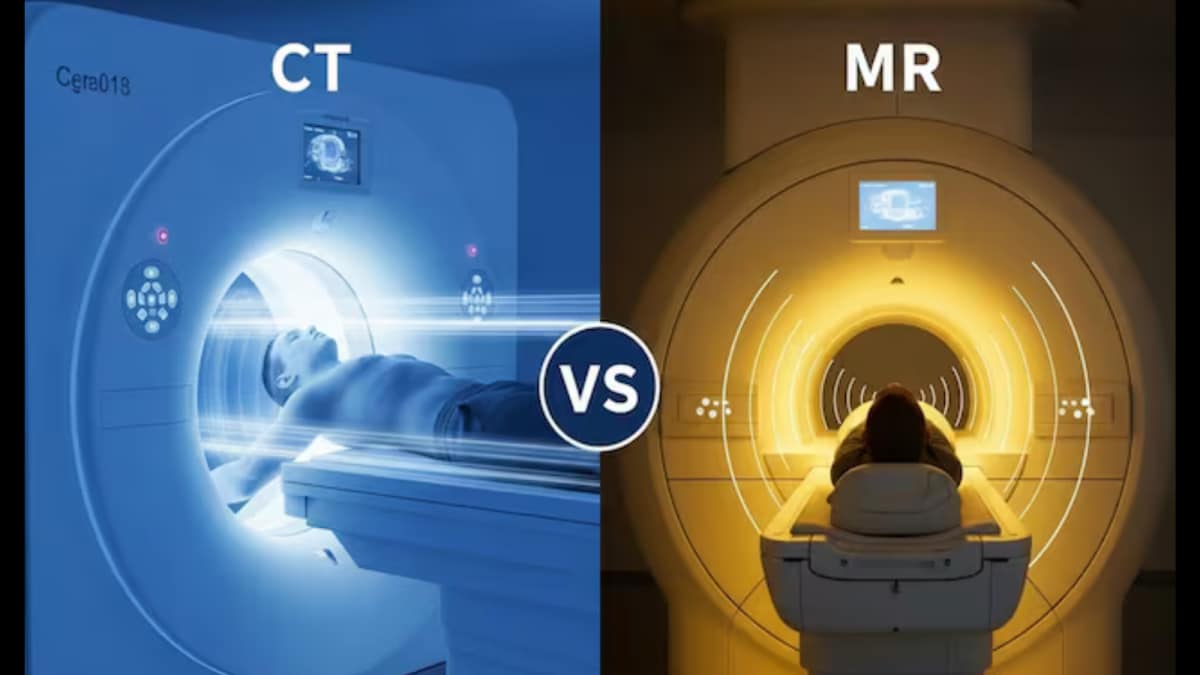
Imagine your body is like a house.
Sometimes, you need to see what's happening inside the walls without opening them up.
MRI and CT scans are like special cameras for your insides.
MRI uses magnets and radio waves to take detailed pictures of soft parts like your brain and muscles.
CT scans use X-rays to make 3D pictures, good for seeing bones and finding problems quickly.
MRI is safer for kids and pregnant women because it doesn't use radiation.
CT scans use a little radiation, so doctors might choose MRI if they can.
MRI takes longer, while CT scans are faster.
Both scans can help doctors figure out what's wrong and how to help you feel better.

MRI and CT scans are both used to detect internal injuries and diseases, but they work differently.
MRI uses a magnetic field and radio waves to create detailed images of soft tissues.
CT scans use X-rays to create 3D images of the body, particularly for bones, lungs, and blood vessels.
MRI provides clearer images of soft tissue; CT scans are more accurate for bones and hard tissue.
Doctors recommend MRI for neurological conditions and deep injuries, while CT scans are used for head injuries and fractures.
- Who
- Medical experts like Dr. Sonia Rawat.
- What
- MRI and CT scans are medical imaging techniques used to diagnose internal injuries and diseases.
- When
- The article was last updated on August 21, 2025.
- Where
- Sir Ganga Ram Hospital, New Delhi.
- Why
- To diagnose internal injuries and diseases.
Medical Professionals
Patients
Choosing between scans
Medical Professionals
Prefer MRI due to its safety.
Patients
Use CT scans for time-sensitive situations or when examining bones.
- MRI uses
- Magnetic field and radio waves
- CT scan uses
- X-ray technology
- MRI best for
- Soft tissues
- CT scan best for
- Bones, lungs, blood vessels
- MRI safety
- Safe for pregnant women and children
- CT scan time
- Minutes
- MRI time
- 30 minutes to an hour