Archive · 4 Sep 2026
Vance Rejects ‘War’ Label Amid Renewed US-Iran Strikes
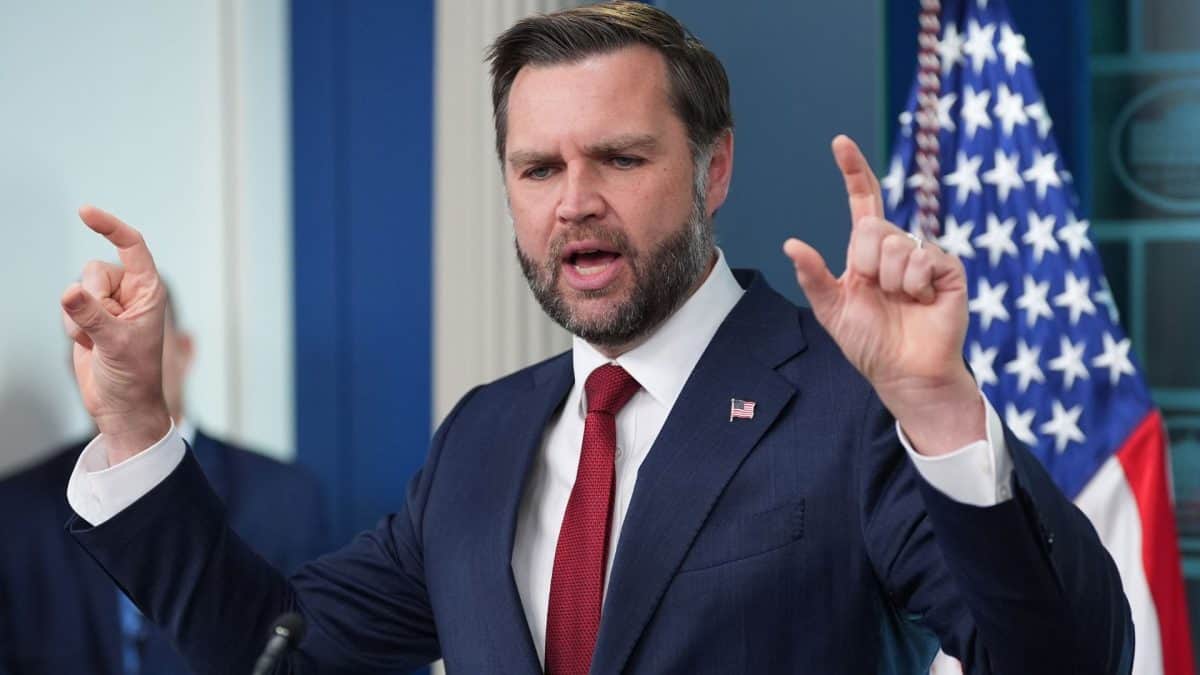
JD Vance said the United States is not technically at war with Iran.
He said there was no active shooting when he spoke, although fighting had flared in some places.
Reports said new US strikes hit Iran over the weekend.
Iran reportedly responded by launching missiles at Kuwait.
Vance said the biggest battles lasted about six weeks.
He said US attacks damaged Iran’s nuclear facilities, weapons-making industries, and military forces.
The United States says it will not restart talks while Iran attacks commercial ships.
Polls cited in one report say more Americans oppose the conflict than support it.

Vice President JD Vance said he would not call the Iran conflict a war, saying there was no active shooting at the time of his briefing.
Vance said major combat operations lasted about six weeks after the US-Israel conflict began on February 28.
Reports said hostilities resumed with US strikes on Iran’s Larak Island and that Iran launched missiles at Kuwait.
Vance defended renewed US strikes, saying Iran continued targeting commercial vessels near the Strait of Hormuz.
He said the United States would not reopen talks with Iran until attacks on commercial shipping ended, while declining to set a timeline for the conflict’s end.
- Who
- US Vice President JD Vance, the United States, Iran, Israel, President Donald Trump, and affected shipping interests.
- What
- Vance disputed describing the hostilities with Iran as a war amid renewed strikes, missile attacks, and maritime tensions.
- When
- The conflict reportedly began on February 28, 2026; fresh clashes and US raids were reported over the weekend, with comments reported on September 4, 2026.
- Where
- The hostilities involve Iran, the United States, and Israel; reported strikes affected Iran’s Larak Island, missiles reached Kuwait, and shipping was threatened near the Strait of Hormuz.
- Why
- Vance said US strikes were necessary because Iran continued targeting commercial vessels, and he said talks would not resume until those attacks stopped.
Vance’s limited-conflict characterization
Reports of continuing hostilities
Whether the conflict is a war
Vance’s limited-conflict characterization
Vance said he would not call it a war because there was no active shooting during his briefing.
Reports of continuing hostilities
The reports describe a six-month conflict involving renewed strikes, missile attacks, and continuing clashes with Iran.
Status of the fighting
Vance’s limited-conflict characterization
Vance said major combat lasted about six weeks and that fighting had only flared in certain places.
Reports of continuing hostilities
Reports said fresh clashes followed several weeks of calm, including US raids and attacks affecting commercial shipping.
Responsibility for ending the conflict
Vance’s limited-conflict characterization
Vance said Iran was responsible for ending the conflict by stopping attacks on commercial vessels and said US strikes were necessary.
Reports of continuing hostilities
One report said the United States launched the conflict without provocation, while continued US strikes and Iran’s maritime attacks have contributed to the impasse.
- Main speaker
- US Vice President JD Vance
- Conflict start
- February 28, according to the reports
- Vance’s characterization
- He said he would not call the conflict a war because there was no active shooting at the time
- Major combat
- Vance said major combat operations lasted about six weeks
- Reported renewed strikes
- The United States reportedly struck Iran’s Larak Island over the weekend
- Reported Iranian response
- Iran reportedly launched missiles at Kuwait
- Talks condition
- The United States will not reopen talks until attacks on commercial shipping end
- Public opinion
- A poll-of-polls cited by one report found 55% opposed the conflict and 37% supported it