

Archive · 15 Sep 2025
Mumbai Metro: How Underground Tunnels Are Constructed
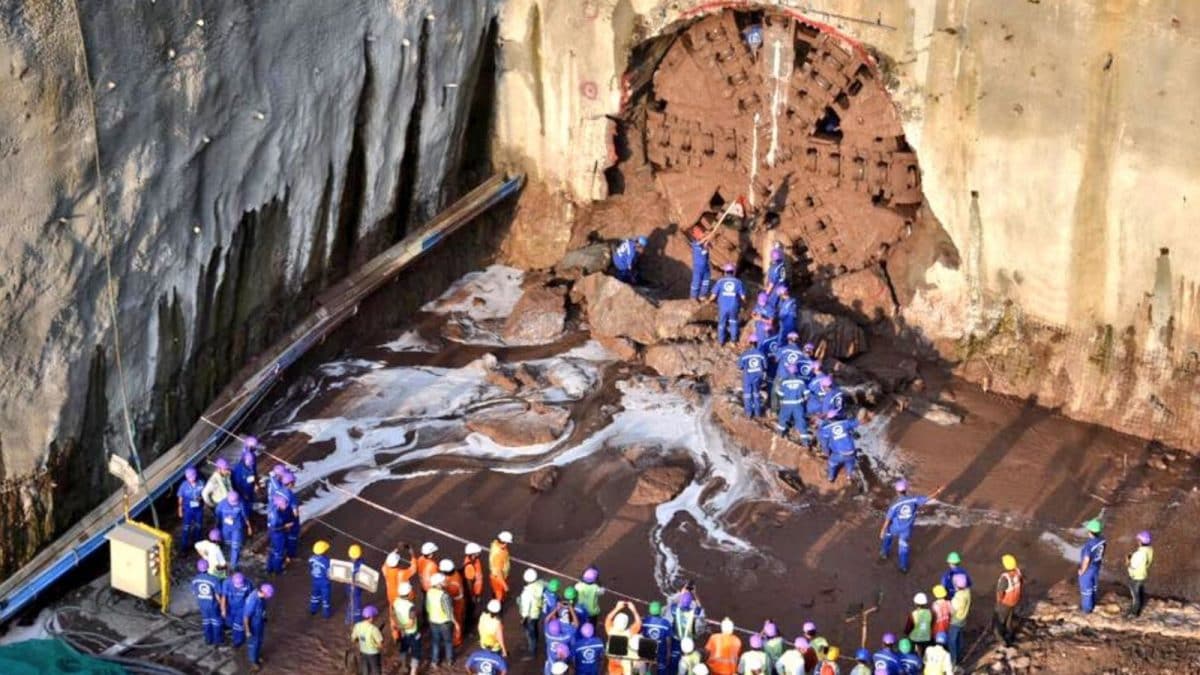
Building underground metro lines in Mumbai is a big job.
Machines called Tunnel Boring Machines (TBMs) dig through the ground, making tunnels.
These tunnels go under buildings, roads, and even rivers.
Engineers use special tools and methods to make sure everything is safe, like monitoring the ground and using waterproof materials.
The tunnels need to avoid existing pipes and train lines.
This complex process involves global experts and innovative solutions to overcome challenges unique to Mumbai's environment.

Mumbai's metro system is expanding with underground lines to ease congestion.
Tunnel Boring Machines (TBMs) are the primary method used for digging the tunnels.
Line 3, the first underground metro, is 33.5 km long, with 12 km of tunnels already completed.
Tunnels pass under heritage sites, existing infrastructure, and areas with high water tables.
Engineers use technology and various methods to handle risks like water ingress and ground subsidence.
- Who
- Mumbai Metro engineers and construction teams
- What
- The process of building underground metro lines in Mumbai.
- When
- Ongoing; with Line 3 tunneling began in 2018
- Where
- Mumbai, India
- Why
- To ease commute in the crowded city
- Main Method
- Tunnel Boring Machines (TBMs)
- Line 3 Length
- 33.5 km
- Line 3 Tunnels Completed
- 12 km
- TBMs on Line 3
- 17
- Tunnelling Depth
- 25-40m
- Uses NATM
- Yes, for short sections