

Archive · 24 Jul 2025
Chola Temples: Architecture and Political Influence
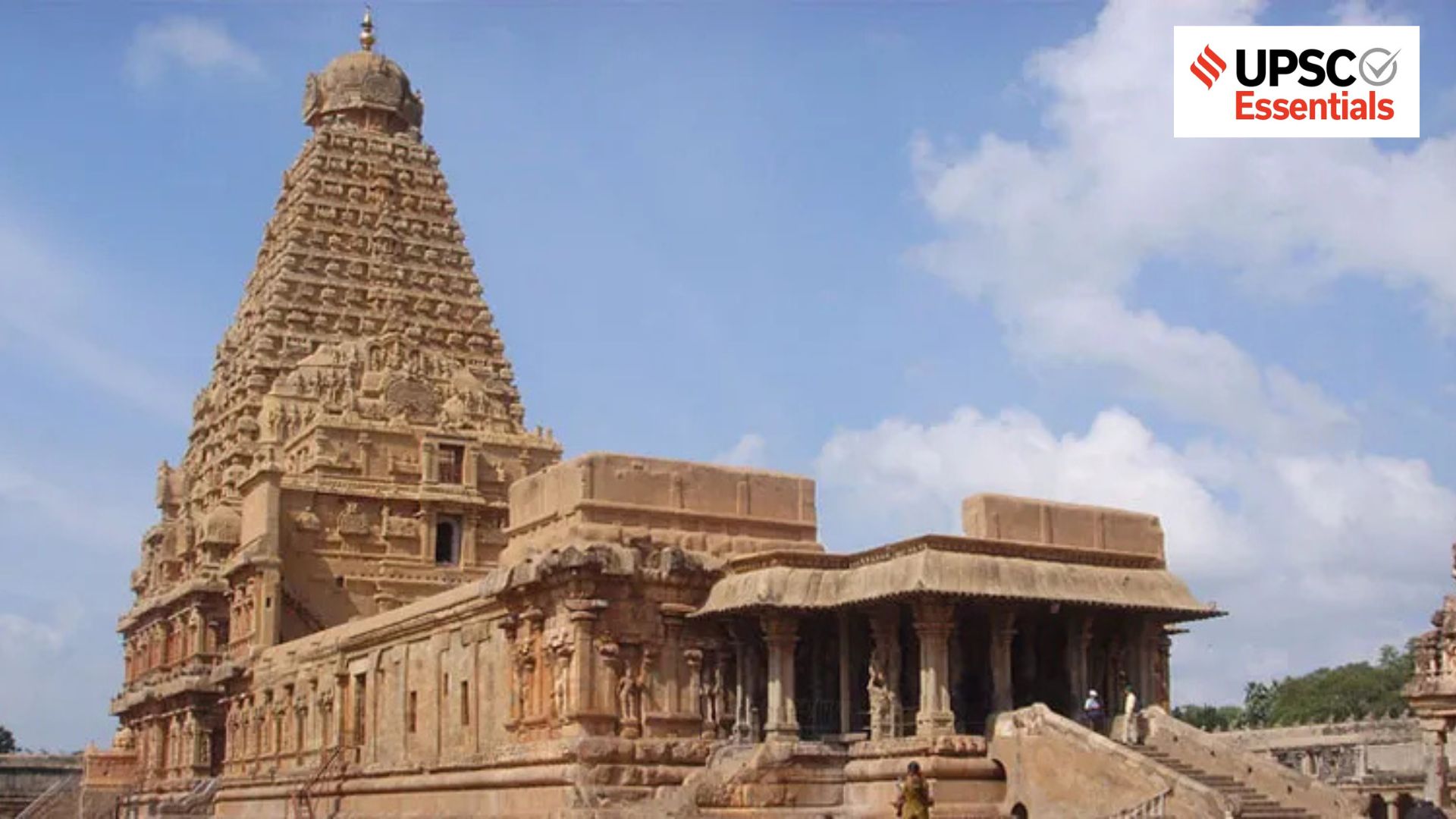
The Chola dynasty, who ruled in South India centuries ago, were famous for their amazing temples.
These temples were built with a special style, including big towers and lots of detailed carvings.
The main temples like the one in Tanjore were like the city's center, not just for praying but also for events and even banking.
The temples also used images of a god called Śiva to show the kings' power and remind people of their victories.
These impressive buildings show how skilled the Cholas were and how important their temples were to their society.

Chola temples, particularly those built between the 11th and 12th centuries CE, are considered the pinnacle of Chola architectural style.
Key features of Chola temples include an east-west axis layout with entry halls, pillared halls, vestibules, and sanctums with Dravida-style superstructures.
The Brihadēśvara temple in Tanjore, built by Rājarāja, is a prominent example featuring a large courtyard, a moat, and a towering vimana.
Tripurāntaka imagery, depicting Śiva as a cosmic warrior, was frequently used in Chola temples to assert dominance and carry political connotations.
Chola temples functioned as religious sites, civic centers, and economic hubs, supporting a range of activities including music, dance, and financial transactions.
- Who
- The Cholas were a South Indian dynasty.
- What
- Chola architecture represents a high watermark in the evolution of temple design.
- When
- The Chola dynasty's significant reemergence began in the ninth century CE.
- Where
- Chola temples are primarily located in the Kaveri basin, in the region known as Cōl̥amaṇḍalam.
- Why
- Chola temples served as religious centers, civic hubs, and symbols of royal power, demonstrating the dynasty's cultural and political influence.
- Dynasty
- Chola
- Geographic region
- Kaveri basin
- Key period
- 9th-12th centuries CE
- Notable temples
- Brihadēśvara (Tanjore), Gangaikoṇḍacōl̥apuram, Airavatēśvara (Darasuram)
- Architectural style
- Dravida style
- Royal Patronage
- Rājarāja I, Rajendra I, Rājarāja II