

Archive · 22 Jul 2026
India Releases CAFE III Norms for Vehicle Emissions
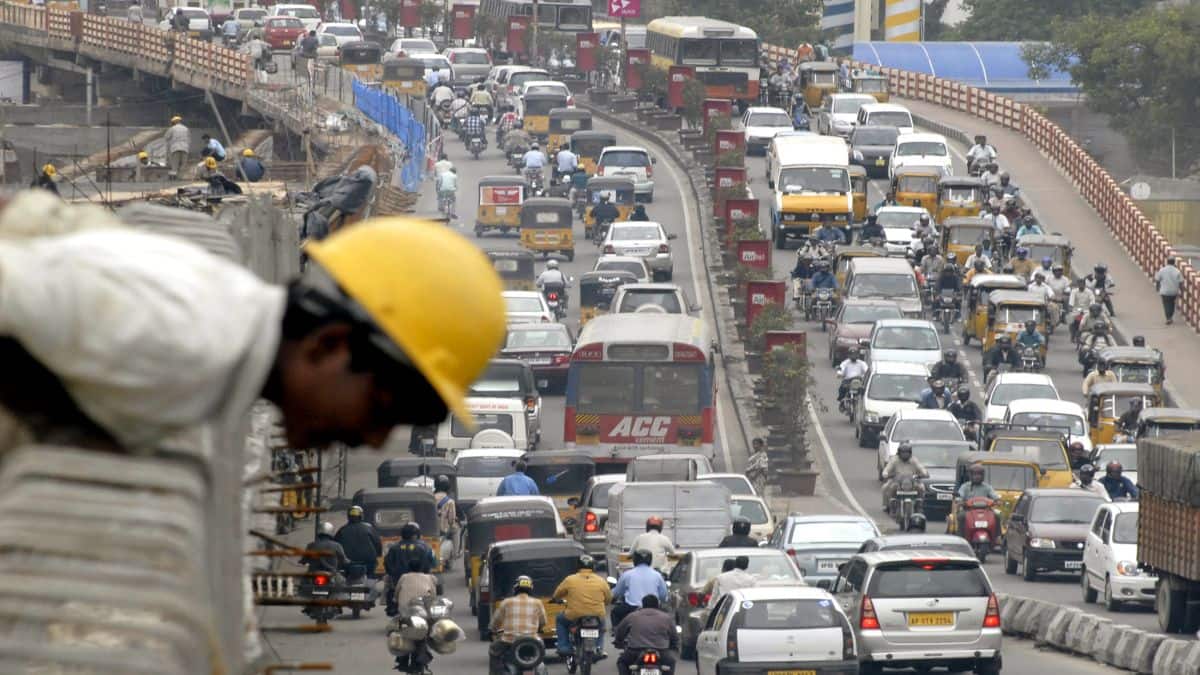
India has released new rules called CAFE III to make cars more fuel-efficient and reduce pollution.
These rules will start in 2027 and aim to lower the amount of carbon dioxide (CO2) that cars emit.
Manufacturers will have to meet certain targets, and those who do well can earn credits, while those who don't can buy credits.
The rules also give benefits to cars that use cleaner fuels like ethanol and CNG.
This means cars might become more expensive, but they could also use less fuel, making them more attractive to buyers who want to save on fuel costs.

India's Ministry of Power released CAFE III norms to govern vehicle fuel efficiency from 2027 to 2032.
The norms set a fleet-average CO2 target of 94.76 grams/km in 2028, tightening to 78.90 grams/km by 2032.
Manufacturers can earn credits for exceeding targets and trade them or buy credits if they fall short.
Vehicles using cleaner fuels like E20, flex-fuel, and CNG receive compliance benefits.
The rules aim to encourage adoption of emission-free technologies and reduce India's oil import bill.
- Who
- Ministry of Power, India
- What
- Release of CAFE III norms for vehicle emissions
- When
- Effective from April 1, 2027
- Where
- India
- Why
- To improve fuel efficiency and reduce emissions
Manufacturers
Environmental Advocates
Compliance Flexibility
Manufacturers
Manufacturers appreciate the leniency in the new norms, which provide more room to comply, especially for those selling lighter vehicles.
Environmental Advocates
Environmental advocates argue that the softened targets may not be stringent enough to drive significant reductions in emissions.
Technology Adoption
Manufacturers
Manufacturers see the new norms as an opportunity to adopt new technologies and potentially benefit from credits for exceeding targets.
Environmental Advocates
Environmental advocates push for faster adoption of emission-free technologies to meet global climate goals.
- Effective Date
- April 1, 2027
- End Date
- March 31, 2032
- Initial CO2 Target
- 94.76 grams/km (2028)
- Final CO2 Target
- 78.90 grams/km (2032)
- Compliance System
- Market-based with credits and debits
- Credit Buyout Price
- Rs 2,500 to Rs 4,500 per gramme of CO2 per kilometre
- Benefits for E20 Vehicles
- 8% reduction in declared CO2 emissions
- Benefits for Flex-Fuel Vehicles
- 22.3% reduction in declared CO2 emissions