1 hr ago
Corporate America Shifts Toward Cheaper Open-Source AI Models
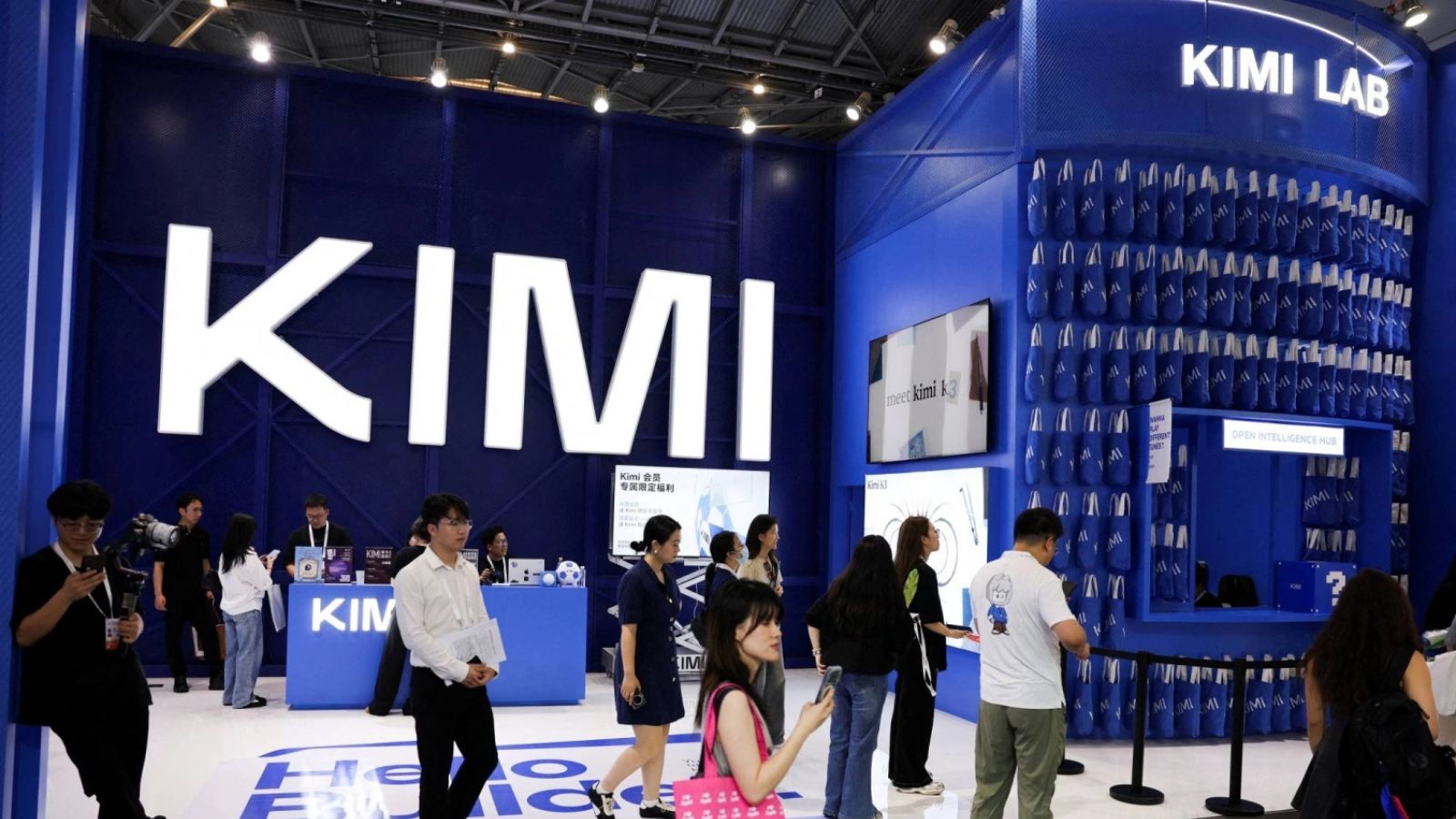
Many companies are using AI programs that can be downloaded and changed more easily.
These programs are often cheaper because companies mainly pay for the computers that run them.
AT&T says open models now handle 40% of its AI work, compared with 20% in May.
The company says this has saved as much as 80% on AI costs.
Some Chinese AI models are nearly as powerful as leading closed models but cost much less.
Closed models from companies such as OpenAI and Anthropic are still preferred for some difficult jobs.
Some businesses worry about privacy and rules when using Chinese AI models.
The change has started a larger argument about whether AI should be open to more people or controlled more tightly.

AT&T increased its use of open AI models from 20% in May to 40%, with further growth possible.
The company said open models have reduced its AI costs by as much as 80%.
OpenRouter data showed open models represented 58% of U.S. AI use last month, up from 10% a year earlier.
Chinese companies including DeepSeek, Moonshot AI and Alibaba produce many popular open models that can cost far less than closed systems.
Nvidia announced a $12.9 billion purchase of Hugging Face as debate continues over AI openness, performance, regulation and data privacy.
- Who
- AT&T and other companies, including Airbnb and Deloitte, are increasing their use of open AI models; Nvidia and Hugging Face are also central to the story.
- What
- Businesses are shifting part of their AI workloads from paid, closed models to downloadable and customizable open models.
- Where
- The trend is occurring across corporate America, with the cited usage data covering U.S. users.
- When
- The shift accelerated after DeepSeek released DeepSeek-V3 last year; AT&T increased its open-model use this year, and Nvidia announced its Hugging Face purchase on Thursday.
- Why
- Companies are seeking lower costs and greater customization, while some remain concerned about the performance, regulation and data privacy of certain models.
Open-Model Advocates
Closed-Model and Security Concerns
Cost and access
Open-Model Advocates
Open models can be downloaded, customized and operated mainly by paying for servers, making them substantially cheaper for many tasks.
Closed-Model and Security Concerns
Closed-model companies argue implicitly through their pricing and investment that advanced research, computing power and difficult tasks require costly commercial systems.
Performance
Open-Model Advocates
Supporters say some Chinese open models now reach 80% to 90% of the capability of OpenAI and Anthropic models at as little as 20% of the price.
Closed-Model and Security Concerns
Critics and users of closed models maintain that closed systems remain better for heavy-duty work such as coding and image or video generation.
Control and security
Open-Model Advocates
Jensen Huang and Mark Zuckerberg argue that open technology can support a more democratic and balanced AI ecosystem, and Zuckerberg said restricting foreign open models would not be effective.
Closed-Model and Security Concerns
Dario Amodei has argued for tighter AI regulation because of national security concerns, while some U.S. companies hesitate to use Chinese models because of regulatory and data-privacy concerns.
Key facts
- AT&T open-model use
- 40% of the company’s AI use, up from 20% in May
- Potential AT&T use
- Andy Markus said open models could reach 60% in coming months
- Reported savings
- AT&T said it was saving up to 80% compared with earlier this year
- OpenRouter usage
- Open models represented 58% of U.S. AI use last month, compared with 10% a year earlier
- Nvidia-Hugging Face deal
- Nvidia announced a planned purchase valued at $12.9 billion
- Model types
- Open-source models publish underlying code; open-weights models publish the numerical weights used by the system
- Current division of work
- Closed models remain favored for some heavy-duty tasks, while open models are often used for simpler specialized work
Quotes

Mark Zuckerberg
Meta’s chief executive officer
“I do not believe restricting access to foreign open-source models is an effective solution. Our goal should be for American open-source models to be the best globally.”
 indianexpress.com
“Together, we will make AI more open, more capable and more accessible to people and institutions around the world”
indianexpress.com
Sources
Related news

AT&T Is Betting Big on Open-Weight AI for Cost Savings

NVIDIA Announces $12.93 Billion Acquisition of Hugging Face

Meta unveils Muse Glimmer AI; Zuckerberg urges fewer US barriers

NVIDIA Agrees to Acquire Hugging Face for $12.93 Billion

Alibaba Qwen Models Hit 3 Billion Downloads, Passing Meta, Google

Nvidia Reportedly Agrees to Acquire Hugging Face for $12.9 Billion
Anthropic Rebuilds Ties With Trump Administration After Pentagon Feud

AI Threats Push Companies to Modernize Aging Cybersecurity Infrastructure

Sony and Warner Sue Anthropic Over Claude Copyright Claims

Anthropic Research Explores AI Systems Improving Their Own Training