

Archive · 6 Sep 2025
Jahangir's Portrait: How a Painting Forged a New Mughal Identity
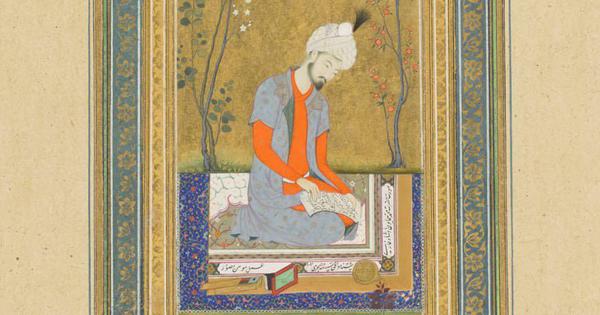
Imagine a king named Jahangir who wanted to show everyone he was a great ruler.
He did this by commissioning a painting of his grandfather, Humayun, who was known for his smarts.
In the painting, Humayun is holding an astrolabe, a special tool used to study the stars.
This showed that Jahangir valued science and knowledge, just like his grandfather.
The painting was a way for Jahangir to create his own unique image and show that he was worthy of being a king.
It was a way of connecting himself to his grandfather's legacy and also showing that he was different from his father, the previous ruler.

Shahzada Salim (Jahangir) commissioned a portrait of his grandfather, Humayun, in 1603.
The painting, by Mohan, depicts Humayun with an astrolabe.
The astrolabe was used for measuring the altitude of celestial bodies.
Jahangir used the painting to forge a new cultural identity distinct from his father.
The painting linked Jahangir to Humayun's legacy of scientific interest.
- Who
- Shahzada Salim (Jahangir) commissioned a painting depicting his grandfather, Humayun.
- What
- The painting, "Humayun with astrolabe", featured Humayun with an astrolabe and served as a symbol to forge a new identity.
- When
- The painting was commissioned in 1603.
- Where
- The painting's original is in a 58-folio album belonging to the 18th-century Nawab Wazir Asaf ud-Daulah of Awadh, and a reproduction is at the Humayun’s Tomb World Heritage Site Museum in New Delhi.
- Why
- The painting was used to legitimize Jahangir's claim to kingship by linking him to Humayun, emphasizing a shared interest in science and knowledge to distinguish his rule from his father's.
- Commissioned By
- Shahzada Salim (Jahangir)
- Year
- 1603
- Subject
- Humayun with astrolabe
- Artist
- Mohan
- Instrument Depicted
- Planispheric astrolabe
- Purpose of Astrolabe
- Measure altitude of celestial bodies