

Archive · 6 Jan 2026
Earth's Formation Linked to Supernova Explosion
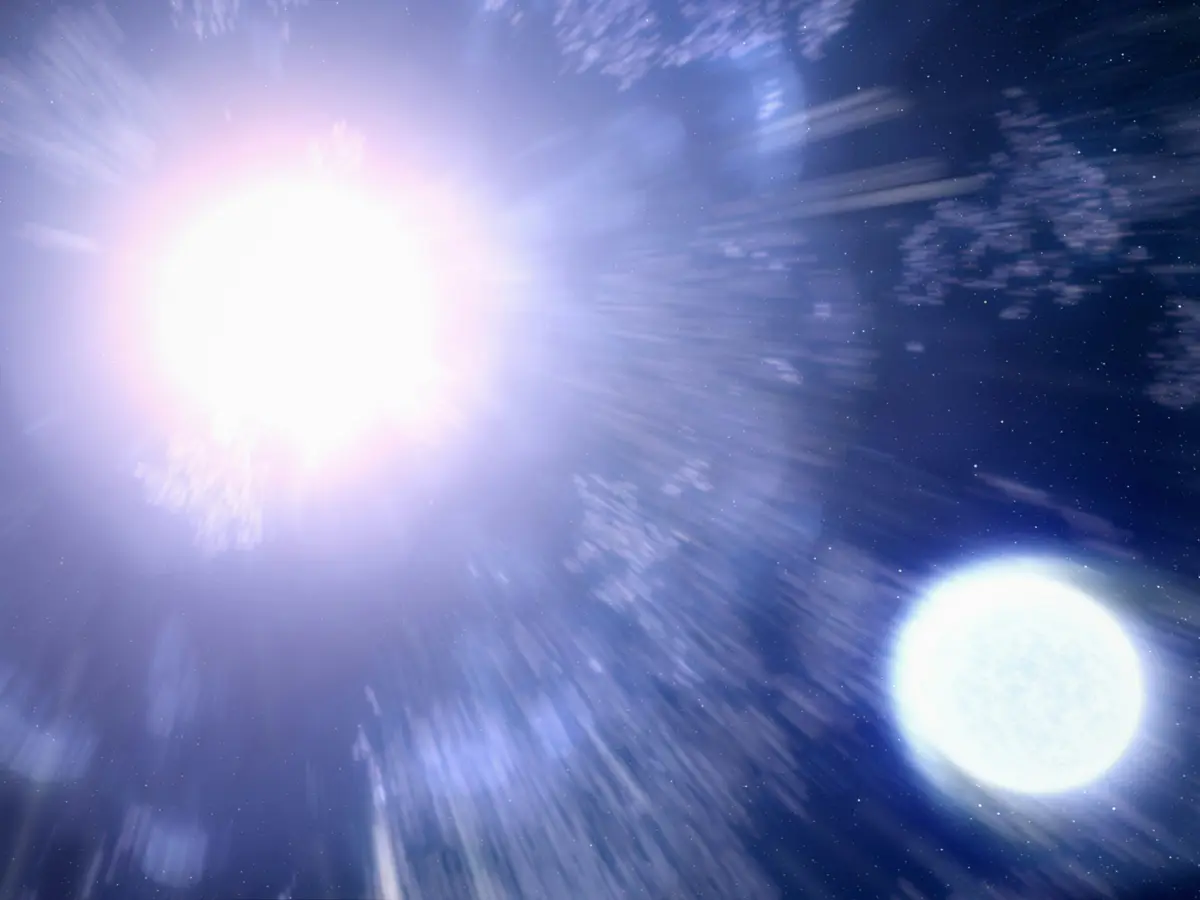
Scientists have found that for a planet like Earth to form, it needs special ingredients called short-lived radioisotopes (SLRs).
These SLRs come from a big explosion called a supernova, which happens when a star dies.
The SLRs help create a warm environment that stops planets from having too much water.
If these SLRs weren't there, Earth-like planets might turn into water worlds with thick atmospheres.
We know SLRs were present in our solar system because we've found them in meteorites.
However, supernovas can also destroy the areas where planets form, so Earth-like planets might be quite rare.

Earth-like planets require short-lived radioisotopes (SLRs) for formation, which come from supernova explosions.
SLRs create a warm cosmic environment that prevents planets from holding too much water.
Without SLRs, Earth-like planets might turn into Hycean worlds with deep oceans and thick atmospheres.
Evidence of SLRs in our solar system is found in meteorites.
Supernovas, while necessary for SLR formation, can disrupt the protoplanetary disks where planets form, making Earth-like planets potentially rare.
- Who
- Scientists studying planetary formation and meteorites
- What
- The formation of Earth-like planets and the role of short-lived radioisotopes (SLRs)
- When
- The study is ongoing, with evidence from meteorites supporting the presence of SLRs
- Where
- Our solar system, with implications for exoplanets in other star systems
- Why
- To understand the conditions necessary for the formation of Earth-like planets and the rarity of such worlds
- Key Ingredients for Earth-like Planets
- Short-lived radioisotopes (SLRs), warm solar system, optimal distance from star
- Role of SLRs
- Prevents terrestrial planets from holding too much water, creates warm cosmic environment
- Hycean Worlds
- Theoretical exoplanets with deep global oceans and thick hydrogen-rich atmospheres
- Evidence of SLRs
- Presence in meteorites
- Supernova Requirement
- Necessary for the formation of SLRs, but can disrupt protoplanetary disks
- Rarity of Earth-like Planets
- Potentially rare due to the need for a supernova and the survival of the protoplanetary disk