

Archive · 26 Jun 2025
India's Edible Oil: Groundnut or Soybean for Self-Sufficiency?
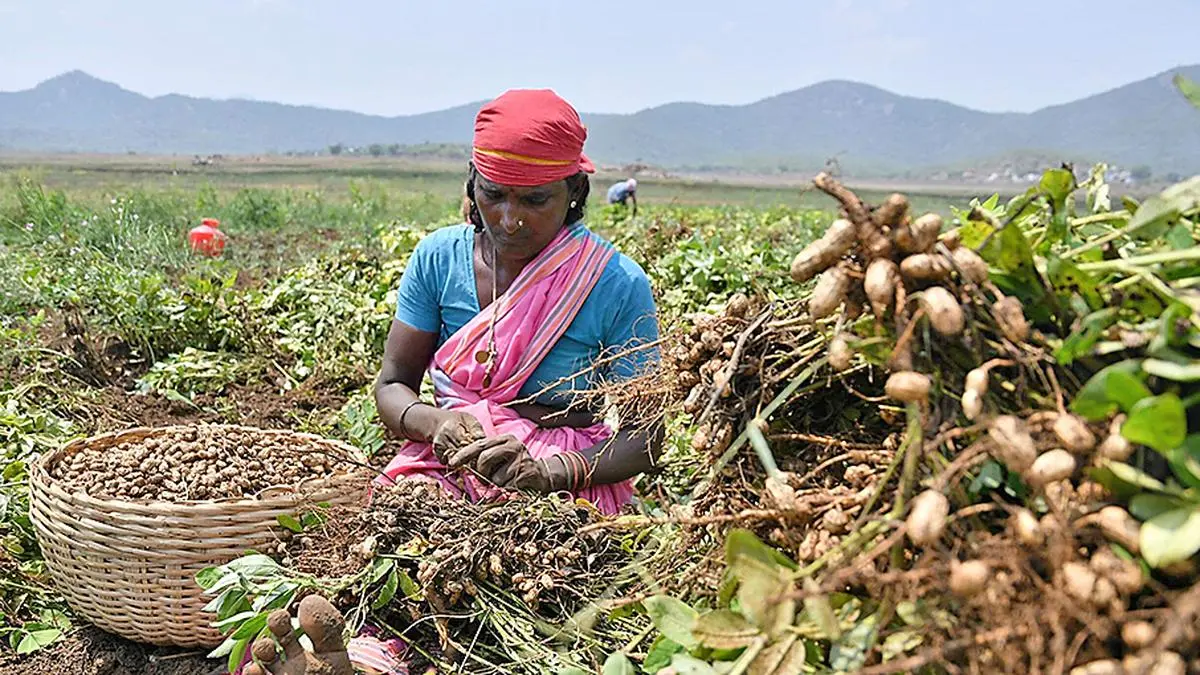
Imagine farmers used to grow groundnuts for tasty oil, but now they grow less because of problems with monkeys and better options.
While groundnut oil is great, its availability is decreasing, and soybean is increasing.
Soybean is easier to grow but doesn't produce as much oil.
Some experts think soybean may not be the best choice, and suggest the government and farmers plan what to grow to make sure there is enough oil.

Groundnut acreage has declined in India, while soybean has increased significantly.
Farmers shifted from groundnut due to issues like monkey damage and the appeal of paddy.
Soybean's yield and oil content are lower than groundnut, but its returns were lower than groundnut.
Experts and farmers debate the value and sustainability of soybean cultivation.
Government intervention is needed to improve edible oil self-sufficiency.
- Who
- Farmers, Agriculture Minister Shivraj Singh Chouhan, and experts.
- What
- Changes in edible oil crop cultivation, focusing on groundnut and soybean.
- When
- Over the last three and a half decades.
- Where
- India, with a focus on states like Odisha, Gujarat, and Madhya Pradesh.
- Why
- To analyze the shift in crops, its impact on edible oil self-sufficiency, and to debate the best strategies for the future.
Proponents of Soybean
Critics of Soybean
Soybean viability and future
Proponents of Soybean
Soybean has improved farmer economies. Government policies should focus on sustainability, even if the crop needs adjustments.
Critics of Soybean
Soybean offers low yield and oil content.
- Groundnut yield
- 22-24 quintal/hectare
- Soybean yield
- 11.72 quintal/hectare
- Groundnut oil content
- 50-52%
- Soybean oil content
- 18-20%
- Groundnut return (2021-24)
- ₹38,017/ha
- Soybean return (2021-24)
- ₹19,749/ha