

Archive · 25 Jul 2025
Rare Wildcats Photographed in Pakistan, Highlighting Conservation Needs
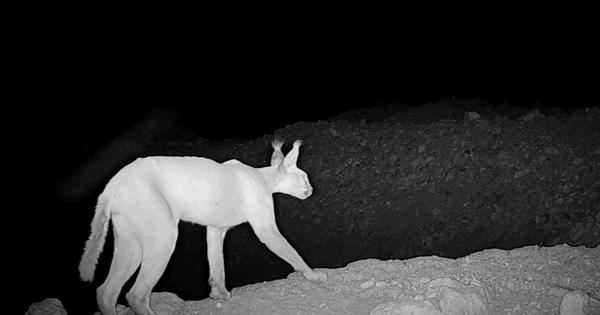
Scientists in Pakistan used special cameras to take pictures of two types of wild cats: caracals and sand cats.
Caracals are like small lynxes, and sand cats are very rare.
These cats are hard to find, and some people thought the sand cat might not even live in Pakistan anymore.
The pictures are helping scientists learn more about these cats and where they live.
But the places where these cats live are in danger because people are taking out sand and gravel for building.
Scientists are working to protect the cats by teaching people how important they are and trying to stop the cats from being harmed.

Camera traps in Pakistan captured rare images of Asiatic caracals and sand cats.
Sand cats were thought to be possibly extinct in Pakistan, according to IUCN.
The caracal image provides rare visual evidence of a declining species in Pakistan.
Kirthar National Park is threatened by sand and gravel mining driven by nearby development.
Conservation efforts aim to expand awareness and address threats like retaliatory killings.
- Who
- The Indus Fishing Cat Project and other conservationists.
- What
- Camera traps captured images of Asiatic caracals and sand cats in Pakistan.
- When
- Earlier this year.
- Where
- Kirthar National Park, Pakistan.
- Why
- To gather data and raise awareness for conservation of these rare species.
Conservation Efforts
Habitat Destruction
Conservation vs. Threats
Conservation Efforts
Conservationists are working to protect wildcats by expanding awareness and creating compensation schemes.
Habitat Destruction
Habitat destruction from mining, and retaliatory killings remain a significant threat to these species.
- Species Documented
- Asiatic caracal, sand cat
- Location of Sightings
- Kirthar National Park, Nushki (Balochistan)
- Threats
- Sand mining, retaliatory killings, habitat destruction
- Caracal Population (Pakistan)
- Approximately 100 individuals (estimated)
- IUCN Status (Caracal)
- Critically Endangered (Pakistan)