3 weeks ago
US may ban China data centre fibre; Indian makers gain
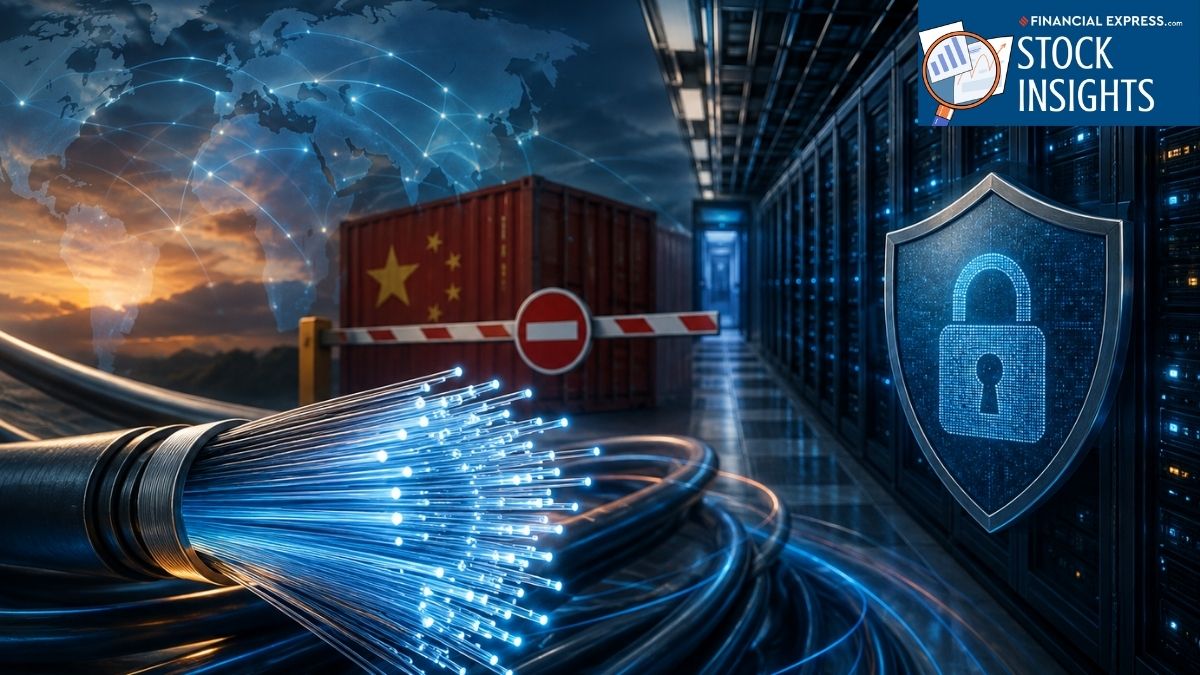
The United States and China are having a big argument about technology.
The US is thinking about stopping the import of some computer parts from China, including special cables that help data centres talk to each other.
This has made investors excited about two Indian cable-making companies, Sterlite Technologies and HFCL.
Both companies make optical fibre cables, which work like super-fast internet highways.
Their stock prices went up 20% and 25%.
The companies also had their best quarters ever, selling lots of cables and earning record profits.
Their order books are huge, meaning customers have already promised to buy more cables in the future.
Why is everyone so interested?
Because data centres that help artificial intelligence need more and more of these cables every year.
But some experts warn that the stock prices have already gone up a lot, so people should watch carefully before investing.

Reuters reports the US is preparing to ban imports of certain data centre parts from China, a claim not independently verified by Financial Express.
Shares of Sterlite Technologies and HFCL jumped 25% and 20% respectively on the news and strong results.
Sterlite posted record Q1FY27 results with revenue up 87% to ₹1,910 crore and a total order book above ₹20,000 crore.
HFCL's Q1FY27 revenue rose 119.9% to ₹1,915 crore, turning a ₹29.3 crore loss into a ₹245.6 crore profit.
Chinese optical-fibre cables already face a 35% anti-dumping duty, and global data-centre optical-cable demand is projected to rise 63% in 2026.
- Who
- The US government, which is reportedly preparing to restrict data centre parts imports from China, and Indian optical fibre firms Sterlite Technologies and HFCL, which stand to benefit.
- What
- A reported US plan to ban certain data centre parts from China that could boost non-Chinese optical-fibre suppliers; both Indian companies also reported record quarterly results and growing order books.
- Where
- The US, which is the hub of data centre expansion demand, and India, home to the two companies gaining US market share.
- When
- The Reuters report was published about a week before the article (around early August 2026), and both companies reported record Q1FY27 results during the quarter ended June 30, 2026.
- Why
- The deepening US-China rivalry, an existing 35% anti-dumping duty on Chinese fibre, and rapidly expanding AI workloads driving higher bandwidth needs and fibre demand.
Open Trade View
Decoupling View
Restricting Chinese fibre imports
Open Trade View
Import bans and heavy anti-dumping duties seen as protectionist measures that hurt price competition and global supply-chain efficiency.
Decoupling View
Import restrictions are a necessary response to US-China rivalry, protecting domestic security and manufacturing while rewarding non-Chinese suppliers like Sterlite and HFCL.
Stock rally vs. valuations
Open Trade View
The rally reflects real structural demand from AI data centres, record order books and sharply improved margins, so gains can be sustained.
Decoupling View
Both stocks trade at a premium to their three-year historical and industry median valuations, and near-term optimism may already be priced in.
Key facts
- Sterlite Q1FY27 revenue
- ₹1,910 crore, up 87% year-on-year
- Sterlite order book
- Over ₹20,000 crore, including a $210 million order on August 5, 2026
- HFCL Q1FY27 revenue
- ₹1,915 crore, up 119.9% year-on-year
- HFCL order book
- All-time high of approximately ₹26,665 crore
- HFCL FY27 guidance
- Revenue growth raised from 20% to 40% and above
- Duty on Chinese fibre
- 35% anti-dumping duty in the US
- Data centre cable demand
- Projected +63% globally in 2026 (Commodity Research Unit)
- Recent stock moves
- Sterlite +25%, HFCL +20%
Sources
Related news

CLSA Sees 46% Upside for Sterlite Technologies on AI Demand
TD Power and Sterlite Target AI Data Centre Boom

Sterlite Technologies wins $210M international order for optical fibre cables
Indian Stocks Move Sharply on Company-Specific Developments
Indian Pipe Stocks Ride America’s AI Infrastructure Buildout
HFCL Wins Rs 2,329 Crore Optical Fibre Cable Contract
India’s SIP Boom Meets Years of Modest Market Returns

Americans Oppose Trump’s Canada Tariffs and Lake America Renaming

How Indian News Photographs Became National Visual Memory

Meta Removes Scam Ads After India Flags Porn Malware Bait
X’s Transparency Pledge Collides With India’s Secrecy Rules