

Archive · 13 Sep 2026
India’s New Prosperity Tests Its Everyday Respect for Others
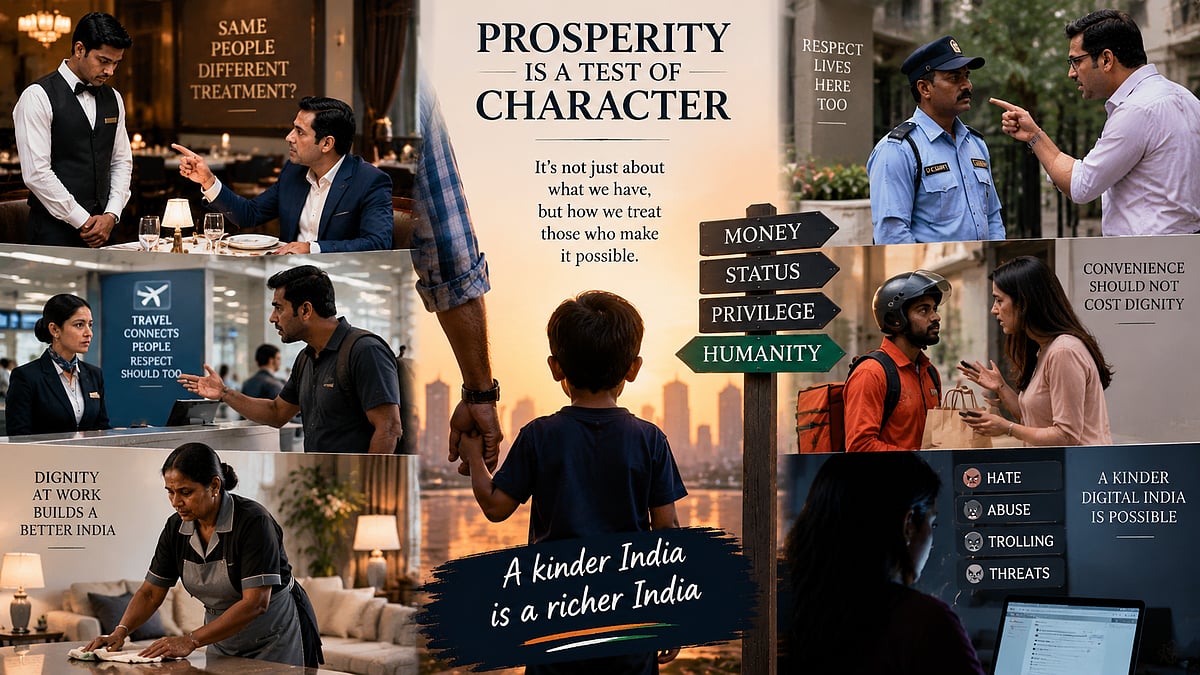
India has become wealthier, and many families can now afford things their parents could not.
But having more money does not always make people kinder or fairer.
Some people treat powerful people politely while speaking harshly to workers such as drivers, cleaners, waiters and security guards.
These workers often change their schedules or take risks so other people can enjoy convenience.
Apps and online services can make it easy to forget the people doing this work.
Social media can also encourage insults and threats, especially toward women.
Children learn about respect by watching how adults treat workers and strangers.
The article says real prosperity means paying fairly, respecting everyone’s time and accepting small inconveniences instead of passing them to people with less power.

India’s economic mobility has expanded access to homes, travel, education, healthcare and other comforts.
The essay argues that social hierarchies persist, shaping how people treat workers with less money or power.
Service and domestic workers often absorb the time, inconvenience and risks created by affluent consumers’ demand for convenience.
Technology and social media can make human labor, responsibility and online cruelty easier to ignore.
The article says prosperity should be measured by fairness, dignity and responsibility—not only income and consumption.
- Who
- The essay discusses affluent and newly prosperous Indians, service and domestic workers, companies, technology platforms, families and children; it is written by Dr Srinath Sridharan.
- What
- The article examines how India’s growing wealth and convenience can coexist with status-based disrespect, entitlement and unequal treatment.
- When
- The article does not specify a publication date or a particular time period.
- Where
- India, especially urban homes, workplaces, service settings, public spaces and online platforms.
- Why
- The essay argues that economic progress should increase dignity, fairness and responsibility rather than strengthen demands for privilege.
- Author
- Dr Srinath Sridharan, identified as a policy researcher and corporate adviser
- Central issue
- The relationship between India’s new prosperity and everyday treatment of people with less money or power
- Workers mentioned
- Waiters, drivers, delivery riders, cleaners, security guards, technicians, domestic workers and warehouse workers
- Technology’s role
- Apps and platforms can provide convenience while making human labor and accountability less visible
- Online abuse
- The essay says social media can spread abuse, threats, ridicule and doxxing, particularly against women
- Suggested standard
- Prosperity should be judged by fairness, dignity, responsibility and respect—not only income and consumption