

Archive · 3 Oct 2025
BRIC-RGCB Nanopores: New Tool for Early Disease Detection
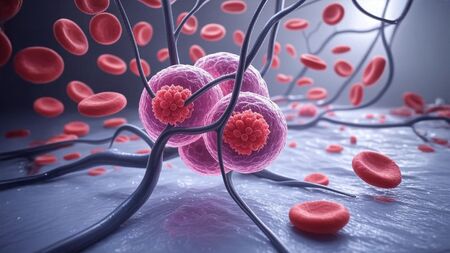
Imagine tiny gates that can tell doctors if you're getting sick!
Scientists in India have made these gates called mirror-image nanopores.
They are like tiny tunnels that can be tuned to let certain things pass while blocking others, kind of like a security guard.
These gates can spot very small signs of diseases.
They can even target and damage cancer cells while leaving healthy cells alone!
This could lead to new treatments for cancer and other problems, like helping wounds heal or even helping with brain diseases.
The team hopes their invention can transform how doctors diagnose and treat illnesses.

Researchers at BRIC-RGCB have created mirror-image nanopores called DpPorA.
These nanopores are made from flipped versions of natural proteins.
Computer simulations showed these pores are structurally opposite to their natural counterparts.
DpPorA can detect various molecules, opening the door for early disease detection.
Lab tests suggest these nanopores can target and damage cancer cells.
- Who
- Researchers at BRIC-RGCB, led by Dr. K.R. Mahendran.
- What
- Creation of mirror-image nanopores, named DpPorA, for early disease detection.
- When
- The research findings were recently published.
- Where
- BRIC-RGCB in Thiruvananthapuram.
- Why
- To create a tool for early disease detection, targeted cancer therapy, and other medical applications.
- Research Team
- BRIC-RGCB, Thiruvananthapuram
- Nanopore Name
- DpPorA
- Publication
- Nature Communications
- Primary Goal
- Early disease detection and personalized diagnostics
- Potential Applications
- Cancer treatment, wound healing, muscle repair, immune function, neurodegenerative conditions
- Collaborators
- CSIR-NIIST, Constructor University (Germany), Centre for Human Genetics (Bengaluru)
- Funding Sources
- Department of Biotechnology, Department of Science and Technology, ICMR, CSIR