

Archive · 29 May 2025
Jharkhand Tribals Face Economic Hardship, Survey Reveals
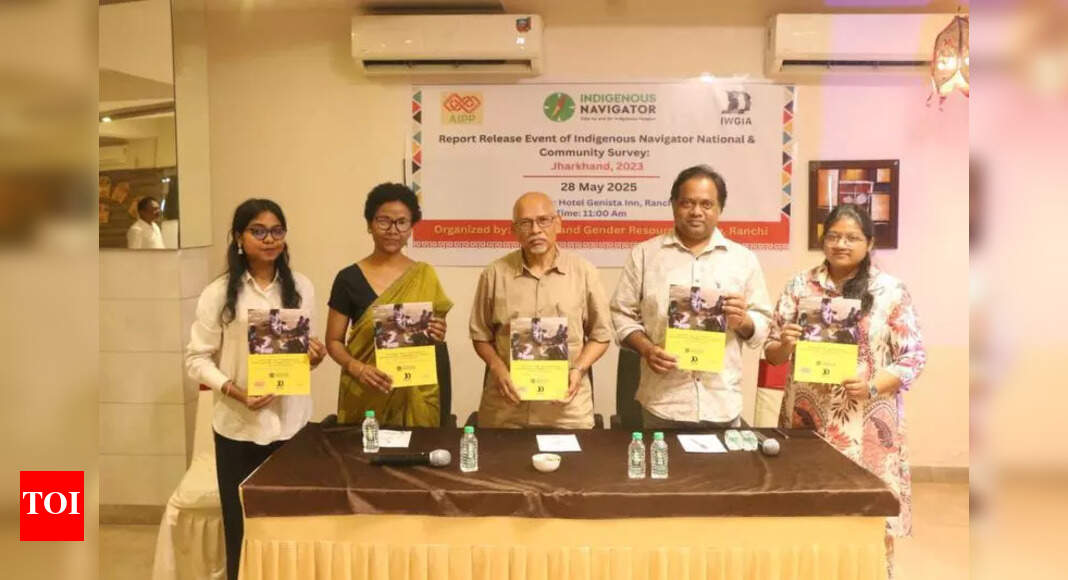
Imagine a group of people called tribals in a place called Jharkhand.
A study showed many of them are struggling with money problems.
More than 46% don't have enough money, and many don't get help like food or pensions.
A lot of young people have to leave their homes to find jobs.
They often don't have jobs or training where they live.
Also, they sometimes have trouble with their land.
The people want the government to help them with jobs, education, and land, and want them to listen to what they need.

Over 46% of surveyed indigenous people in Jharkhand live below the poverty line.
Many lack access to social protection schemes such as pensions or food security.
Migration is widespread, with many young people seeking work elsewhere.
Only a small percentage of communities have full legal recognition of their ancestral lands.
Most communities report ongoing land conflicts and exploitation.
- Who
- Indigenous communities of Jharkhand
- What
- Facing economic hardship and social issues as revealed by a community survey.
- When
- Reported in 2023
- Where
- Jharkhand, across 27 villages in Gumla, Simdega, Saraikela-Kharsawan, West Singhbhum, and Khunti districts.
- Why
- Due to lack of job opportunities, limited access to resources and legal rights, and ongoing land conflicts.
Indigenous Communities
Government Policies
Development Approach
Indigenous Communities
Current policies are insufficient and need to move beyond tokenism
Government Policies
Focus on community-driven development with direct participation.
Implementation of Laws and Policies
Indigenous Communities
Protective laws exist more in principle than practice, leading to exploitation.
Government Policies
Ensure ground-level implementation of PESA Act, secure land tenure, and vocational training.
- Percentage below poverty line
- Over 46%
- Survey location
- 27 villages
- Survey districts
- Gumla, Simdega, Saraikela-Kharsawan, West Singhbhum, and Khunti
- Migration rate (ages 15-24)
- 42.3% young men, 50% young women
- Communities with full land recognition
- 8%
- Ongoing land conflicts
- 81%