

Archive · 1 Feb 2026
Rising Water Threatens Maharashtra’s Ancient Lonar Lake
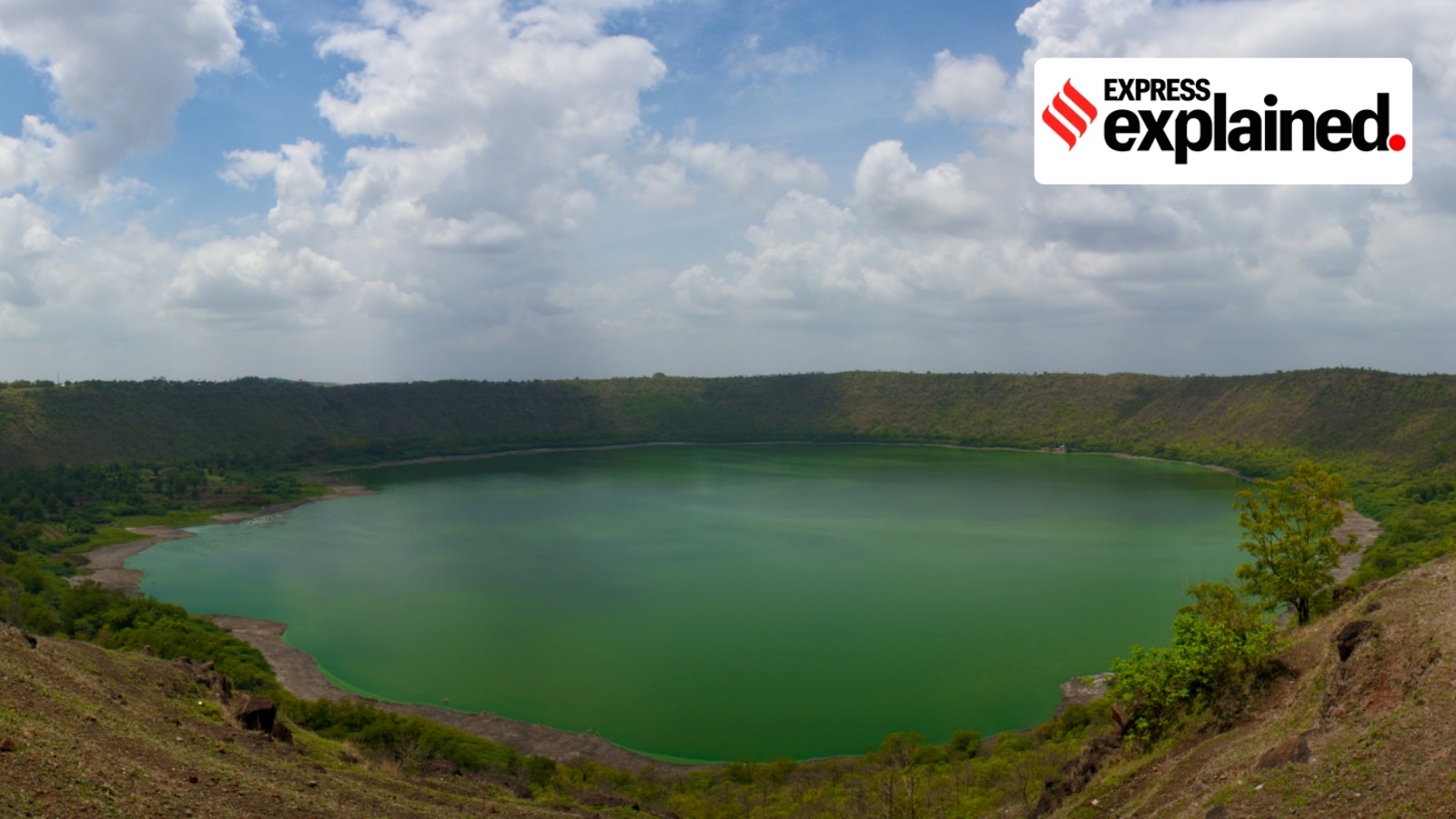
Lonar Lake in Maharashtra, India, is a special lake inside a big crater made by a meteorite a long time ago.
The water in the lake is very salty and alkaline, which means not many living things can survive in it.
Recently, the water level in the lake has been rising a lot, which is causing problems.
The rising water is threatening ancient temples around the lake, some of which are already underwater.
Experts think the water level is rising because of new water management structures and heavy rains.
The government is trying to find solutions to protect the lake and the temples, but it's a big challenge.

Lonar Lake, a saline and highly alkaline lake in a meteorite crater, is facing rising water levels threatening ancient temples.
The water level has risen by about 4 meters since 2022, partially submerging 9 out of 15 protected temples.
Experts attribute the rise to increased water management structures and heavy monsoon rainfall recharging lower aquifers.
The ASI plans to build a gabion wall as a temporary solution to protect the temples.
A long-term solution involves a geological and geo-hydrological survey to identify and treat the recharge zones.
- Who
- Geologists, archaeologists, and government authorities
- What
- Rising water levels threatening Lonar Lake and nearby temples
- When
- Water levels have been rising since 2022, with significant increase in 2025
- Where
- Lonar Lake, Buldhana district, Maharashtra, India
- Why
- Increased water management structures and heavy monsoon rainfall leading to aquifer recharge
- Location
- Buldhana district, Maharashtra, India
- Crater Diameter
- 1.88 km
- Water Level Rise
- 4 meters since 2022
- pH Level
- Around 10 (highly alkaline)
- Protected Temples
- 15 (9 submerged)
- Temporary Solution
- Gabion wall construction
- Long-term Solution
- Geological and geo-hydrological survey
- Conservation Status
- Ramsar site and National Geo-heritage site