

Archive · 25 Jul 2026
Climate Change and GLOFs in Indus River System
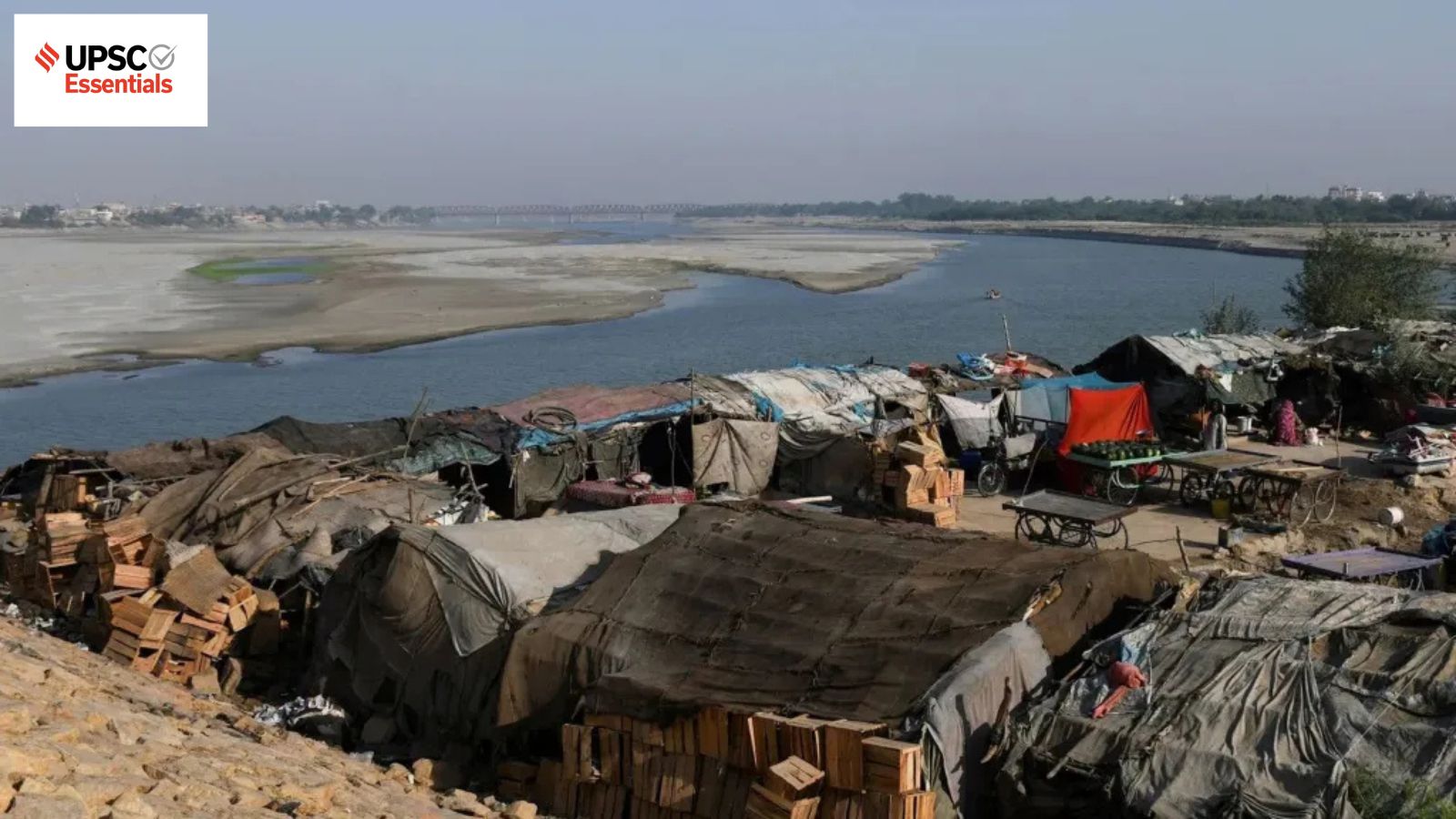
The Indus River system, which starts in the Himalayas and Karakoram, is fed by monsoon rains, western disturbances, and melting glaciers.
Recent studies show that the eastern part of the river system has seen a 20% drop in rainfall since 1951.
This change is due to rising temperatures, which affect how and when rain falls.
The melting glaciers are also forming new lakes, which can burst and cause floods.
These changes are making it harder to manage water resources and protect people and infrastructure in the region.

The Indus River system's eastern sub-basins have experienced a 20% decline in precipitation since 1951.
Rising temperatures are altering precipitation patterns and accelerating glacier retreat.
Glacial retreat is leading to the formation and expansion of glacial lakes, increasing the risk of GLOFs.
Changes in western disturbances are affecting winter precipitation in the upper Indus basin.
The interplay of climate change, monsoon variability, and glacial retreat is transforming the physical geography of the region.
- Who
- Scientists and researchers studying the Indus River system and Himalayan glaciers.
- What
- Changing precipitation patterns and increasing risk of Glacial Lake Outburst Floods (GLOFs).
- When
- Observed changes in precipitation patterns since 1951 and ongoing glacial retreat.
- Where
- Indus River system and the Indian Himalayas.
- Why
- Climate change, monsoon variability, western disturbances, and glacial retreat.
Climate Change Impact
Natural Variability
Precipitation Patterns
Climate Change Impact
Climate change is significantly altering precipitation patterns in the Indus River system, leading to reduced rainfall in the eastern sub-basins.
Natural Variability
Some argue that the observed changes in precipitation patterns are part of natural climatic variability and not solely attributable to climate change.
Glacial Retreat and GLOFs
Climate Change Impact
The retreat of Himalayan glaciers due to rising temperatures is accelerating the formation of glacial lakes, increasing the risk of Glacial Lake Outburst Floods (GLOFs).
Natural Variability
Others suggest that glacial retreat and the formation of glacial lakes are natural processes that have occurred throughout geological history and are not exclusively driven by anthropogenic climate change.
- Indus River System
- Originates in the Himalayas and Karakoram, fed by monsoon rains, western disturbances, glaciers, and snowpack.
- Precipitation Decline
- Eastern Indus sub-basins (Ravi, Beas, Sutlej) have seen a 20% decline in precipitation since 1951.
- Glacial Lakes
- Formed by meltwater from retreating glaciers, posing risks of GLOFs.
- Western Disturbances
- Winter precipitation in the upper Indus basin influenced by changes in frequency and intensity.
- GLOFs
- Rapid releases of water from glacial lakes due to dam failures.