

Archive · 12 Nov 2025
Tibet Leader Penpa Tsering Advocates Peaceful Coexistence with Neighbors
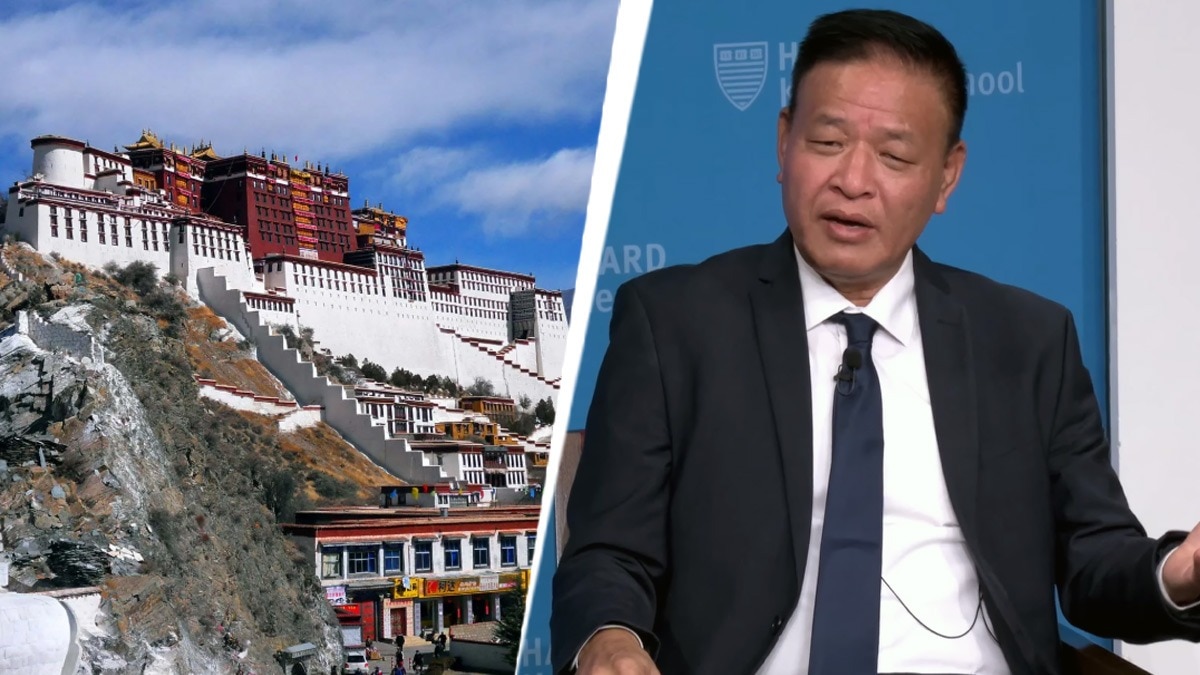
Imagine Tibet is like a house stuck on a very high mountain.
It's so high and hard to get to that people can't easily move the house somewhere else.
Because of this, the leader of Tibet, Penpa Tsering, says it's best for Tibetans to be good neighbors with the people around them, like in China and India.
He used a story about a strong monkey god named Hanuman who could lift mountains, but said Tibet doesn't have such magic.
So, living peacefully is the main idea.
However, he also explained that China is changing things for Tibetans, teaching their children only Chinese and making them loyal to the Chinese government.
This worries him because he fears Tibetan culture and language might disappear over time if this continues.

Tibet's elected leader, Penpa Tsering, stated that peaceful coexistence with neighbors is necessary due to Tibet's inaccessibility.
He referenced Tibet's high altitude and geographical isolation as reasons why it cannot be moved, unlike the mythological lifting of mountains by Hanuman.
Tsering highlighted historical peaceful relations between Tibetans and surrounding communities like Chinese, Nepalese, and Indians.
He expressed deep concern over Chinese policies, including colonial-style boarding schools, that threaten Tibetan identity, language, and culture.
The leader noted that 157 Tibetans have self-immolated, and that Chinese policies are targeting the core of Tibetan identity by assimilating younger generations.
- Who
- Sikyong Penpa Tsering, the elected leader of the Central Tibetan Administration
- What
- Spoke about Tibet's autonomy, emphasizing the need for peaceful coexistence with neighbors due to its geographical constraints and the threat to Tibetan identity from Chinese policies.
- When
- During a conversation hosted by the Institute of Politics Harvard Kennedy School
- Where
- Harvard Kennedy School
- Why
- To discuss Tibetan democracy in exile and respond to questions on autonomy, highlighting the practical realities of Tibet's location and the cultural assimilation faced by Tibetans.
Tibet's Autonomy via Peaceful Neighborly Relations
Tibet's Identity Threatened by Chinese Policies
Geographic Reality and Neighborly Relations
Tibet's Autonomy via Peaceful Neighborly Relations
Due to Tibet's inaccessible terrain, peaceful coexistence with neighbors like China, Nepal, and India is the only practical way forward for Tibet.
Tibet's Identity Threatened by Chinese Policies
While emphasizing peaceful coexistence, the leader highlights the severe impact of Chinese policies on Tibetan identity, culture, and language.
Geopolitical and Environmental Significance
Tibet's Autonomy via Peaceful Neighborly Relations
Tibet's unique geographical position as the 'roof of the world' and 'water tower of Asia' necessitates maintaining stable relations with surrounding countries.
Tibet's Identity Threatened by Chinese Policies
Despite its strategic importance, Tibet faces the erosion of its cultural and linguistic heritage due to Chinese assimilationist policies, particularly through boarding schools.
- Speaker
- Sikyong Penpa Tsering (Elected Leader of the Central Tibetan Administration)
- Event
- Conversation titled ‘Tibetan Democracy in Exile: Governance Without a State’
- Host
- Institute of Politics Harvard Kennedy School
- Tibet's Altitude
- Approximately 16,010 ft above sea level
- Tibetan Self-Immolations
- 157 reported inside Tibet
- Children in Chinese Boarding Schools
- About 1 million Tibetan children