

Archive · 7 Aug 2026
Buried ancient dams may have helped build pyramids, study finds
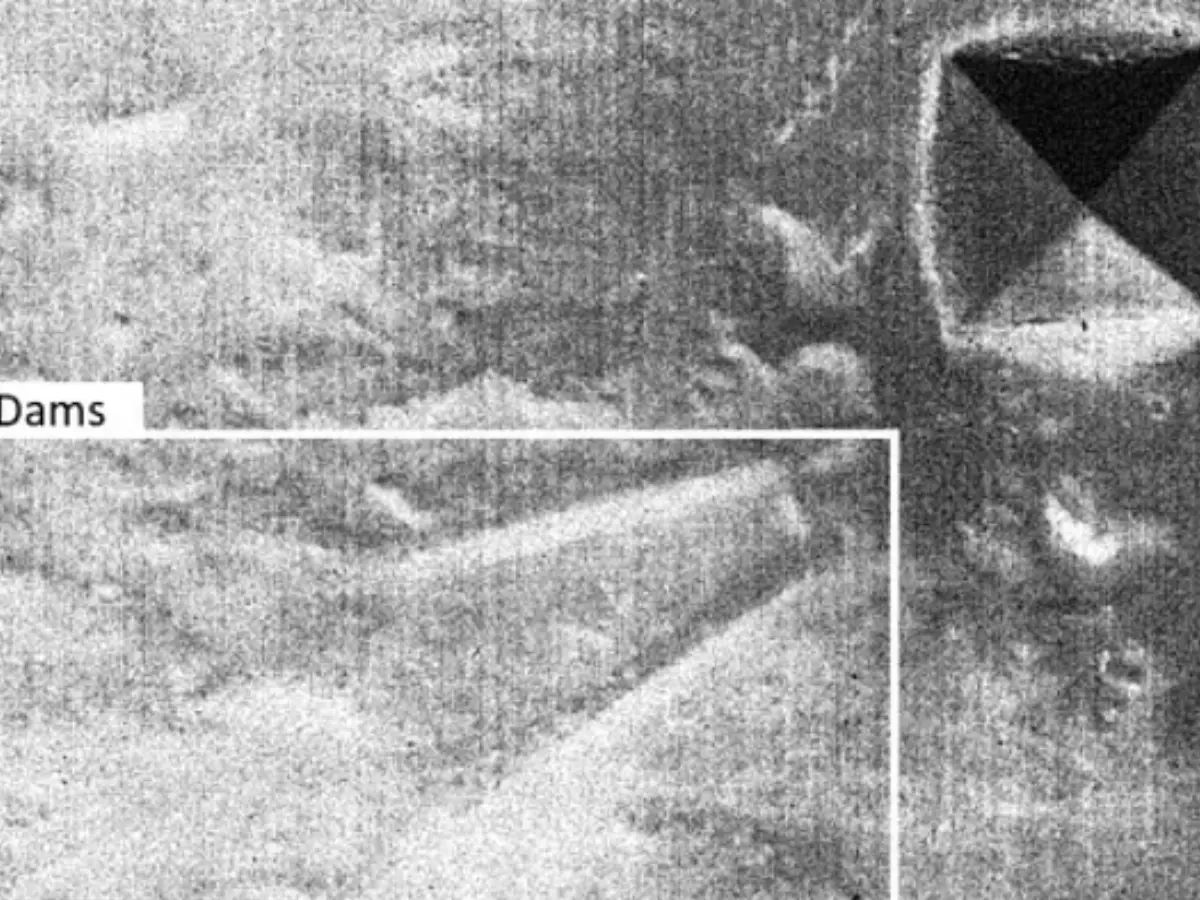
Long ago, in ancient Egypt, people built giant stone buildings called pyramids.
Scientists have been trying to figure out how they did it.
A big clue has been found buried under sand next to a pyramid called the Red Pyramid.
It looks like two big walls that were part of a clever water system.
These walls were really dams — they could hold back flood water and trap mud and rocks.
The water was used to move heavy stones and to make mortar, a kind of glue for building.
It also kept the pyramid builders safe from floods and gave them water to drink.
For a long time, people thought the walls were just natural hills or a road.
Now scientists think the ancient Egyptians built them as a giant water system.
If that is true, Egyptians knew how to do amazing water engineering 4,500 years ago.

A study led by Cairo University and published in Nature says two sand-buried structures near Egypt's Red Pyramid form a colossal hydraulic dam system.
The system consists of two dams, a reservoir, a diversion canal and a triangular spillway, possibly the earliest advanced spillway in ancient Egypt.
Researchers say the controlled water flow helped move heavy cargo, prepare mortar, safeguard the under-construction pyramids from floods, and supply workers' water.
The structures extend approximately 1,970 to 2,300 feet and were previously believed to be a natural rise and a stone-transport road.
If confirmed, the discovery would show Egyptians had complex water engineering 4,500 years ago, but excavation and dating are still needed to verify the link to the Red Pyramid.
- Who
- Researchers led by Cairo University, whose study was published in Nature; the Red Pyramid was built during the time of pharaoh Sneferu of Egypt's Fourth Dynasty.
- What
- Discovery of a colossal hydraulic system of dams, a reservoir, a diversion canal and a spillway that may have helped build the pyramids.
- When
- The system could date back about 4,500 years if the theory is confirmed; the Red Pyramid is about 4,600 years old.
- Where
- Next to the Red Pyramid in Dahshur, a few kilometres outside Cairo, Egypt.
- Why
- The system trapped sediment and captured floodwater while regulating its flow, supporting construction and daily operations at the pyramid site.
New hydraulic system theory
Prior interpretations and skepticism
Purpose of the buried structures
New hydraulic system theory
The structures worked in tandem as a two-stage water and sediment management system built to aid pyramid construction, including moving heavy cargo and preparing mortar.
Prior interpretations and skepticism
The structures were previously believed to be naturally occurring formations and a stone-transport road, and their link to the Red Pyramid is not confirmed until excavation and dating are carried out.
- Location
- Next to the Red Pyramid in Dahshur, a few kilometres outside Cairo, Egypt
- Components
- Two dams, a reservoir, a diversion canal and a triangular spillway
- Formation length
- Approximately 1,970 to 2,300 feet across the valley
- Base width
- Approximately 49 to 98 feet
- Visible height
- About 20 to 23 feet above the present valley floor, with a major portion under sand
- Intermediate reservoir
- Approximately 21 acres, holding an estimated 61 million gallons (possibly double)
- Publication
- Nature, from a study led by Cairo University
- Red Pyramid age
- About 4,600 years old, built under pharaoh Sneferu of the Fourth Dynasty