3 days ago
Reports Highlight Alleged Forced Conversions in UK Prisons
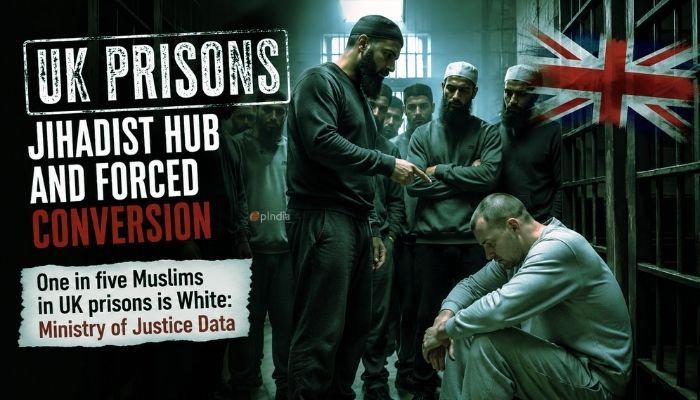
Several British reports have raised concerns about religious gangs in some prisons.
They say some vulnerable prisoners may be pressured to become Muslim or face threats from gangs.
The reports describe tactics such as bullying, offering protection, giving gifts and using violence.
They also identify jailed extremists who allegedly tried to recruit or influence other prisoners.
The articles cite government figures showing that Muslims made up about 18% of prisoners in England and Wales.
They also say the number of white Muslim prisoners increased between 2022 and June 2025.
Critics argue that the government has not done enough to stop coercion and extremist activity.
The Ministry of Justice says intimidation and forced conversion are prohibited and that prisons have improved their response.
The figures do not by themselves prove that conversions were forced or that Muslim prisoners generally support such activity.

UK reports and reviews have documented alleged coercive conversion and intimidation by extremist prison gangs.
Jonathan Hall’s 2022 terrorism report linked prison radicalization to vulnerable inmates, material incentives, threats and violence.
Muslim prisoners represented about 18% of England and Wales’s prison population, according to figures cited in the articles.
The number of white Muslim prisoners reportedly rose from 2,767 in 2022 to 3,218 by June 30, 2025.
The Ministry of Justice says faith-based coercion is not tolerated and that prison services have expanded training and monitoring.
- Who
- The reports concern vulnerable prisoners, alleged extremist prison gangs, prison officials and critics including Nick Timothy, Jonathan Hall and Colin Bloom.
- What
- Reports describe alleged coercive religious conversions, intimidation, recruitment and radicalization in some UK prisons.
- Where
- Prisons in England and Wales, including HMP Belmarsh in London.
- When
- The cited evidence spans reports from 2019, 2022 and 2023, with population figures updated to June 30, 2025; a separate prison attack was reported in January 2025.
- Why
- Critics say extremist prisoners and gangs seek influence, protection, recruitment and control, while the government says it is working to disrupt such activity.
Critics and Report Authors
Government and Institutional Response
Extent of coercion
Critics and Report Authors
Nick Timothy and reports cited in the articles say aggressive conversion efforts, including threats and violence, have occurred in some prisons and require urgent action.
Government and Institutional Response
The Ministry of Justice says forced religious conversion is not tolerated across the prison estate and that threatening behavior is addressed.
Prison security
Critics and Report Authors
Critics including Nile Gardiner argue that extremist gangs have gained excessive influence and pose a national-security risk.
Government and Institutional Response
The government says His Majesty’s Prison and Probation Service has improved its ability to identify and disrupt emerging extremist gang activity.
Interpretation of prisoner data
Critics and Report Authors
Critics present the rising Muslim prisoner population and number of white Muslim prisoners as evidence that prison radicalization and conversion require investigation.
Government and Institutional Response
The reported demographic figures show prisoner composition and changes over time, but do not by themselves establish that conversions were coerced or that Muslim prisoners generally support extremist activity.
Key facts
- Muslim share of prison population
- About 18% in England and Wales, according to figures cited in the articles.
- Muslim prisoners
- The cited number rose from 14,037 in 2022 to 16,051 by June 30, 2025.
- White Muslim prisoners
- The cited number rose from 2,767 in 2022 to 3,218 by June 30, 2025, a reported 16% increase.
- Muslim prison chaplains
- The Telegraph figures cited in the article put the number at 140, up from 128 in 2023–24.
- Jonathan Hall report
- His 2022 report said extremist prisoners could influence and recruit vulnerable or lonely inmates through guidance, gifts, threats and violence.
- Government response
- The Ministry of Justice said faith-based coercion and intimidation are not tolerated and that prison services have improved training and data collection.
Quotes
UK Justice Ministry spokesperson
Representative of the UK Justice Ministry
“the terrorists in UK prisons are “exerting a controlling and radicalising influence on the wider Muslim prison population (including through enforcers, whilst keeping their hands clean); recruitment (in particular of vulnerable or lonely prisoners, using guidance, sharing of food or material gifts), and conversion backed by implicit or actual violence; soliciting or accepting menial tasks (such as cell-cleaning) from lower status prisoners,””
 opindia.com
“The percentage of Muslims who are white in our prisons is so vastly higher than in the general population it raises serious questions. We know that experts have warned repeatedly about forced conversions taking place behind bars, driven by Islamic gangs. We need to be honest that something is not right here – Labour must urgently investigate and stamp out forced conversions in prison”
opindia.com
Sources
Related news

UK MP Seeks Probe Into Alleged Forced Prison Conversions

UK Booklet Tells Asylum Seekers How To Behave

US Lawmakers Urge Pakistan to Protect Christian Woman’s Rights

Jemima Goldsmith Urges UK Intervention Over Imran Khan Prison Treatment

Pakistan’s Minority Communities Face Violence, Impunity and Weak Protections

UK Forced Marriage Referrals Include More Than 100 Young Children
UK Asylum Hotel Numbers Halve as Migration Pressure Falls

Five Eyes Nations Discuss AI to Combat Terrorism and Crime
Johnson Urges Mahmood to Press Ahead With Immigration Reforms

Mahmood Defends Controversial Early Release Plan Amid Prison Capacity Crisis