

Archive · 11 Dec 2025
Shakespeare's Influence in India's Legal System
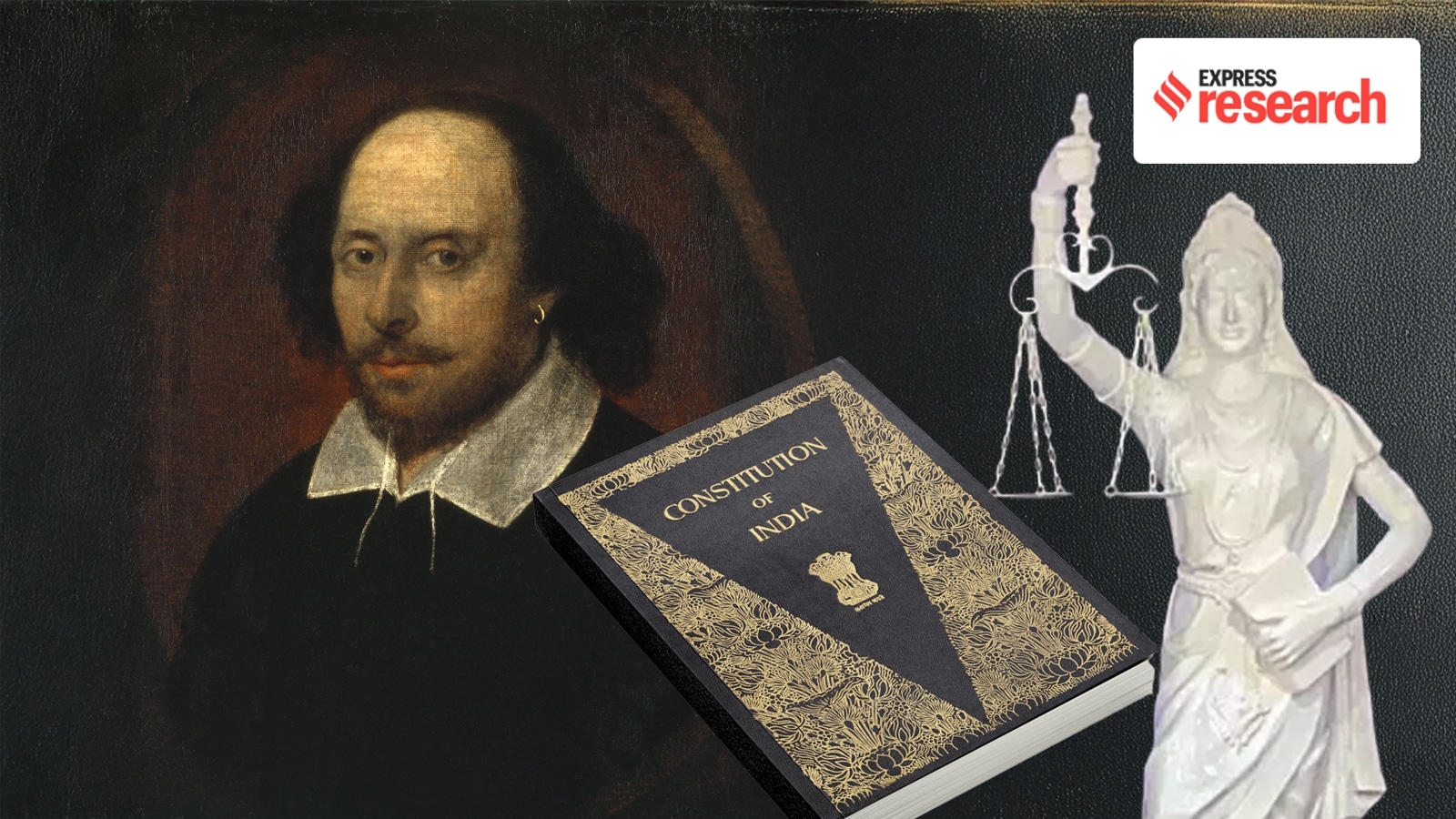
William Shakespeare's plays and quotes have been very popular in India for a long time.
They have been used in important meetings and court cases.
In the 1940s, when India was making its constitution, people talked about Shakespeare to make their points.
Some wanted Hindi to be the main language, while others wanted to keep using English.
Shakespeare's words helped them explain their ideas.
Even today, judges use Shakespeare's stories to talk about things like freedom, fairness, and justice.
His words help make complicated ideas easier to understand.
So, Shakespeare is still important in India's legal system.

Shakespeare's works have been popular in India since the early 19th century, influencing both cinema and legal canons.
Members of India's Constituent Assembly frequently referenced Shakespeare during debates, particularly on language and cultural issues.
Shakespeare's quotes were used to anchor arguments in a long Western tradition of political texts and to dramatize points of view.
In postcolonial India, judges have continued to invoke Shakespeare in legal principles about identity, liberty, mercy, diversity, and human frailties.
Shakespeare's influence is seen in various legal judgments, from decriminalization cases to discussions on discrimination and mercy.
- Who
- William Shakespeare, Indian jurists, Constituent Assembly members, Indian judges
- What
- The influence of Shakespeare's works on India's legal system and Constituent Assembly debates
- When
- From the early 19th century to present, with specific references during the Constituent Assembly (1946-1949) and in recent legal judgments
- Where
- India, specifically in the Constituent Assembly and various Indian courts
- Why
- Shakespeare's works have been used to anchor arguments, provide moral authority, and illustrate legal principles in debates and judgments
- Playwright
- William Shakespeare
- Time Period
- Early 19th century to present
- Key Figures
- VR Krishna Iyer, Sachchidananda Sinha, L Krishnaswami Bharathi, Algu Rai Shastri, TT Krishnamachari, Raj Bahadur, Zahirul Hasnain Lari
- Constitutional Assembly
- December 9, 1946 to November 26, 1949
- Language Debate
- Hindi vs. English
- Legal Cases
- Navtej Singh Johar v. Union of India, Ananda Sahu v. State of Orissa, Pebam Ningol Mikoi Devi v. State of Manipur, Gaurav Jain v. Union of India, Shayara Bano v. Union of India, Ajai Shanker Pandey v. Union of India, Alli Noushad v. Rasheed, Amina Nahna v. State of Kerala, Shivajirao Nilangekar Patil v. Mahesh Madhav Gosavi, Amar Singh v. State of U.P., Priyanka Pandey v. Secretary, Board of Secondary Education, Fathima Bibi v. Selvammal, Damordass Agarwal v. R. Badrilal
- Shakespearean Works Cited
- Hamlet, The Merchant of Venice, Romeo and Juliet, The Comedy of Errors, Othello, King John, King Lear, Henry VI Parts 1 and 2