

Archive · 1 Feb 2026
AI System Prevents Elephant-Train Accidents in India
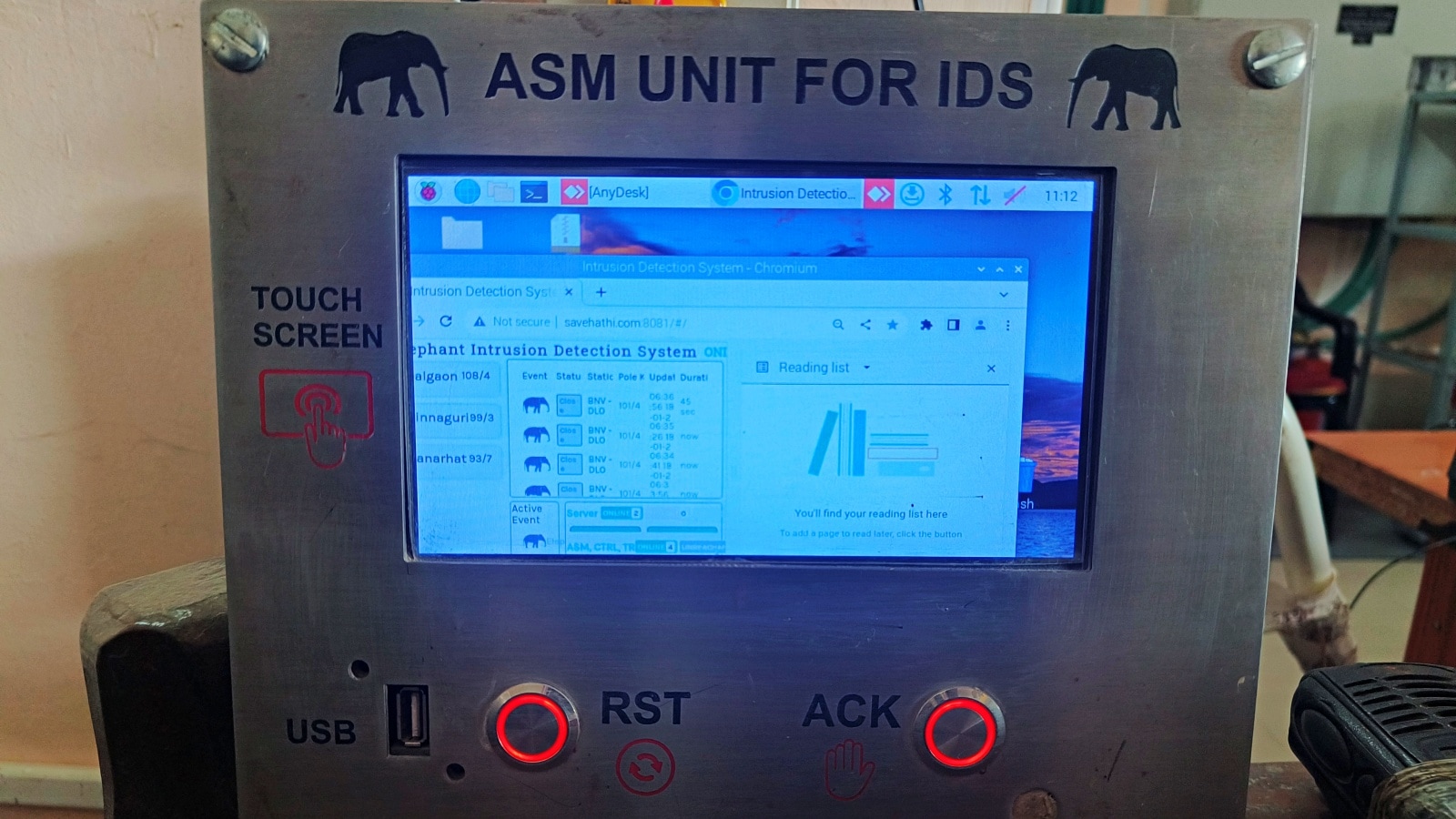
In India, a special system called the Intrusion Detection System (IDS) is being used to stop elephants from getting hit by trains.
This system uses tiny fibres laid near the train tracks to sense when elephants are nearby.
When an elephant is detected, the system sends an alert to the train driver to slow down.
This technology is important because elephants are big and can't quickly get off the tracks when they hear a train horn.
The system has been working well in some areas, like the Madarihat-Nagrakata section, and the government is planning to install it in more places to keep elephants safe.
Sometimes, the system might give a false alarm if it senses other animals or objects, but it's still very helpful in preventing accidents.

An AI-enabled Intrusion Detection System (IDS) is used to detect elephant movements near railway tracks in India.
The system uses optical fibres and Distributed Acoustic Sensing (DAS) to sense vibrations caused by elephants.
Alerts are sent to train drivers to reduce speed when elephants are detected, preventing accidents.
The Ministry of Railways has undertaken a Rs. 208-crore project to install IDS across 1,158 route kilometres in eight railway zones.
The system has been operational in the Madarihat-Nagrakata section since 2023, with no accidents reported in the last four years.
- Who
- Indian Railways and Ministry of Environment, Forest and Climate Change
- What
- Implementation of an AI-enabled Intrusion Detection System (IDS) to prevent elephant-train accidents
- When
- Pilot project commissioned in 2023, with ongoing installations
- Where
- Across eight railway zones in India, including Northeast Frontier Railway and East Coast Railway
- Why
- To reduce elephant deaths due to train collisions, especially in vulnerable corridors
- System Name
- Intrusion Detection System (IDS)
- Technology Used
- Distributed Acoustic Sensing (DAS)
- Project Cost
- Rs. 208 crore
- Total Route Kilometers
- 1,158 km
- Elephant Deaths (2019-2024)
- 81
- Pilot Project Location
- Madarihat-Nagrakata section
- Operational Since
- 2023
- False Alarms
- Occasional, due to other animals or objects