

Archive · 16 Nov 2025
UPSC Ethics Simplified: Do Results Matter or Purpose?
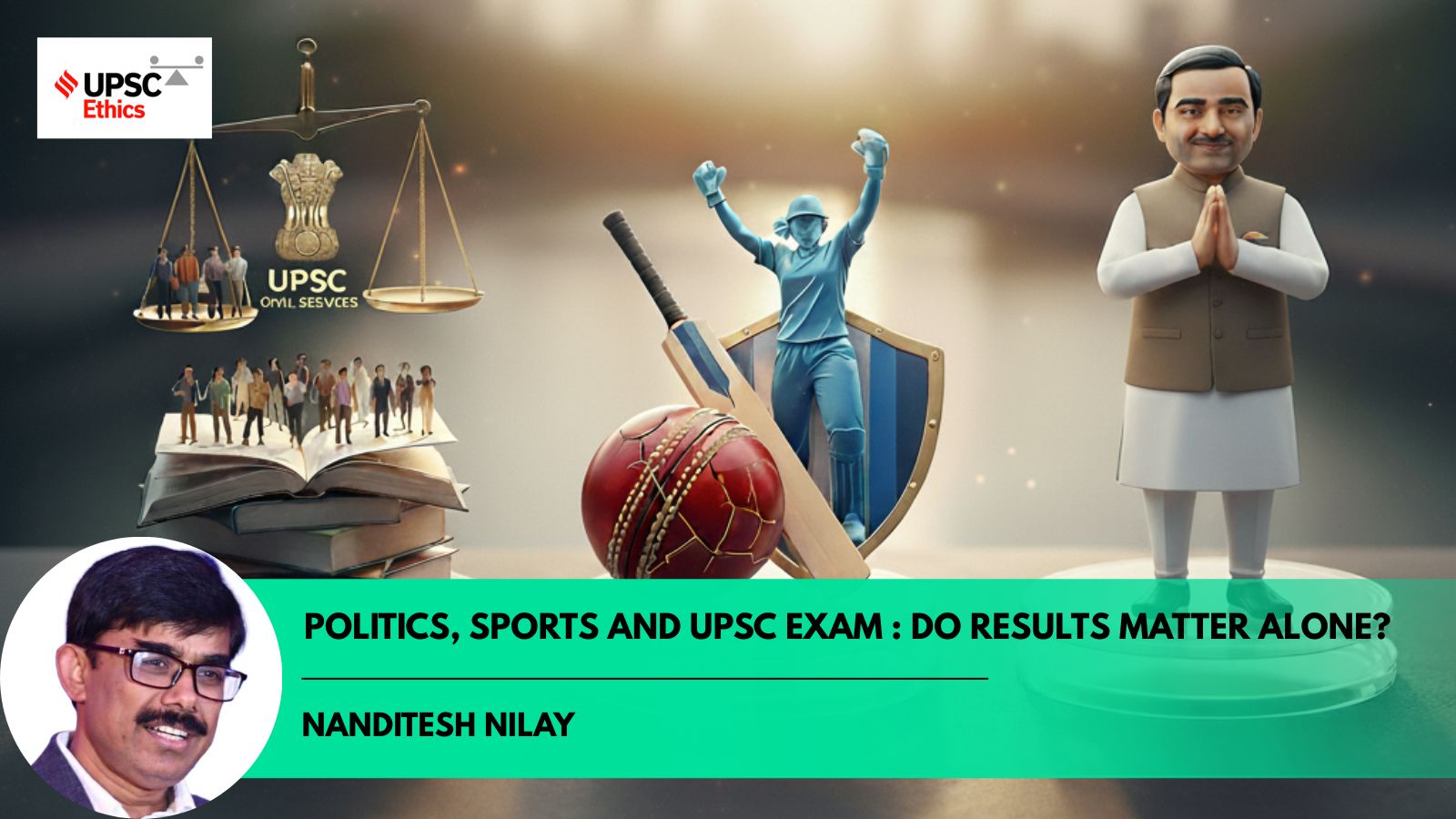
Imagine you're playing a game, like soccer or studying for a big test.
Sometimes you win, sometimes you lose, and sometimes you don't get the grade you wanted.
This article says that while winning or getting good grades (results) feels nice, what's more important is *why* you started playing or studying in the first place (your purpose).
It's like remembering you love playing soccer, not just focusing on whether you scored a goal.
For politicians, athletes, and students, working hard, being fair, and having good habits are key, even when things don't go their way.
Just like a chef focuses on making good food, not just on whether people like it right away, we should focus on doing our best and building good habits.
Even a famous thinker named Aristotle said that the best way to know what someone deserves is to look at the purpose of what they are doing.

The article explores whether results or the underlying purpose and consistent habits are more crucial for success and ethical behavior among politicians, athletes, and UPSC aspirants.
It argues that focusing solely on outcomes can lead to despair upon failure, while embracing the purpose behind endeavors and cultivating good habits provides resilience.
Aristotle's concept of 'telos' (purpose) is introduced, suggesting that fairness and merit are determined by understanding the inherent purpose of a good or an activity.
Ethical principles are emphasized, advocating for choices that build good habits of hard work, honesty, and a belief in excellence.
The piece encourages maintaining motivation and discipline through setbacks by learning from the unwavering attitudes of politicians and the dedication of athletes, focusing on the process rather than just the end result.
- Who
- Politicians, athletes, and UPSC aspirants
- What
- Discussion on whether results or purpose and habits are more important in achieving success and ethical conduct
- When
- UPSC CSE Mains result for 2025 declared last week, referencing ongoing careers and practices
- Where
- Implied to be within the contexts of Indian politics, sports, and civil services
- Why
- To understand the ethical dimension of success, emphasizing purpose, consistent effort, and good habits over immediate outcomes, especially in the face of setbacks.
- Focus
- Ethics, Purpose, and Habits over Solely Results
- Key Figures
- Politicians, Athletes, UPSC Aspirants, Aristotle
- Core Concept
- Telos (Aristotle's concept of purpose)
- Ethical Framework
- Consequentialism, Utilitarianism, Kantian ethics
- Advice
- Focus on process, habits, and the deeper purpose of endeavors.