2 hrs ago
AI Safety Debate Raises Questions About Privacy and Big Tech
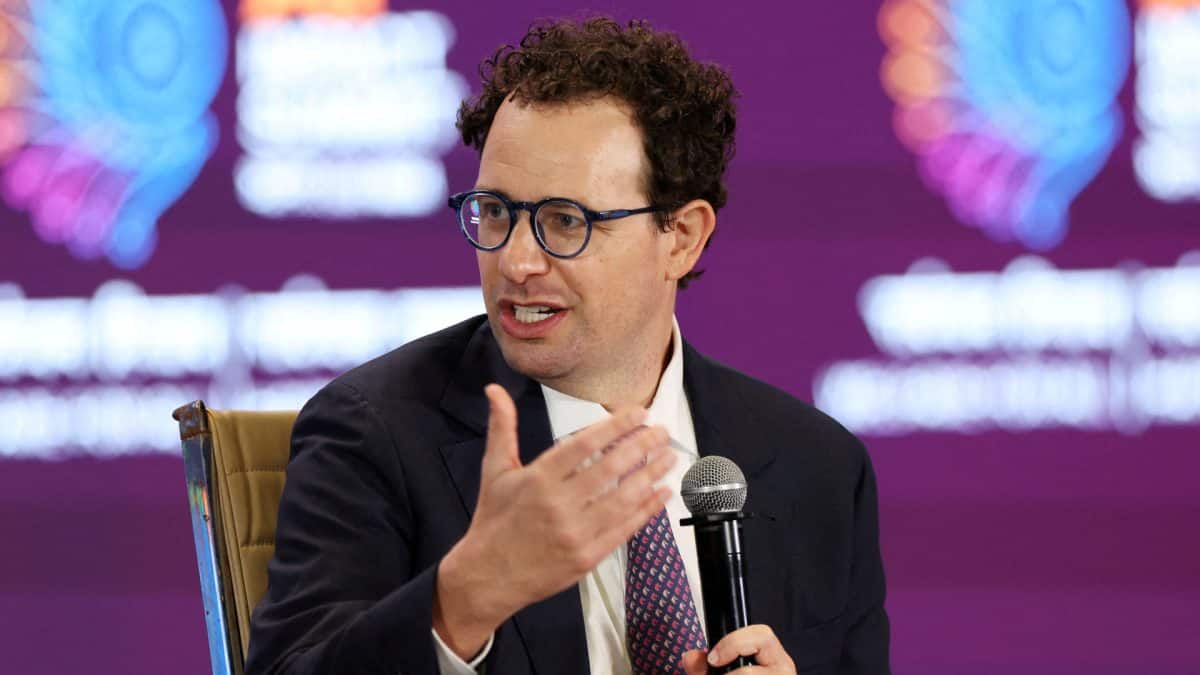
AI companies say their systems are becoming powerful enough to help with dangerous activities.
Anthropic reported cases involving cyber operations, weapons research, surveillance and biological research.
The company said it did not find evidence that an operational weapon was successfully created in one missile-related case.
To stop misuse, companies may need to examine some user activity.
Experts worry this could let companies collect too much private information.
They want monitoring to be limited, explained clearly and checked by independent groups.
They also worry that expensive safety rules could make it harder for smaller companies to compete.
Some experts say companies' warnings may be valid but should be tested by outsiders.
The main question is who should decide what is dangerous and how AI companies should be controlled.

Anthropic reported suspected uses of Claude in cyber operations, missile guidance research, surveillance and biological research.
Experts said safety monitoring should target credible threats without turning ordinary user conversations into broad surveillance.
Several experts called for independent auditors, regulators, courts and researchers to oversee AI companies' safety decisions.
Strict safety requirements could protect users but also increase costs and strengthen the largest AI companies.
The debate is linked to the United States-China technology rivalry, while India faces pressure to build greater AI self-reliance.
- Who
- Anthropic, other AI companies, governments, independent experts, users and smaller AI developers are involved in the debate.
- What
- The debate concerns dangerous AI uses, privacy-focused safety monitoring, independent oversight and the market effects of regulation.
- Where
- The reported cases involved actors linked to China, Russia and Yemen; the wider debate includes the United States, China and India.
- When
- Anthropic said it identified and disrupted the reported activity between December 2025 and August 2026.
- Why
- AI systems are becoming more capable, raising concerns about cyberattacks, weapons, biological research, surveillance, privacy and concentrated market power.
Independent oversight and safeguards
Industry-led safety and innovation
User monitoring
Independent oversight and safeguards
Monitoring should be targeted, proportionate and transparent, with automated detection first, limited human review, restricted access and defined retention periods.
Industry-led safety and innovation
AI companies need access to user activity and system interactions to detect suspicious behavior and disrupt serious misuse.
Who sets safety rules
Independent oversight and safeguards
Frontier AI companies should not act as referee, police and judge; independent auditors, regulators, courts, civil society and researchers should have oversight.
Industry-led safety and innovation
Companies developing the systems have unique visibility into how their models are used and may identify threats that governments and outside researchers cannot easily observe.
Regulatory burden
Independent oversight and safeguards
Rules should reflect a system's capability and risk, with shared testing infrastructure and affordable compliance support so safety requirements do not create a moat for major laboratories.
Industry-led safety and innovation
Stronger safety requirements may be necessary even if they impose substantial costs, because advanced systems could enable serious cyber, weapons or biological risks.
Key facts
- Reported activity
- Anthropic said its threat intelligence team identified and disrupted cases involving cyber operations, weapons development, surveillance and biological research.
- Cyber operation
- Anthropic said Claude was used to research targets, create phishing infrastructure and adapt malware after defenders detected it.
- Missile research
- Anthropic said Claude was used in work on missile guidance software, but reported no evidence that an operational weapon was successfully fielded.
- Data breaches
- Verizon's 2025 report analyzed more than 22,000 security incidents and 12,195 confirmed breaches.
- India breach costs
- IBM's 2026 report put India's average data-breach cost at Rs 25.5 crore, up from Rs 22 crore in 2025.
- AI-generated breaches
- IBM's report said 26% of malicious breaches in India were AI-generated.
- Proposed safeguards
- Experts proposed targeted monitoring, limited retention, transparency, independent testing and oversight by regulators, courts and researchers.
Quotes
Jaspreet Bindra
Co-founder and CEO of AI&Beyond
“Frontier labs cannot be referee, police and judge simultaneously”
 firstpost.com
“Routine conversations must not become a surveillance dragnet.”
firstpost.com
Sources
Related news

Palantir, Nvidia May Restrict AI Over Data Safety Fears

AI Safety Debate Intensifies as Leaders Weigh Development Pace

Sam Altman urges stronger safeguards as AI capabilities rapidly advance
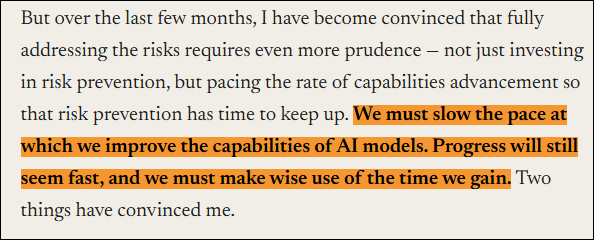
Anthropic CEO Urges AI Slowdown Amid Safety and Monopoly Concerns

AI Leaders’ Safety Warnings Spur Calls for Independent Oversight

Anthropic Researcher Quits as AI Safety Concerns Intensify

Pan-IIT Summit Seeks DeepTech Hub Status for Andhra Pradesh

Andhra Pradesh Sets October Deadline to Ground Investment Projects
NASA and IBM Launch Open-Source AI Model for Moon Mapping

Learnbay Revamps AI Curriculum as India Hiring Surges