

Archive · 22 Jan 2026
Indian Muslims face pressure to remain silent
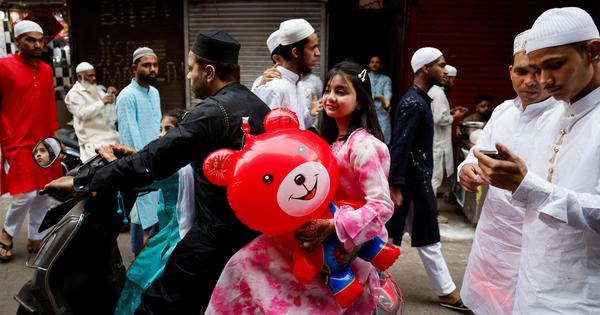
Indian Muslims are often told that to be accepted, they must be quiet and not make political demands.
This idea, called Indian Muslim Exceptionalism, has been around for a long time.
It means that Muslims in India are expected to be very quiet politically and to prove they are different from Muslims in other countries.
They are supposed to be culturally visible but not politically assertive.
This expectation has made it hard for Muslims to participate fully in democracy.
The media often labels Muslim protests or organizations as 'communal' or 'angry,' which makes it even harder for them to speak up.
Unlike other groups like Dalits or Sikhs, Muslim political claims are often seen as tests of loyalty rather than as normal demands for rights.
Many Muslims have tried to avoid suspicion by being very careful with their words, but this has not led to more acceptance.
The article argues that Indian Muslims should be treated equally and should have the same rights as other citizens, without having to be 'exceptional' to be accepted.

Indian Muslims face pressure to be politically quiet and culturally visible, a concept termed Indian Muslim Exceptionalism.
This expectation has roots in post-Partition history and has been reinforced by majoritarian politics.
Muslim political agency is often framed as a problem rather than as normal democratic participation.
The media frequently labels Muslim protests or organizations in negative terms, reinforcing the pressure to remain silent.
Unlike other groups, Muslim political claims are often seen as tests of loyalty rather than as legitimate demands for rights.
- Who
- Indian Muslims
- What
- Pressure to remain politically quiet and culturally visible
- When
- Since Independence, with increasing intensity in recent years
- Where
- India
- Why
- Due to post-Partition expectations and majoritarian politics
- Concept
- Indian Muslim Exceptionalism
- Root Cause
- Post-Partition expectations and majoritarian politics
- Effect on Muslims
- Pressure to be politically quiet and culturally visible
- Media Framing
- Muslims are often labeled as 'communal' or 'angry' when they organize or protest
- Contrast with Other Groups
- Dalit and Sikh political claims are more readily accepted as legitimate
- Current Situation
- Muslim political agency is increasingly institutionalized and constrained
- Internalization
- Some Muslims preemptively dilute their language to avoid suspicion
- Solution
- Normalize Muslim citizenship and grant equal political agency