

Archive · 10 Oct 2026
Centre Caps Cancer Drug Trade Margins at 30%
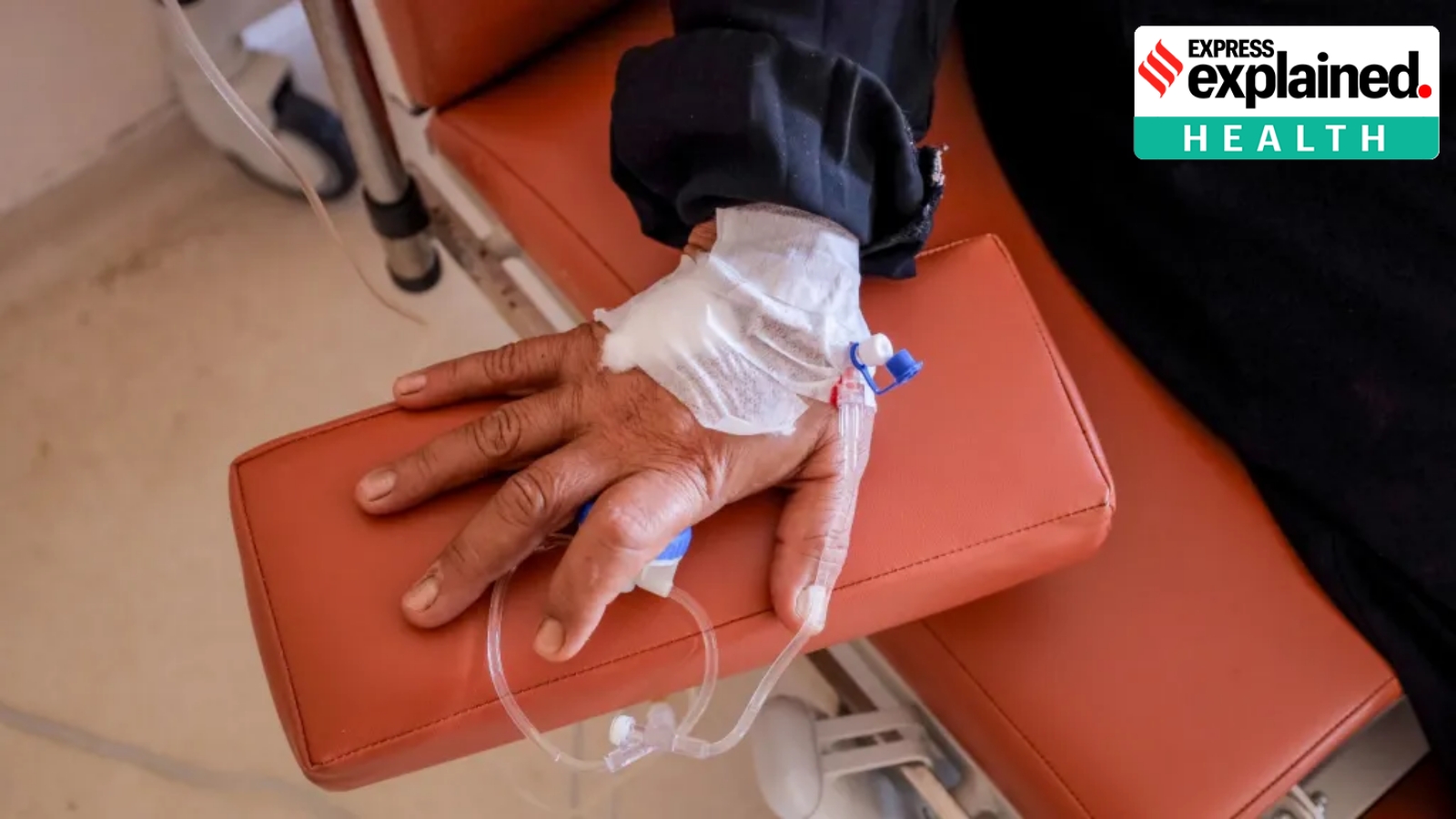
The government has decided to limit the extra amount added to the price of many cancer medicines as they move through the supply chain.
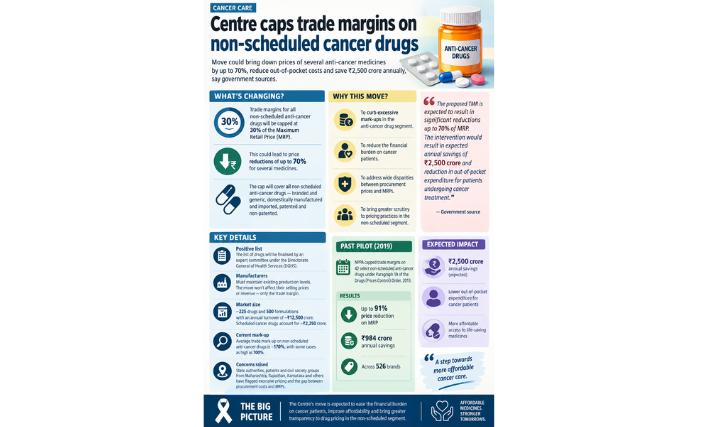
The limit will be 30% of the medicine’s maximum retail price.
It applies to non-scheduled medicines, which are not covered by the usual government ceiling prices.
The measure is expected to include about 110 medicines, including some patented drugs.
An expert committee will decide exactly which medicines are included, and the drug-pricing regulator will issue the formal notice.
Officials say some prices could fall by 20% to 70%.
Their estimates of yearly savings for patients vary, with reports citing ₹2,500 crore to ₹3,500 crore.
The government says manufacturers must maintain current production levels to help prevent shortages.
Some experts and industry representatives say the final effects on affordability and supply-chain businesses will depend on how the rules are implemented.

The Centre has decided to cap trade margins at 30% of MRP for non-scheduled anti-cancer medicines.
The measure is expected to cover about 110 medicines, including roughly 35 patented drugs, across branded, generic, domestic and imported products.
Officials estimate affected MRPs could fall by 20% to 70%; reported annual patient-savings estimates range from ₹2,500 crore to ₹3,500 crore.
A Directorate General of Health Services expert committee will finalise the covered-medicine list, after which the National Pharmaceutical Pricing Authority is expected to notify the cap.
The policy expands on a 2019 intervention covering 42 cancer medicines across 526 brands, which reportedly generated annual savings of ₹984 crore.
- Who
- The Indian government; a Directorate General of Health Services committee will finalise the list, and the National Pharmaceutical Pricing Authority is expected to notify the cap.
- What
- A 30% trade-margin cap on covered non-scheduled anti-cancer medicines.
- When
- The government has decided on the measure; reports say implementation is expected soon, with a Supreme Court hearing scheduled for October 12.
- Where
- India.
- Why
- To curb excessive trade mark-ups, reduce patients’ medicine costs and improve affordability while maintaining availability.
Affordability and stronger price controls
Implementation and supply-chain concerns
Effect on patient affordability
Affordability and stronger price controls
The government and supporters say limiting excessive mark-ups can reduce prices and out-of-pocket costs; officials estimate some MRPs could fall by up to 70%.
Implementation and supply-chain concerns
Some patient advocates and experts argue that a trade-margin cap may not make patented medicines affordable if manufacturers’ prices to stockists remain uncontrolled.
Effect on sellers and hospitals
Affordability and stronger price controls
The cap is intended to limit large differences between procurement prices and MRPs and make medicine pricing more transparent.
Implementation and supply-chain concerns
Industry and brokerage views cited in reports warn of pressure on retailer, hospital and other supply-chain margins; one brokerage estimated a possible 2%–4% effect on hospital EBITDA, pending details.
Expected market impact
Affordability and stronger price controls
The government says manufacturers will maintain current production levels and officials say the cap targets trade mark-ups rather than manufacturers’ selling prices.
Implementation and supply-chain concerns
Experts and industry representatives say outcomes will depend on the final list and implementation; some argue margins are needed to maintain distribution and that prices to stockists could leave room for workarounds.
- Trade-margin cap
- 30% of MRP for covered non-scheduled anti-cancer medicines
- Expected coverage
- About 110 medicines, including roughly 35 patented drugs
- Products covered
- Branded and generic, domestic and imported, patented and non-patented medicines
- Estimated price reductions
- Reports cite a possible 20%–70% reduction, depending on the medicine and distribution structure
- Estimated annual patient savings
- Most reports cite about ₹2,500 crore; one report gives a range of ₹2,500 crore to ₹3,500 crore
- Implementation
- A DGHS expert committee will finalise the covered-medicine list; the NPPA is expected to issue the notification
- Supply safeguard
- Manufacturers are to maintain current production levels
- 2019 intervention
- A cap on 42 non-scheduled anti-cancer medicines across 526 brands reportedly generated annual savings of ₹984 crore
Sources

Cancer Drug Prices May Fall By Up To 70% As Centre Caps Trade Margins At 30%
Prices of 110 anti-cancer drugs to fall sharply
Cancer Drug Prices May Fall By Up To 70% As Government Caps Trade Margins: Sources

Prices of 110 anti-cancer medicines may fall up to 70 pc as govt caps trade margins
Government plans caps on cancer drug margins. Will prices fall?
After Supreme Court questions cancer drug price gap, Centre caps trade margins at 30% - Telegraph India

Centre plans 30% trade-margin cap on non-scheduled cancer drugs
Cancer Drug Prices May Fall 70% As Centre Caps Margins
Govt caps margin at 30 pc of MRP on non-scheduled cancer drugs; patients may save Rs 2,500 crore annually
