

Archive · 19 Jun 2025
UK Startup Aims to Revolutionize Space Travel with Fusion Rocket
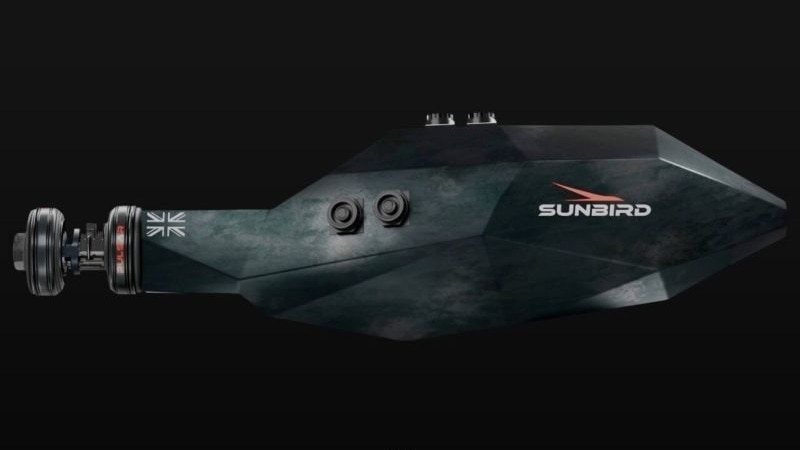
Scientists are working on a new type of rocket called the Sunbird that could travel to Mars much faster.
Currently, a trip to Mars takes about seven months.
The Sunbird, powered by nuclear fusion, aims to make the journey in just 30 days!
The rocket will travel extremely fast, like a space tug, attaching to larger spacecraft.
The company hopes to test the rocket in space by 2027.
If successful, the Sunbird could also be used for things like carrying satellites or mining asteroids.

A UK-based startup, Pulsar Fusion, is developing Sunbird, a nuclear fusion-powered rocket.
The Sunbird aims to reduce Mars travel time from seven months to just 30 days.
The rocket is designed to reach speeds up to 329,000 mph using a Direct Fusion Drive (DDFD).
The Sunbird could potentially reach Pluto in four years and be used for various applications.
An orbital demonstration of the Sunbird is planned for 2027.
- Who
- Pulsar Fusion, a UK-based startup, is developing the Sunbird.
- What
- Pulsar Fusion is developing the Sunbird, a nuclear fusion-powered rocket.
- When
- An orbital demonstration is planned for 2027.
- Where
- The UK-based startup Pulsar Fusion is developing the rocket.
- Why
- To significantly reduce travel time to Mars and other destinations in space.
Challenges
Potential
Fusion Feasibility
Challenges
Achieving nuclear fusion on Earth is difficult.
Potential
Space is a more suitable environment for fusion.
- Company
- Pulsar Fusion
- Rocket Name
- Sunbird
- Power Source
- Nuclear Fusion
- Mars Travel Time (Projected)
- 30 days
- Current Travel Time to Mars
- 7 months
- Speed (Projected)
- 329,000 mph
- Planned Demonstration
- 2027