Archive · 16 Dec 2025
Mosasaurs adapted to freshwater, ate dinosaurs
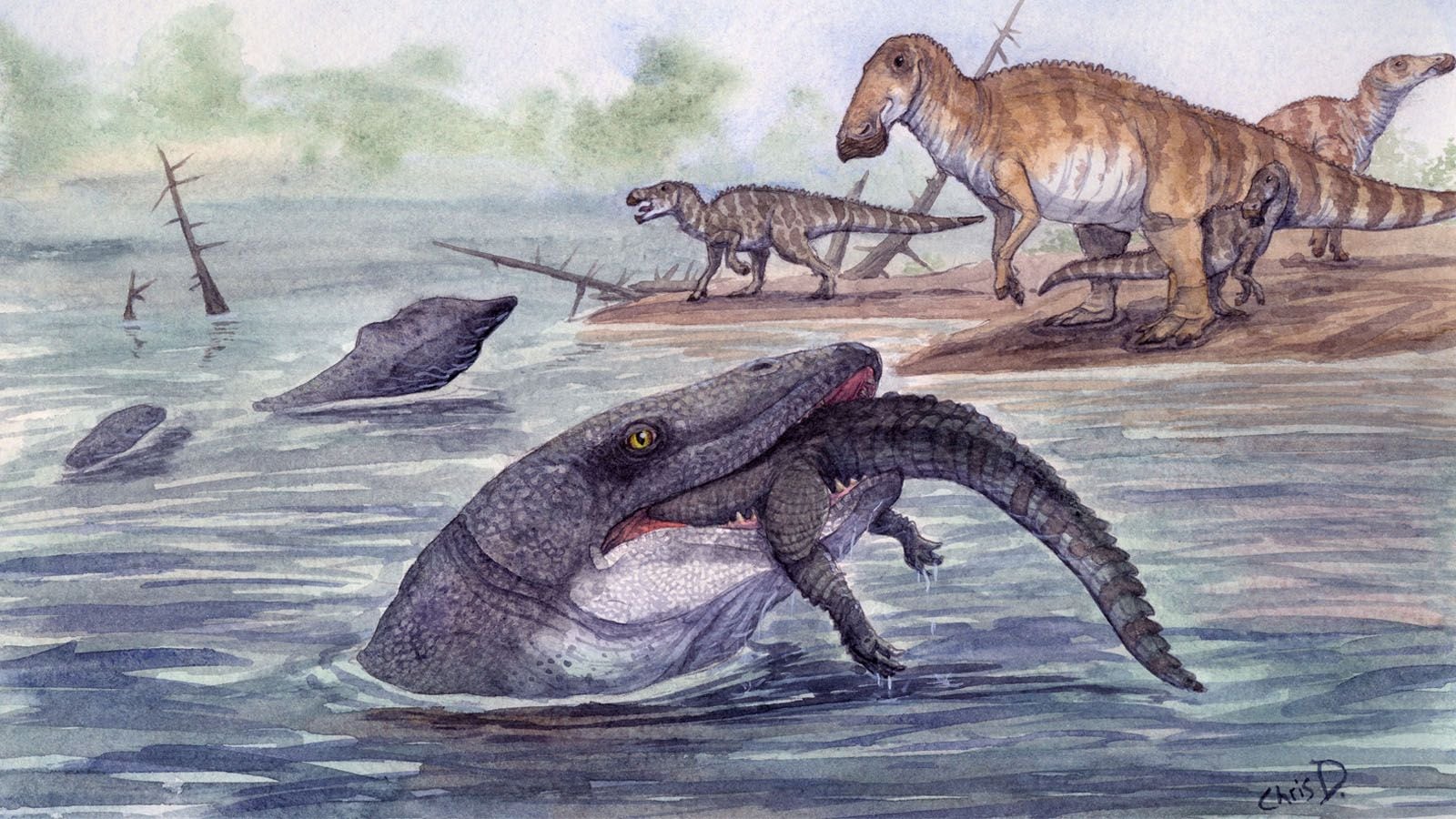
Scientists found a tooth from a mosasaur, a big sea reptile, in a place called Hell Creek in North Dakota.
This is surprising because mosasaurs were thought to live only in salty oceans.
The tooth was found far from the ocean, about 2,000 kilometers away.
Scientists think that a long time ago, the sea that mosasaurs lived in got cut off from the ocean.
Over time, the water became fresh, like rivers.
This means mosasaurs adapted to living in freshwater and even ate dinosaurs.
The study about this discovery was published in a science journal called BMC Zoology.

Scientists discovered a mosasaur tooth in Hell Creek, North Dakota, far from any ocean.
The mosasaur belonged to the Prognathodontini subfamily, known for its marine habitat.
The region was once part of the Western Interior Seaway, which became freshwater due to geological changes.
Mosasaurs adapted to living in freshwater environments and preyed on dinosaurs.
The study was published in the journal BMC Zoology, highlighting the adaptability of mosasaurs.
- Who
- Scientists led by Dr. Clint Boyd and Dr. Melanie During
- What
- Discovery of a mosasaur tooth in a freshwater environment, indicating adaptation to rivers and predation on dinosaurs
- When
- The discovery was made in 2022, with the study published in BMC Zoology
- Where
- Hell Creek, North Dakota, approximately 2,000 kilometers from the ocean
- Why
- The Western Interior Seaway was blocked, turning the region into a network of rivers, leading to the adaptation of mosasaurs to freshwater environments
- Discovery Location
- Hell Creek, North Dakota
- Discovery Year
- 2022
- Mosasaur Subfamily
- Prognathodontini
- Distance from Ocean
- 2,000 kilometers
- Study Published In
- BMC Zoology
- Key Scientist
- Dr. Clint Boyd
- Marine Reptile Expert
- Dr. Nathan Van Vranken
- Paleontologist
- Dr. Melanie During