

Archive · 8 Nov 2025
FIDE Implements Strict Anti-Cheating Measures at Chess World Cup
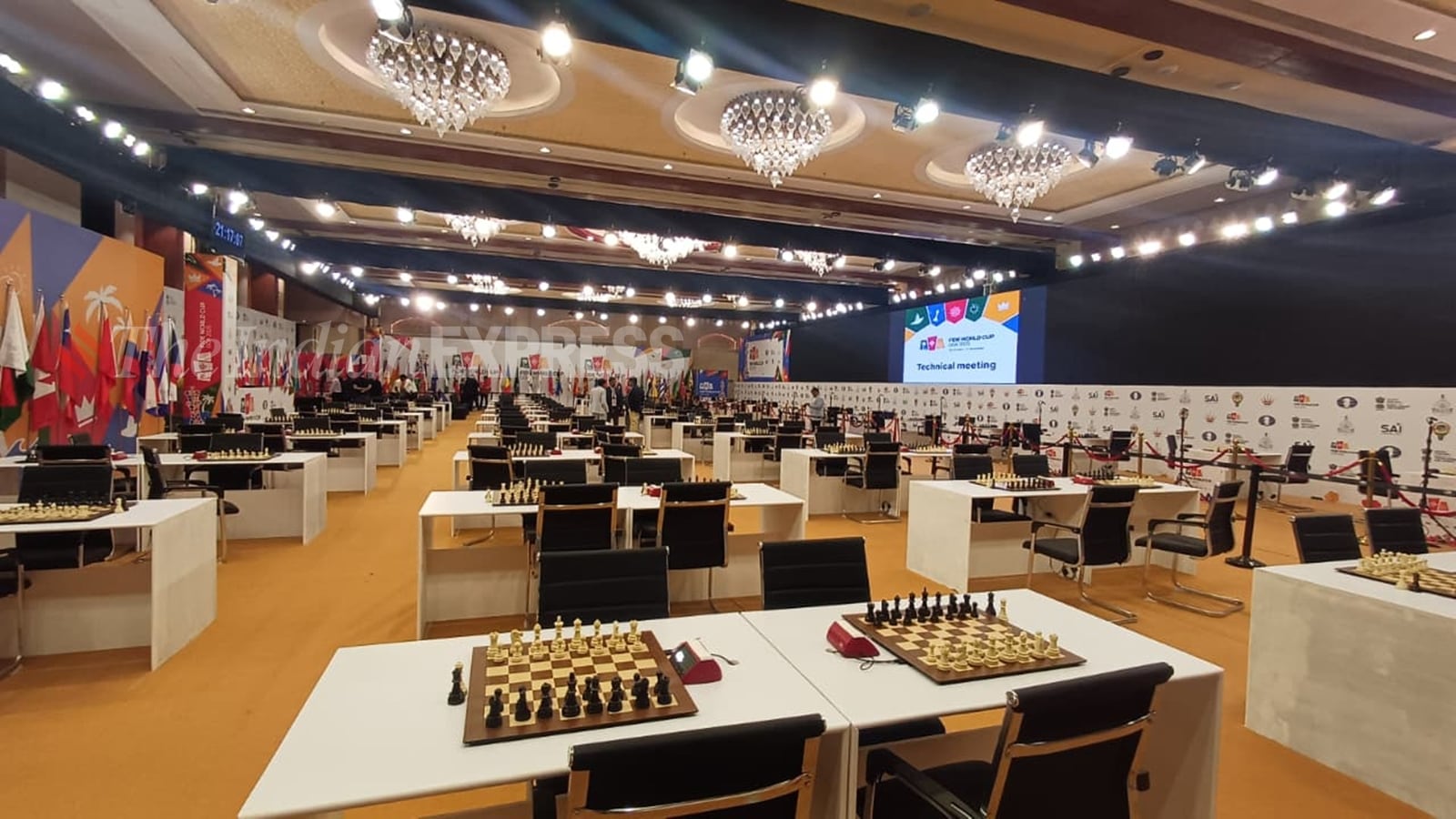
Chess tournaments, like the big World Cup, need to make sure no one cheats.
To do this, special helpers called fairplay officers check everything.
They use cool tools like metal detectors and body scanners, kind of like at an airport.
There's also a smart computer program that looks at how players move their pieces.
If a player suddenly starts playing much differently than usual, the program flags them.
Even after games, players might get checked randomly.
Also, the audience can only watch at certain times and can't come and go as they please.
This helps keep the games fair for everyone playing.

FIDE employs a team of nine fairplay officers at the Chess World Cup in Goa.
Anti-cheating measures include specialized software that analyzes player performance ratings and compares them to ELO ratings.
Visible and invisible security devices like thermal scanners and metal detectors are used.
Players undergo screenings upon entry, and electronic devices are banned after the initial 10 minutes of play.
Spectator access is restricted to specific time slots with no re-entry to maintain focus and security.
- Who
- FIDE, fairplay officers, and organizers
- What
- Implementing comprehensive anti-cheating measures
- When
- During the FIDE World Cup
- Where
- Resort Rio, Goa
- Why
- To ensure fair play and integrity of the game, addressing concerns raised by past incidents and online cheating crusades.
- Event
- FIDE World Cup
- Location
- Resort Rio, Goa
- Fairplay Team Size
- Nine officers
- Cheating Detection Software
- Professor Ken Reagan's program using Intrinsic Performance Rating (IPR)
- Security Measures
- Metal detectors, thermal scanners, signal detection equipment, broadcast delay, electronic device ban
- Spectator Access
- Limited time slots, no re-entry