

Archive · 20 Nov 2025
Breakthrough: Single Artificial Neuron Mimics Multiple Brain Areas
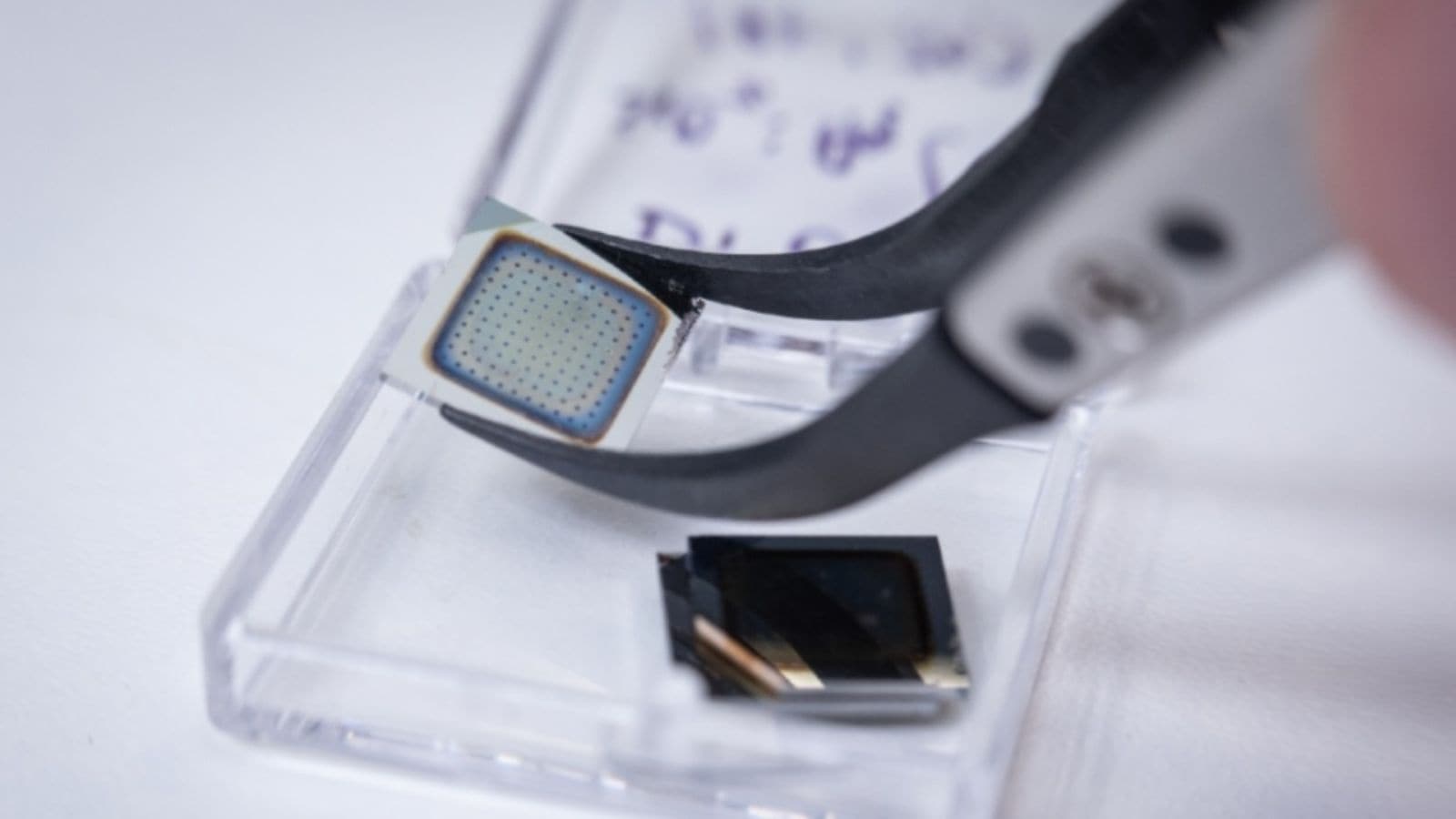
Scientists made a special computer chip that can act like different parts of the brain.
It can switch between jobs like moving, planning, and seeing.
This is a big step towards making robots more like humans and computers that use less energy.

Scientists create a 'transneuron' that can replicate activity from various brain areas
The device alternates between functions related to movement, planning, and vision
It uses electrical pulses to process information, mimicking biological computation
The transneuron can switch between roles by changing its electrical parameters
Research paves the way for more human-like robots and energy-efficient computers
- Who
- Scientists from the Salk Institute, USC, and Loughborough University
- What
- Created a 'transneuron' that mimics multiple brain areas
- When
- Not specified
- Where
- Labs at the Salk Institute, USC, and Loughborough University
- Why
- To advance the field of artificial intelligence and create more human-like robots
Proponents of the Transneuron
Skeptics
Versatility
Proponents of the Transneuron
The transneuron's ability to mimic multiple brain areas is a significant advancement.
Skeptics
More research is needed to ensure the device's reliability and consistency.
Energy Efficiency
Proponents of the Transneuron
The transneuron's use of electrical pulses could lead to faster, energy-efficient computers.
Skeptics
The long-term energy efficiency of the device remains to be seen.
- Device Name
- Transneuron
- Brain Areas Mimicked
- Pre-motor, motor, and visual
- Processing Method
- Electrical pulses
- Accuracy of Replication
- Up to 100%
- Potential Applications
- More human-like robots, artificial sensory systems, faster computers