Archive · 24 Sep 2026
Trump Welcomes Xi as Trade Truce Extends Through January
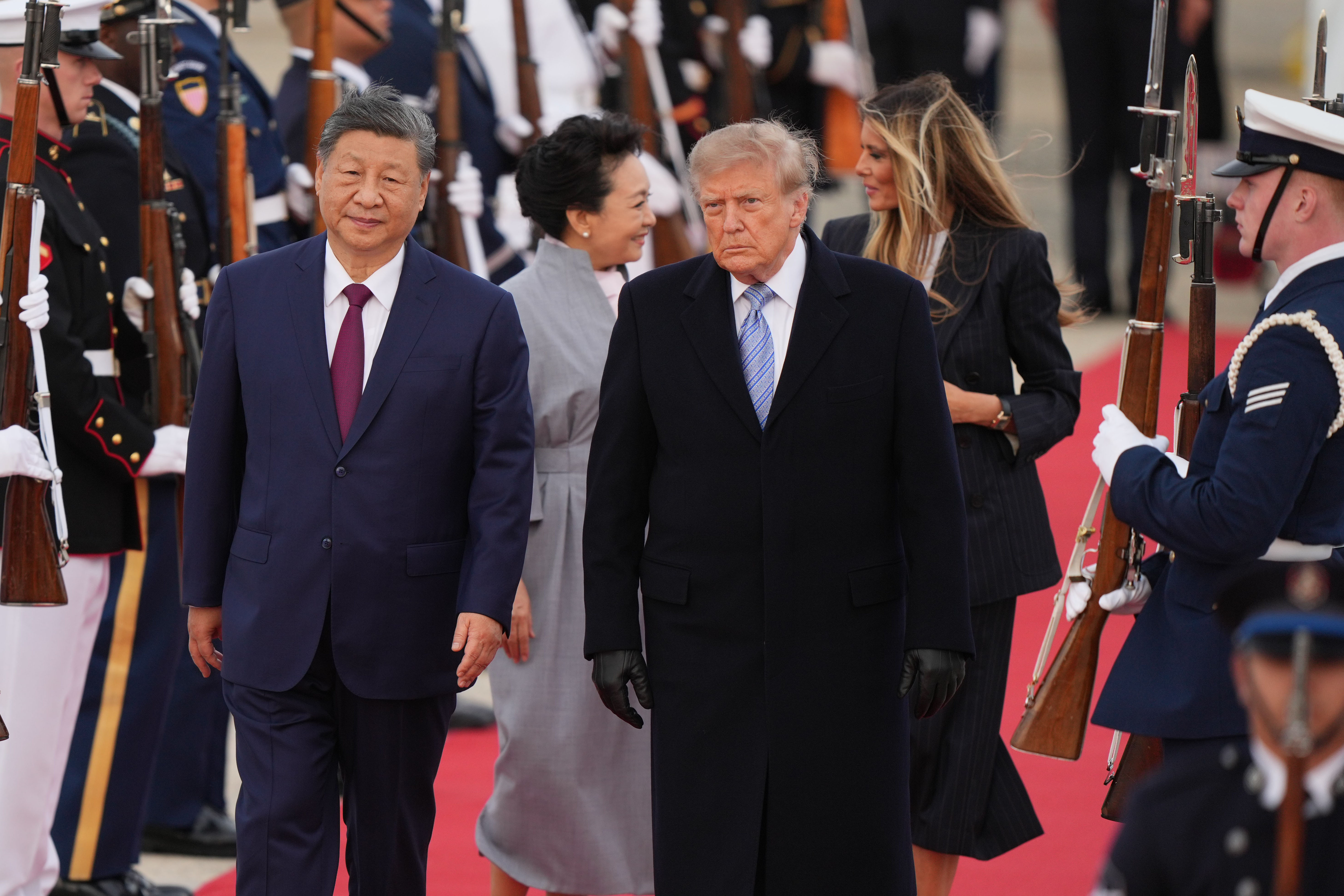
Chinese President Xi Jinping visited the United States for three days.
President Donald Trump personally greeted him at a military airport near Washington.
This was unusual because visiting leaders are usually welcomed at the White House.
The ceremony included a long red carpet, soldiers, flags, music, and two large military planes flying overhead.
The United States and China also agreed to keep their trade arrangement until January 10.
The arrangement pauses some tariffs and restrictions, while China continues supplying rare-earth materials used by American manufacturers.
Trump and Xi planned to discuss trade, technology, artificial intelligence, Iran, and Taiwan.
Some American lawmakers and former diplomats said the welcome was too generous to China.
Other officials said the two countries need to keep talking because they are powerful economies and militaries.

Chinese President Xi Jinping began a three-day U.S. state visit with a rare planeside welcome from President Donald Trump at Joint Base Andrews.
The ceremony featured a 100-foot red carpet, a 21-person honor guard, military units, national anthems, and two B-1 bomber flyovers.
The United States and China extended their trade arrangement through January 10, maintaining certain tariff suspensions and restrictions while China continues rare-earth supplies.
Trump and Xi are scheduled for White House ceremonies, troop reviews, bilateral meetings, a state dinner, and a National Archives visit.
Critics said the lavish welcome benefited Beijing, while U.S. officials defended high-level engagement despite disputes over trade, technology, Iran, and Taiwan.
- Who
- Chinese President Xi Jinping, U.S. President Donald Trump, first lady Melania Trump, Chinese first lady Peng Liyuan, and officials from both countries.
- What
- Xi began a three-day state visit, and the United States and China extended their trade arrangement through January 10.
- When
- Xi arrived on Wednesday; the visit was scheduled to continue through Friday, with formal White House events and talks on Thursday.
- Where
- The visit began at Joint Base Andrews near Washington and was scheduled to continue at the White House and National Archives.
- Why
- The leaders are seeking to maintain dialogue and strategic stability while addressing trade, technology, artificial intelligence, security, Iran, and Taiwan.
Critics of the Welcome
Supporters of Engagement
Ceremonial treatment
Critics of the Welcome
Senator Roger Wicker and former diplomat Danny Russel criticized the lavish airport reception, saying it gave Beijing a propaganda advantage and showed excessive deference to Xi.
Supporters of Engagement
Trump called the ceremony a great greeting, while Melania Trump said Xi and Peng should be welcomed with the greatest respect because they were visiting the United States.
Dealing with China
Critics of the Welcome
Critics said Trump should press Xi over China’s military buildup, support for Iran, treatment of neighbors, and other security concerns.
Supporters of Engagement
Secretary of State Marco Rubio said the United States and China must interact at the highest levels because they are among the world’s largest economies and most powerful militaries.
Expected results
Critics of the Welcome
Reports said expectations were low for major breakthroughs, and that difficult questions involving advanced technology and geopolitical influence remained unresolved.
Supporters of Engagement
The trade extension preserves negotiations and gives the leaders more time to discuss economic and security disputes.
- Visit duration
- Three days, scheduled through Friday
- Trade arrangement
- Extended through January 10
- Trade measures
- The United States suspends certain tariffs and restrictions while China maintains supplies of rare-earth minerals, according to the cited reports
- Arrival location
- Joint Base Andrews, Maryland
- Ceremony
- A 100-foot red carpet, 21-person honor guard, military units, national anthems, and two B-1 bomber flyovers
- Scheduled events
- White House welcome ceremony, troop reviews, bilateral meetings, state dinner, private tea, and a National Archives tour
- Main issues
- Trade, artificial intelligence, investment, economic competition, military matters, Iran, and Taiwan