

Archive · 3 Sep 2025
JWST Detects Ancient Black Hole Potentially Formed After Big Bang
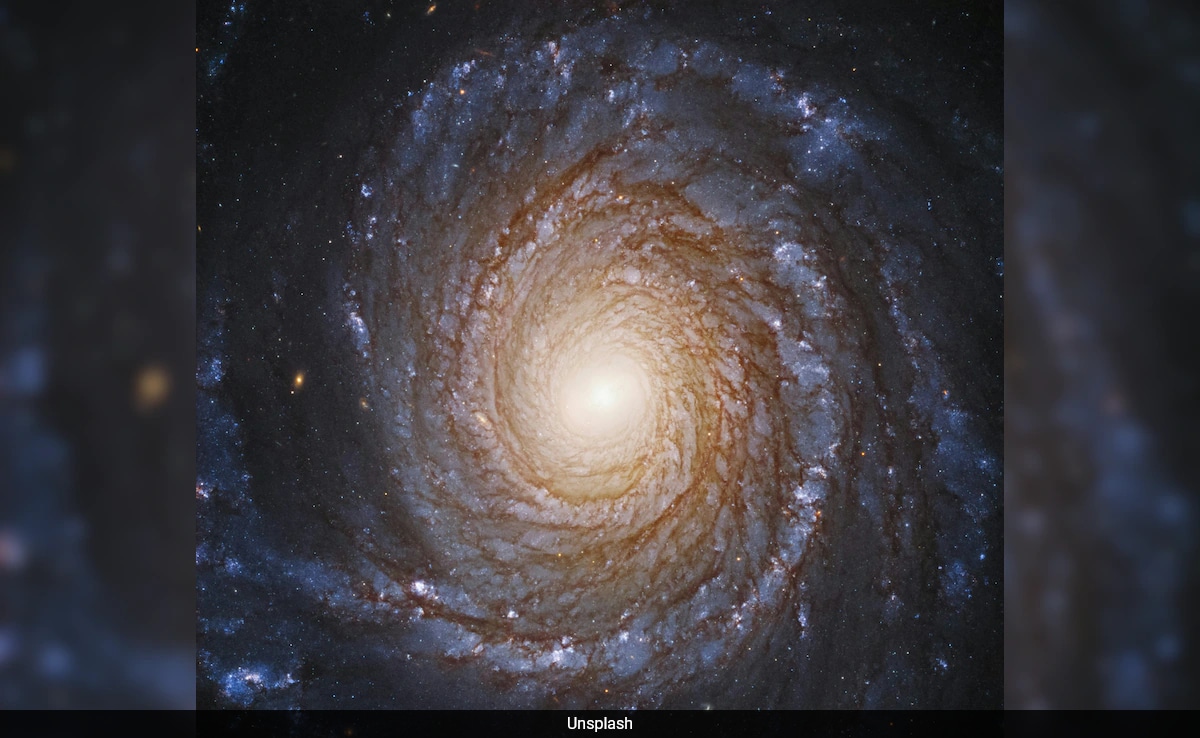
Imagine a super-old black hole that might have formed right after the Big Bang!
Scientists found it using a powerful telescope.
This black hole, called QSO1, is really big, about 50 million times bigger than our sun.
It's surrounded by a cloud of gas, mostly made of the simplest stuff like hydrogen and helium.
This is a surprise because usually, black holes grow after stars form.
The black hole seems to have formed before any galaxy grew around it.
Scientists think it could have formed in two ways: either from a big cloud collapsing directly, or as a primordial black hole.
Either way, this changes what scientists think about how the first black holes formed.

Astronomers detected an ancient black hole, QSO1, using the JWST.
QSO1 is potentially a primordial black hole, dating back to the early universe.
The black hole has a mass of 50 million times that of the Sun.
The surrounding material is less massive and contains mostly hydrogen and helium.
Scientists are puzzled by how such a massive black hole could have formed so early.
- Who
- Astronomers using the James Webb Space Telescope (JWST)
- What
- Have identified an ancient, massive black hole, possibly primordial
- When
- Observed during a time when the universe was roughly 700 million years old.
- Where
- Not specified.
- Why
- To investigate the formation of early black holes and their relationship to the first galaxies.
- Object of Study
- QSO1 (small, red object)
- Estimated Age
- More than 13 billion years old
- Time of Origin
- When the universe was about 700 million years old
- Black Hole Mass
- 50 million times the mass of the Sun
- Surrounding Material
- Less than half the black hole's mass
- Notable Observation
- Gas around black hole is mostly hydrogen and helium