

Archive · 13 Nov 2025
Growing Swadeshi Preference Fuels Atmanirbhar Bharat Goals Amid Export Pressures
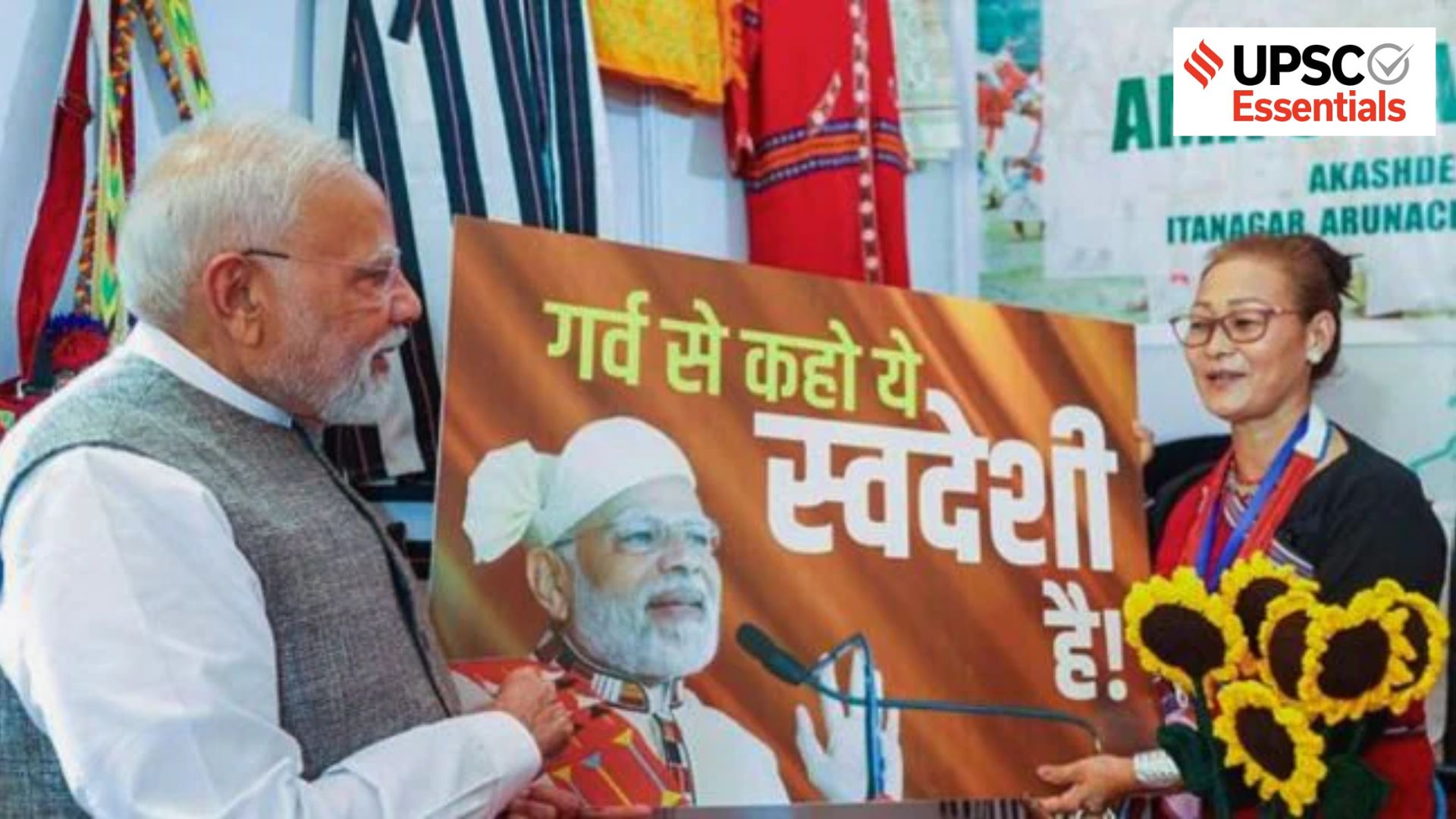
Imagine India wants to make more things itself, which is called 'Atmanirbhar Bharat.'
People are starting to really like buying things made in India, called 'swadeshi,' especially now that it's harder to sell Indian products to other countries.
The Prime Minister even noticed that during a recent festival, everyone bought more Indian-made items.
This is good because it helps India's own businesses and ideas grow, like a new map app made in India.
A long time ago, when Britain ruled India, Britain took a lot of India's resources to build its own factories, which hurt India's small businesses.
Today, India wants to avoid that by making sure its own industries are strong.
The government's 'Make in India' program started to help this, but it's still a work in progress.
The challenge is to help medium-sized businesses grow, as many are either very small or very big, but not much in between.
Learning from the past helps India build a stronger future for its own products.

The preference for Indian-made 'Swadeshi' goods and indigenous innovations is growing, fueled by pressure on Indian exports.
Prime Minister Modi noted a surge in demand for local products during the last festive season.
Sales of Indian goods during the last Diwali season were the highest recorded, with 87% of customers favoring them over foreign imports.
Despite the 'Make in India' movement since 2014, the manufacturing sector's share in India's GVA has seen minimal growth.
Historical context of the Industrial Revolution and colonial 'drain of wealth' highlights the long-term impact on India's handicrafts and rural economy.
- Who
- Prime Minister Narendra Modi, Confederation of All India Traders (CAIT), economic historians, scholars like Dadabhai Naoroji, R.C. Dutt, Prabhat Patnaik, Utsa Patnaik, Amiya Kumar Bagchi, Friedrich List, Tirthankar Roy.
- What
- A renewed momentum for the Atmanirbhar Bharat and Swadeshi vision, driven by a preference for Indian-made goods and indigenous innovations, amidst pressures on Indian exports.
- When
- The current period, with specific reference to the last Diwali festive season and the period from 2013-14 to 2023-24 for manufacturing GVA share.
- Where
- India, with historical context of Great Britain and its colonies.
- Why
- Mounting pressure on Indian exports to the US due to high tariffs and intensifying global competition, coupled with a historical understanding of how colonial policies impacted India's industrial development and the 'drain of wealth' to Britain.
- Swadeshi Vision
- Gaining momentum due to pressure on Indian exports to the US and global competition.
- PM Modi's Statement
- Demand for local products surged during the last festive season.
- CAIT Sales Data
- Diwali season recorded highest ever sales of 6.05 trillion, with 87% customers preferring Indian goods.
- Make in India Launch
- 2014, aimed to attract national and international companies.
- Manufacturing GVA Share
- Stagnant between 2013-14 (17.2%) and 2023-24 (17.5%).
- Industrial Revolution Period
- Approx. 1750-1914.
- British East India Company
- Facilitated 'drain of wealth' from India to Britain, aiding Britain's industrialization.
- Decline of Indian Handicrafts
- Caused by colonial policies and influx of cheap British manufactured goods.