Archive · 13 Sep 2026
Amit Shah Calls for Indian Perspective on Historical Truth
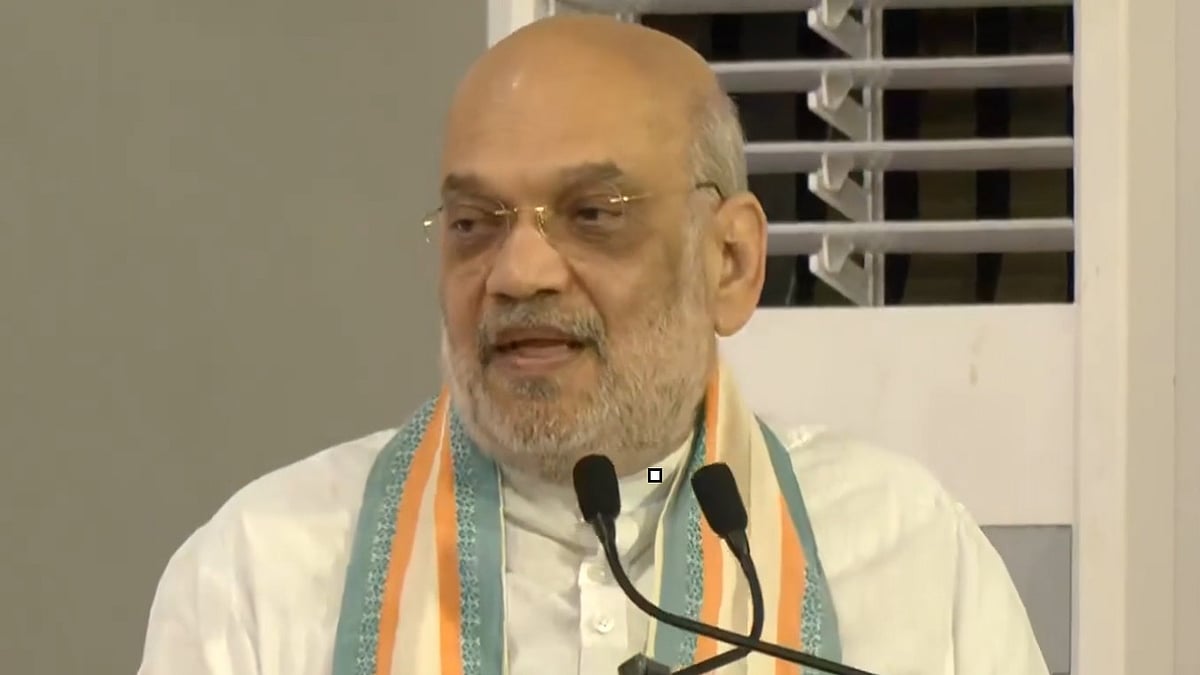
Amit Shah spoke about how India should present its history.
He said decolonisation does not mean deleting or forgetting the past.
Instead, he wants history to be shown completely and truthfully from an Indian point of view.
He also said India’s knowledge, languages, traditions and old documents should be protected.
Some of these documents are kept at the Asiatic Society of Mumbai.
Shah mentioned rare materials about the Mahabharata, Jainism and Buddhism.
He wants libraries and institutions across India to share their collections.
He also called for ancestral documents in villages and homes to be identified and studied.
Shah said this knowledge should be made available to students, researchers and scholars in India and around the world.

Amit Shah said decolonisation means presenting complete historical truth authentically from an Indian perspective, not erasing the past.
He urged the preservation and global sharing of Indian knowledge, traditions, languages, manuscripts and archives.
Shah said British rule intertwined knowledge with political power and called for separating knowledge from that framework.
He highlighted the Asiatic Society of Mumbai’s illustrated Mahabharata, Jain Kalpasutra and Buddhist texts.
Shah proposed digitising collections and connecting libraries, institutions and ancestral documents through a common platform and the Gyan Bharatam mission.
- Who
- Union Home Minister Amit Shah, addressing the Asiatic Society of Mumbai and its newly elected committee.
- What
- Shah said decolonisation means presenting complete historical truth authentically from an Indian perspective while preserving and sharing Indian knowledge.
- When
- Sunday, September 13, 2026.
- Where
- The Asiatic Society of Mumbai in Mumbai, Maharashtra, India.
- Why
- To preserve Indian memory, history, traditions, languages, manuscripts and archives, and make their knowledge available for research and public use.
Critics’ Concern
Shah’s Position
Does decolonisation erase history?
Critics’ Concern
Some scholars and public debate have raised concerns that historical changes could amount to erasing history.
Shah’s Position
Shah rejected that interpretation, saying decolonisation means presenting history completely and authentically from an Indian perspective.
How should Indian knowledge be interpreted?
Critics’ Concern
The accounts describe a longstanding colonial perspective that interpreted Indian knowledge and contributed to an inferiority complex.
Shah’s Position
Shah said knowledge should be freed from colonial frameworks and studied in India’s own voice for the welfare of the country and the world.
- Speaker
- Amit Shah, Union Home Minister
- Event
- Inauguration of the Ganesh Gyanarthi manuscript exhibition
- Venue
- Asiatic Society of Mumbai
- Shah’s definition
- Decolonisation means presenting historical truth completely and authentically from an Indian perspective, rather than erasing history.
- Collections mentioned
- Illustrated copies of the Mahabharata, Jain Kalpasutra texts and Buddhist texts
- Proposed measures
- Digitise collections, connect libraries and institutions, and create a shared repository of heritage knowledge.
- Manuscript initiative
- Connect ancestral documents from villages and homes in Maharashtra with the Gyan Bharatam National Manuscript Mission.