

Archive · 8 Sep 2026
Republicans Make Muslims a Major 2026 Midterm Campaign Issue
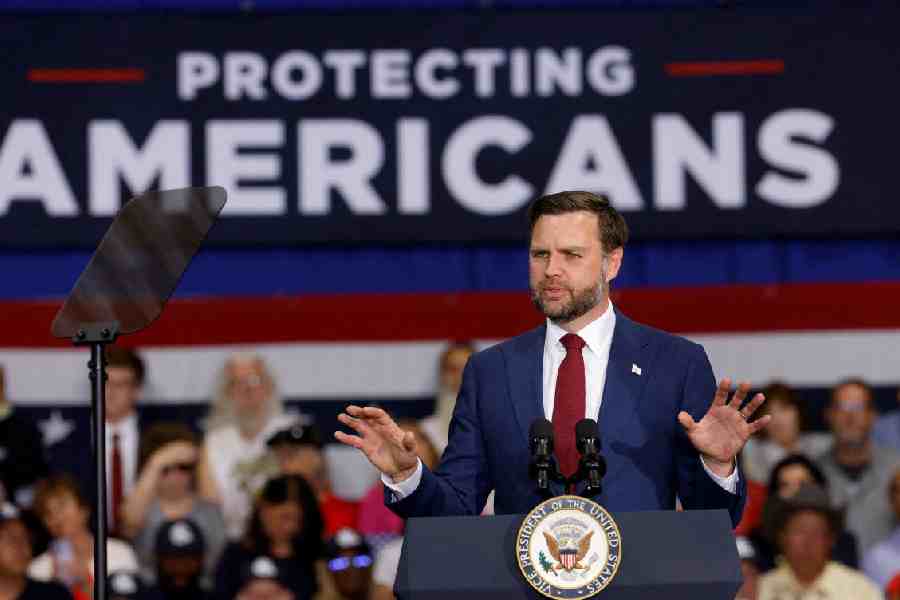
Some Republican politicians are talking about Islam and Muslim candidates more often as the 2026 elections approach.
One Republican leader called Abdul El-Sayed, a Muslim candidate in Michigan, “very, very evil.”
Other Republicans in Texas and Alabama have raised concerns about Muslim-led projects, Islamic facilities and what they call radical Islam.
Critics say these comments unfairly treat many Muslims as a threat.
Republicans say they are discussing security and the role of religion in government.
El-Sayed apologized after some of his comments about an attack were misunderstood.
Muslims make up about 1.6% of the U.S. population, but their political influence has been growing.
Some experts believe Republicans are emphasizing this issue while voters are worried about prices, war and tariffs.
The debate also includes criticism of anti-Muslim comments made by politicians from both major parties.

Republican candidates and officials have increasingly made Islam and Muslim political figures part of the 2026 midterm debate.
Vice President JD Vance called Michigan Senate candidate Abdul El-Sayed “very, very evil” over remarks made after a synagogue attack.
Texas Governor Greg Abbott sought investigations into a Muslim-led development and airport washing facilities, while disputing claims that he was targeting Muslims’ faith.
Alabama Senate candidate Tommy Tuberville warned of an “enemy inside the gates” and criticized El-Sayed’s comments about America and Egypt.
Critics call the rhetoric Islamophobic and politically distracting, while Republicans say they are addressing security, extremism and religion in public life.
- Who
- Republican officials and candidates, including JD Vance, Greg Abbott and Tommy Tuberville, have criticized Muslims, Islam or Muslim political figures; Abdul El-Sayed is a central target.
- What
- Muslims and Islam have become a prominent issue in Republican messaging ahead of the 2026 U.S. midterm elections.
- When
- The developments were reported ahead of the November 3, 2026, midterm elections, with several incidents occurring over the preceding year.
- Where
- The issue has appeared in Michigan, Texas, Alabama, Florida, New York and Virginia, as well as in national political debate.
- Why
- Republicans say they are raising concerns about security, extremism and religion in public life, while critics say the rhetoric unfairly targets Muslims and distracts from economic and foreign-policy concerns.
Critics and civil-rights voices
Republican officials and supporters
Whether the rhetoric unfairly targets Muslims
Critics and civil-rights voices
Critics and scholars say the comments generalize about Muslims, conflate Islam with terrorism or foreign conflicts, and amount to fear-mongering.
Republican officials and supporters
Republicans say they are addressing legitimate concerns about security, extremism and the role of religion in public life, rather than targeting religious beliefs.
Motivation for emphasizing Islam
Critics and civil-rights voices
Some experts argue Republicans are using criticism of Muslims to avoid addressing voters’ concerns about the cost of living, war, immigration and tariffs.
Republican officials and supporters
Republican campaigns frame their actions as responses to alleged illegal conduct, security concerns and possible attempts to establish sharia courts or preferential religious access.
Whether anti-Muslim rhetoric crosses party lines
Critics and civil-rights voices
Democratic and Muslim advocates highlight Republican examples but acknowledge that some Democratic leaders have also made anti-Muslim remarks.
Republican officials and supporters
Ashik Siddique said it would be wrong to attribute Islamophobia to only one party, while Republican criticism has focused on statements and associations involving Democratic candidates.
- U.S. Muslim population
- About 5.5 million people, or approximately 1.6% of the U.S. population.
- Population growth
- The Muslim population increased from about 2.4 million in 2007 to about 5.5 million.
- Central candidate
- Abdul El-Sayed, a Muslim Democrat running for the U.S. Senate in Michigan.
- Election
- The November 3, 2026, midterm elections will determine control of Congress.
- Texas actions
- Greg Abbott sought investigations involving a Muslim-led development and two Texas airports’ Islamic washing facilities.
- Alabama remarks
- Tommy Tuberville warned that “the enemy is inside the gates,” referring to what he called radical Islam.
- Congressional activity
- Keith Self and Chip Roy organized a “Sharia Free America Caucus,” while Randy Fine proposed legislation addressing sharia law.
