

Archive · 29 Jul 2026
Social Media Redefines Nature of Protest Movements
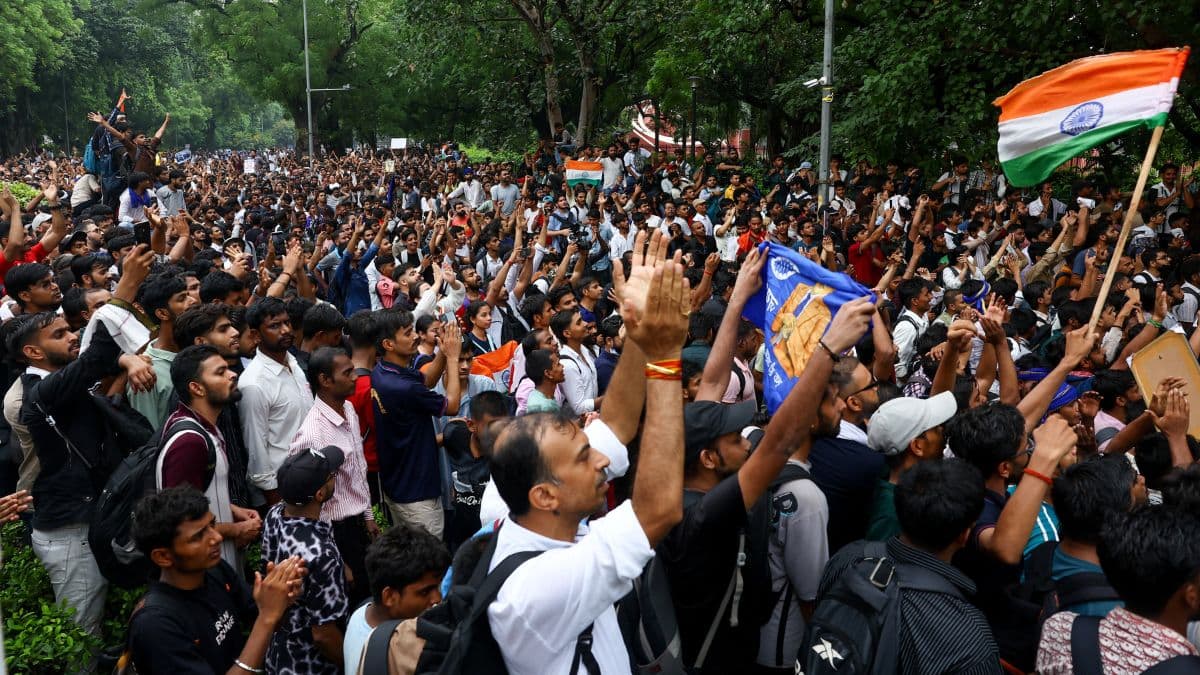
Social media has changed how protests happen.
Before, protests needed lots of planning and time.
Now, they can start quickly online and grow fast.
People use social media to share news, make jokes, and show support.
This can lead to big changes, like in the Arab Spring.
But governments can also use social media to stop protests.
Some people worry about the bad effects of social media, like fake news.
Overall, social media makes protests easier to start but also harder to control.

Social media has redefined protest movements, making them faster and more influential.
The Cockroach Janta Party (CJP) gained millions of followers quickly through social media.
Protesters use real-time documentation, humour, and satire as weapons in their movements.
Governments respond to social media-driven protests by removing content, blocking accounts, and taking legal action.
Social media can have far-reaching political impacts, as seen in the Arab Spring and Myanmar.
- Who
- Protesters, governments, and social media platforms.
- What
- The redefinition of protest movements through social media.
- When
- Ongoing, with notable events in recent years such as the Arab Spring and the Cockroach Janta Party movement.
- Where
- Globally, with specific examples in India, Egypt, Tunisia, and Myanmar.
- Why
- Social media has changed the nature of protest movements, making them more rapid and influential, while governments respond with various measures to control them.
Protest Movements
Government Response
Effectiveness of Protests
Protest Movements
Protest movements leverage social media to quickly gain momentum and influence public opinion, making them more effective in challenging the status quo.
Government Response
Governments can counter these movements by removing content, blocking accounts, and taking legal action against individuals posting 'inflammatory' content.
Impact on Society
Protest Movements
Social media-driven protests can lead to significant political and social changes, as seen in the Arab Spring.
Government Response
Government actions to control these protests can lead to internet shutdowns, spreading disinformation, and economic losses.
- Cockroach Janta Party (CJP)
- A protest movement that started online and gained significant followers on social media.
- Gene Sharp
- Author of 'The Politics of Nonviolent Action', describing the preparation stage of mass movements.
- Zeynep Tufekci
- Author of 'Twitter and Tear Gas: The Power and Fragility of Networked Protest', discussing the capacities of protest movements.
- Arab Spring
- A series of anti-government protests and uprisings in the Middle East and North Africa, influenced by social media.
- Myanmar
- A country where the military junta used social media to stifle pro-democracy opposition.
- Tony Fadell
- Known as the 'father of the iPod', who expressed concerns about the impact of social media.