

Archive · 7 Aug 2025
Why Agra? Taj Mahal's Location and Flood Protection Explained
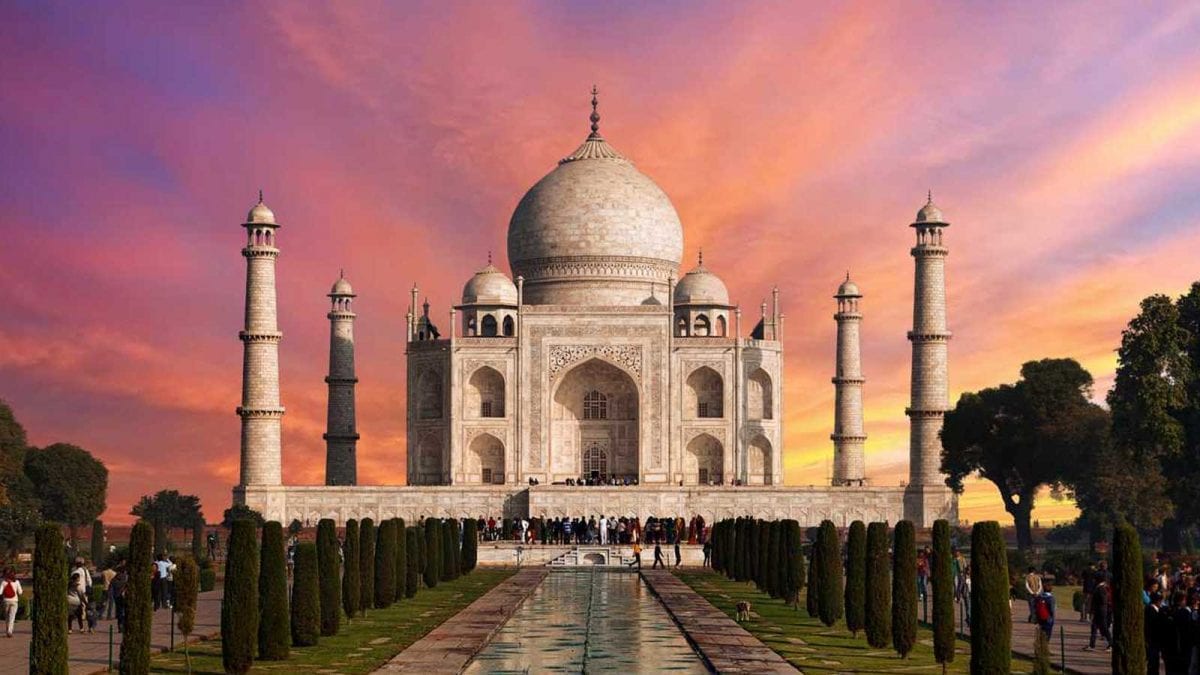
The Taj Mahal, a beautiful building in Agra, India, was built by Shah Jahan for his wife, Mumtaz Mahal.
Agra was chosen because it was the Mughal capital, making it easy to find workers and materials.
The Yamuna River flows nearby, but the Taj Mahal is safe from flooding because it's built on a high platform and the river bends in a way that doesn't directly hit the monument.
It took over 20,000 people about 22 years to complete.
Shah Jahan even planned to build another Taj Mahal, this one in black, but the idea never came to fruition.

Agra was chosen as the location because it was the Mughal capital at the time.
The Taj Mahal was built as a symbol of eternal love in memory of Mumtaz Mahal.
Construction began in 1632 AD and concluded around 1653, taking approximately 22 years.
The site was chosen for its natural setting, including a bend in the Yamuna River.
The Taj Mahal's high platform helps keep it above the usual water level.
- Who
- Shah Jahan and Mumtaz Mahal.
- What
- The selection of Agra and the structural aspects of the Taj Mahal.
- When
- Construction began in 1632 AD and completed around 1653.
- Where
- Agra, India.
- Why
- Shah Jahan chose Agra as it was the Mughal capital and constructed the Taj Mahal to honor his wife.
Shah Jahan's Plans
Aurangzeb's Perspective
Black Taj Mahal
Shah Jahan's Plans
Shah Jahan wanted to build a black marble Taj Mahal.
Aurangzeb's Perspective
The plan for a black Taj Mahal was never realized due to war and being overthrown by his sons.
- Location
- Agra, India
- Built for
- Mumtaz Mahal
- Started
- 1632 AD
- Completed
- 1653
- Workers
- Over 20,000
- Purpose
- A symbol of eternal love