

Archive · 5 Jun 2025
Goa Professor's Actions Sparked Coastal Development Rules
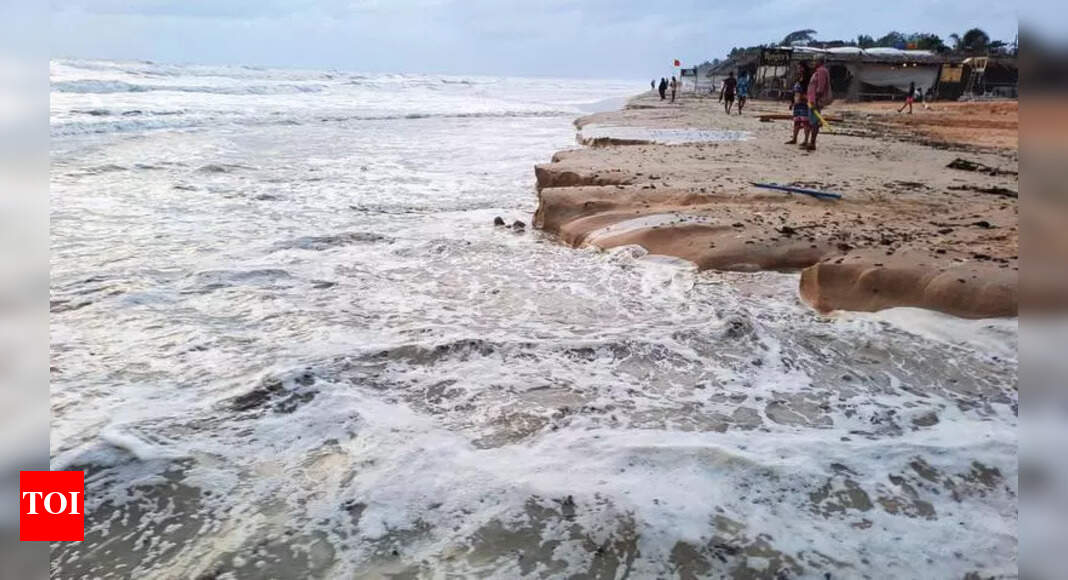
Imagine a professor named Sergio who noticed companies building too close to the beach.
He wrote a letter, starting a court case.
The court found the building was breaking the rules.
Though Sergio's case didn't fully win, it made the government create new rules called CRZ.
These rules protected the coast by setting a safe distance from the water where building wasn't allowed.
The new rules also made sure that groundwater couldn't be taken from the water's edge, to protect the environment.
Now, all along India's coast, these rules help protect the beaches and the ocean.

Professor Sergio Carvalho's actions led to the CRZ Notification of 1991.
Carvalho challenged a reduced no-development zone along the coast.
The Ramada resort's construction on Varca beach violated multiple regulations.
The court ordered dismantling structures within 200m of the high tide line and stopped groundwater extraction.
The CRZ notification created a uniform legal framework to manage and restrict coastal development.
- Who
- Sergio Carvalho, a professor in Goa
- What
- Sergio Carvalho's actions led to the creation of the Coastal Regulation Zone (CRZ) Notification.
- When
- 1987-1991
- Where
- India's coastline
- Why
- Carvalho was concerned about reduced coastal protection and development that violated regulations.
- Sergio Carvalho's Age
- 83
- Carvalho's Affiliation
- Nirmala Institute of Education, Panaji
- CRZ Notification Issued
- 1991
- No-development zone mandated by CRZ
- 200m
- Legal Basis of CRZ
- Environment Protection Act, 1986