Archive · 26 Jul 2026
UNESCO Adds D-Day Beaches, Mount Olympus to World Heritage List

UNESCO has added several new sites to its World Heritage List.
These include the D-Day landing beaches in northern France, Greece's Mount Olympus, the ancient Japanese capitals of Asuka and Fujiwara, and South Sudan's Boma-Badingilo Migratory Landscape.
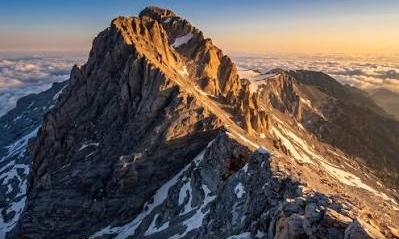
The D-Day beaches are significant for their role in World War II, while Mount Olympus is known for its mythical significance and rich biodiversity.
The Japanese sites show how Japan's ancient state was formed, and South Sudan's site is home to one of the world's largest land mammal migrations.
The additions were made during a U.N. committee meeting in Busan, South Korea.
Greece and Japan have expressed their commitment to protecting these sites, while South Sudan has its first World Heritage site.
The additions are expected to boost tourism but also raise concerns about environmental impact.

UNESCO added the D-Day landing beaches in northern France, Mount Olympus in Greece, the ancient Japanese capitals of Asuka and Fujiwara, and South Sudan's Boma-Badingilo Migratory Landscape to the World Heritage List.
The French inscription covers the five Normandy landing beaches and the Pointe du Hoc assault site, significant for their role in World War II.
Mount Olympus, regarded in Greek mythology as the home of the 12 Olympian gods, was recognized after a 12-year campaign by Greece as a mixed cultural and natural heritage site.
Japan's inscription includes 19 archaeological sites in Nara Prefecture linked to the 6th- to 8th-century capitals of Asuka and Fujiwara.
South Sudan's Boma-Badingilo Migratory Landscape, the country's first World Heritage Site, includes wetlands, flood plains, and savannas that support one of the world's largest land mammal migrations.
- Who
- UNESCO committee, Greece, Japan, South Sudan
- What
- Addition of D-Day Beaches, Mount Olympus, Asuka and Fujiwara, and Boma-Badingilo Migratory Landscape to the World Heritage List
- When
- Sunday, at a U.N. committee meeting in South Korea
- Where
- Busan, South Korea
- Why
- To recognize and protect significant cultural and natural heritage sites.
Tourism Benefits
Environmental Concerns
Tourism Impact
Tourism Benefits
Increased tourism can boost local economies and cultural exchange.
Environmental Concerns
Increased tourism may lead to environmental degradation and overcrowding.
- Mount Olympus
- Mythical home of the 12 Olympian gods, tallest mountain in Greece, 2,918 meters high.
- Asuka and Fujiwara
- Ancient Japanese capitals from the 6th to 8th centuries, 19 archaeological sites.
- Boma-Badingilo Migratory Landscape
- South Sudan's first World Heritage site, hosts one of the world's largest land mammal migrations.
- UNESCO Committee Meeting
- Held in Busan, South Korea, reviewing dozens of nominations.
- Greece's Effort
- 12-year effort to secure recognition for Mount Olympus as a mixed cultural and natural heritage site.
- Japanese Culture Minister
- Kobayashi Shigeki thanked the committee for inscribing the Asuka-Fujiwara sites.
- Japanese Prime Minister
- Sanae Takaichi hopes the World Heritage designation will boost tourism to the site.
- Yoshiyuki Aihara
- Nara University archaeology professor, continuing excavation work at the site.