Archive · 8 Oct 2026
DHS Proposes $70,000 Initial OPT Fee for Foreign Graduates

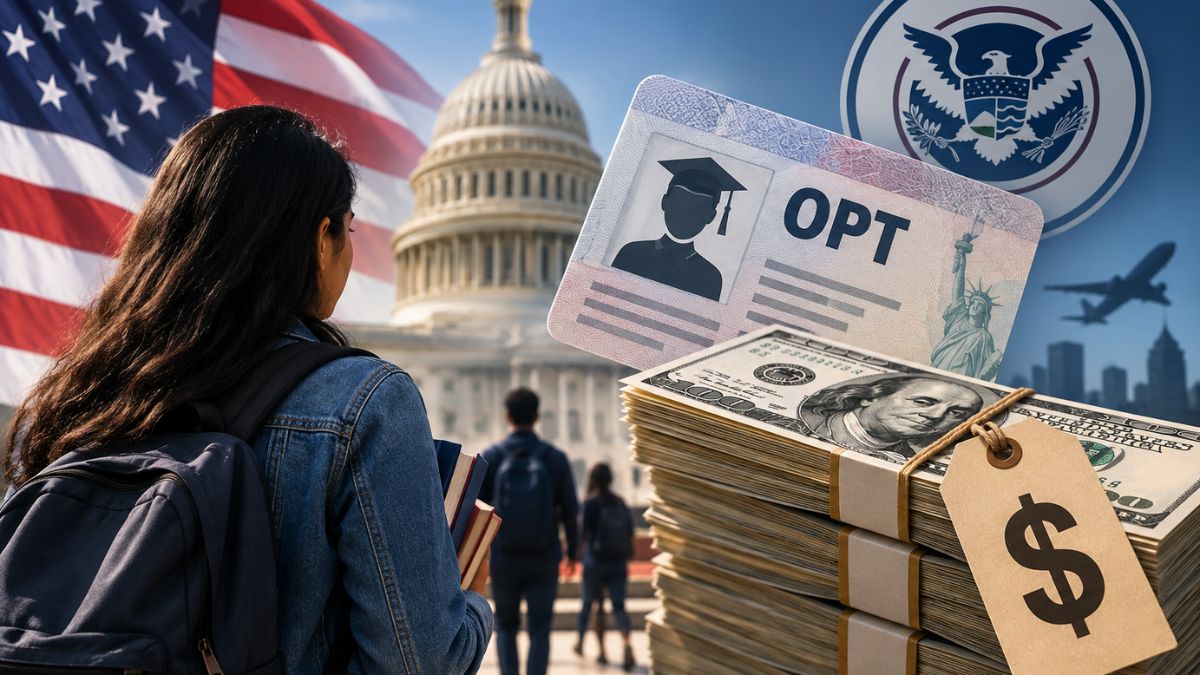
OPT is a program that lets some international students work in the United States in a job related to what they studied.
The Department of Homeland Security has proposed a large fee when a school recommends a student for OPT.
The school would pay $70,000 for the first recommendation and $30,000 for later ones, including an eligible STEM extension.
The proposal says schools may recover the money from students, employers, or other sources, but students would not pay DHS directly.
DHS says the fee could help schools check applications and reduce fraud.
It also says the change could protect American workers.
Critics worry that the cost could make students choose universities in other countries instead.
Indian students could be especially affected because they make up a large share of OPT participants.
The proposal is not yet a rule, and DHS is accepting comments before deciding what to do.

DHS proposed a $70,000 fee for a school's first OPT recommendation and $30,000 for each subsequent recommendation, including eligible STEM OPT extensions.
The SEVP-certified school must pay before recommending a student; the proposal says the school could recover the cost from students, employers, or other sources.
OPT allows eligible F-1 students to work in jobs related to their studies, generally for 12 months, with eligible STEM graduates able to apply for an additional 24 months.
DHS says the fees would discourage fraud and help protect US workers; critics cited in the articles warn the measure could deter international students and weaken US universities' appeal.
The proposal is not in effect; DHS is seeking public comments, and a final rule would take effect 60 days after publication.
- Who
- The US Department of Homeland Security proposed the fee; SEVP-certified schools would pay it for F-1 students recommended for OPT.
- What
- A proposed $70,000 first OPT recommendation fee and $30,000 for subsequent recommendations, including eligible STEM OPT extensions.
- When
- DHS announced the proposal on Wednesday, October 7; it is not in effect, and a final rule would take effect 60 days after publication.
- Where
- United States.
- Why
- DHS says the proposal aims to reduce fraud, encourage closer review of OPT recommendations, and protect American workers; critics warn it could deter international students and talent.
DHS's stated rationale
Concerns raised by critics
Fraud and worker protection
DHS's stated rationale
DHS says OPT has been vulnerable to fraud and that fees could encourage schools to scrutinise recommendations and protect American workers.
Concerns raised by critics
Critics argue that sharply raising the cost could deter legitimate international students and reduce the United States' ability to attract global talent.
Effect on schools and students
DHS's stated rationale
DHS says the proposal would limit OPT participation to students and training placements it considers appropriate.
Concerns raised by critics
Immigration experts cited in the article warn that lower international enrolment could reduce university revenue and make US schools less competitive with Canada, the UK, and Australia.
Who bears the cost
DHS's stated rationale
The fee would be paid to the government by the school, not directly by the student or employer.
Concerns raised by critics
The proposal says schools could recover the cost from students, employers, or other sources, leading the article to warn students could ultimately face the expense.
- Initial recommendation fee
- $70,000, paid by the SEVP-certified school under the proposal
- Subsequent recommendation fee
- $30,000, including for an eligible STEM OPT extension
- Maximum over standard STEM OPT period
- $100,000, according to the article
- OPT duration
- Generally up to 12 months per education level; eligible STEM graduates may receive an additional 24 months
- Indian OPT participation
- Nearly 98,000 Indian students participated in OPT in 2024–2025, according to the article
- DHS estimate of annual revenue
- $8.4 billion to $16.5 billion, with a primary estimate of $12.4 billion
- Status and timing
- Proposal only; DHS is seeking public comments, and a final rule would take effect 60 days after publication