

Archive · 17 Sep 2026
House Passes Graham-Backed Russia Sanctions Bill Targeting China, India
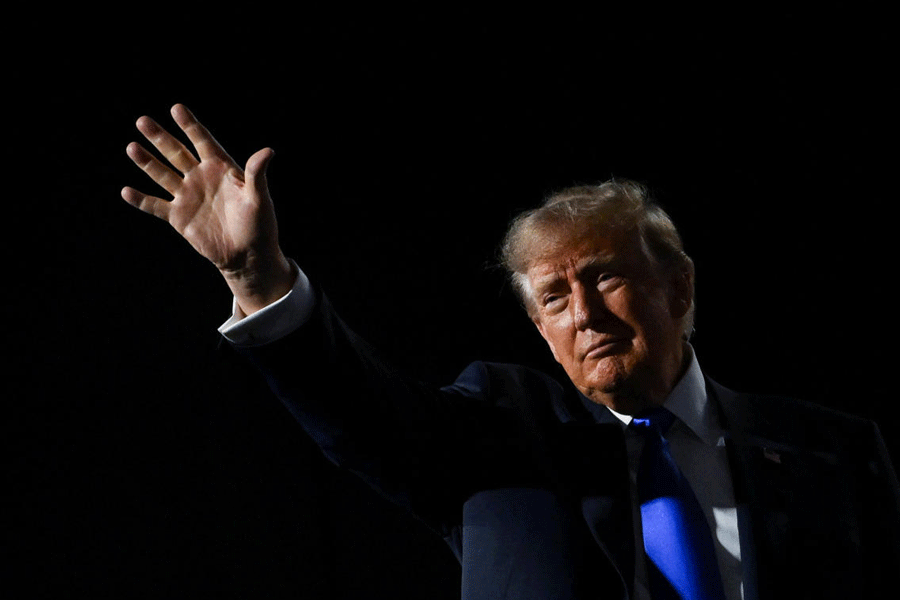
The U.S. House passed a bill designed to put more economic pressure on Russia.
The bill targets Russian energy and defense businesses and tankers accused of avoiding sanctions.
It also adds sanctions related to Iran.
President Donald Trump could impose tariffs on China, India, and other countries that depend on Russian oil and gas.
The Senate had already passed the bill by a vote of 86-11.
Trump is expected to sign it into law.
Supporters say the bill could reduce Russia’s money for its war against Ukraine.
Critics say it gives Trump too much power to impose tariffs and makes sanctions too easy to waive.
Some Republicans also worry that tariffs could raise prices and hurt them politically.

The House passed the Lindsey O. Graham Sanctioning Russia and Iran Act of 2026 by 262-159.
The bill targets Russia’s energy and defense industries and its sanctions-evading “shadow fleet” of tankers.
It authorizes President Donald Trump to impose tariffs on China, India, and other countries dependent on Russian oil and gas.
The Senate approved the measure 86-11 last month after Ukrainian President Volodymyr Zelenskiy urged lawmakers to support it.
Democrats and some Republicans criticized the bill’s broad tariff powers, waiver provisions, and potential consumer costs.
- Who
- The U.S. House of Representatives, President Donald Trump, supporters and opponents of the bill, and Ukrainian officials including President Volodymyr Zelenskiy.
- What
- The House passed the Lindsey O. Graham Sanctioning Russia and Iran Act of 2026, expanding sanctions on Russia and Iran and authorizing additional tariffs.
- When
- The House passed the bill on Wednesday, Sept. 16; the Senate passed it 86-11 the previous month.
- Where
- The vote took place in the U.S. House of Representatives in Washington, D.C.
- Why
- Supporters say the measure will increase pressure on Russia, limit revenue for its war effort, and demonstrate continued U.S. support for Ukraine.
Critics
Supporters
Presidential tariff authority
Critics
House Democrats said the bill gives Trump excessive new power to impose tariffs, potentially including tariffs against U.S. allies and the American people.
Supporters
Supporters said stronger economic tools are needed to pressure Russia and countries that help sustain its energy trade.
Sanctions and waivers
Critics
Democrats argued that the bill contains loopholes and allows Trump to avoid imposing sanctions by declaring that doing so is not in the national interest.
Supporters
Backers said the measure sends Russia and the wider world a strong message that the United States continues to support Ukraine.
Economic and foreign-policy costs
Critics
Some Republicans opposed sanctions as free-market intervention, while others feared tariffs could raise consumer prices and cause political backlash before the midterm elections.
Supporters
Supporters argued that limiting Russia’s energy revenue is necessary to weaken its war effort and address a conflict threatening Ukraine, Eastern Europe, and NATO.
- House vote
- Passed 262-159, with dozens of Democrats joining most Republicans in support.
- Senate vote
- Passed 86-11 with strong bipartisan support last month.
- Bill name
- Lindsey O. Graham Sanctioning Russia and Iran Act of 2026.
- Russia targets
- Russia’s energy and defense industries and its “shadow fleet” of tankers.
- Tariff authority
- Would authorize Trump to impose tariffs on China, India, and other countries dependent on Russian oil and gas.
- Legislative history
- Lindsey Graham and dozens of senators introduced the measure in April 2025.
- Next step
- The bill was sent to the White House, where Trump plans to sign it into law.
