

Archive · 5 Sep 2026
Farakka Track Subsidence Deepens Kolkata–North Bengal Train Disruptions
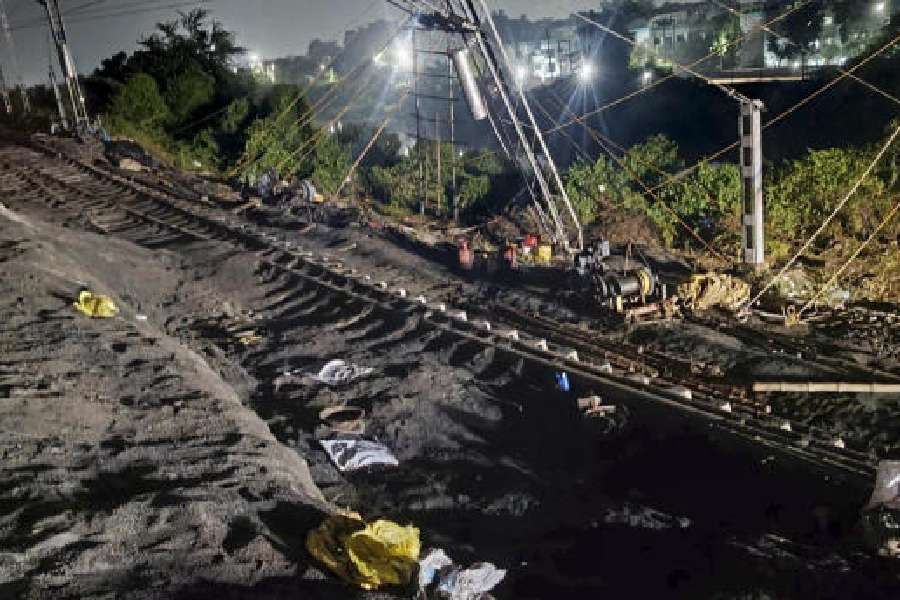
Heavy rain made the ground beneath railway tracks near Farakka weak.
Water from an overflowing pond also washed away soil.
A section of track sank, so trains could not safely pass.
Many trains between Kolkata and North Bengal were cancelled or diverted.
Local trains were also affected because some routes were being used for diverted long-distance trains.
Some passengers used buses or hired cars, but they said the extra buses were not enough.
Railway workers used machines, stone dust, and many wagons to repair the line.
Officials hoped to restore services from Saturday and planned to study similar problems with IITs and artificial intelligence.

Track subsidence along an 80-meter stretch near New Farakka disrupted services for a second day.
Eastern Railway cancelled 14 long-distance trains, while 16 down-direction trains were cancelled for Saturday.
Heavy rain, seepage, and an overflowing pond eroded soil beneath the Up line.
Six piling rigs, about 200 workers, and multiple wagons of stone dust were deployed for repairs.
Extra buses, food, and drinking water were provided, but passengers said transport remained insufficient.
- Who
- Eastern Railway, led at the site by General Manager Gitika Pandey, is repairing the line; passengers and state transport officials were affected.
- What
- Track subsidence caused cancellations, diversions, local-train disruptions, and a rush for buses between Kolkata and North Bengal.
- When
- Disruptions continued on Friday for a second day; Eastern Railway dated the initial subsidence to the night of 3 September, while another report described it as occurring Wednesday night. Fresh subsidence was reported around 10 p.m. the previous night.
- Where
- Along the embankment between New Farakka and Tildanga stations in Murshidabad, near New Farakka Junction.
- Why
- Heavy and continuous rain caused seepage, while an adjacent overflowing pond contributed to soil erosion and softened the clay-filled embankment.
Official Response
Passenger And Local Concerns
Repair progress
Official Response
Eastern Railway said it was working urgently with piling rigs, workers, and stone dust, and expected to restore services from Saturday.
Passenger And Local Concerns
Repair sources said the swollen pond was washing away stabilising stone dust, requiring a temporary guard wall and potentially extending the work.
Alternative transport
Official Response
Authorities arranged additional buses, food, drinking water, and possible accommodation for stranded passengers.
Passenger And Local Concerns
Passengers said the extra buses were not enough to meet the rush, while many had to consider hired vehicles or waiting for trains.
- Affected track
- An approximately 80-meter stretch of the Up line subsided, with the fresh depression reported to be about two meters deep.
- Train cancellations
- Fourteen long-distance trains were cancelled on Friday, and 16 down-direction trains were cancelled for Saturday.
- Diversions
- Several trains used routes through Azimganj, with some travelling via New Nalhati, Jangipur Road, and New Farakka.
- Repair deployment
- Eastern Railway deployed six piling rigs, approximately 200 frontline workers, seven wagons of stone dust, and additional reserved wagons.
- Passenger support
- Canteens and emergency catering supplied food and drinking water at Tildanga, Ballalpur, and New Farakka Junction.
- Alternative transport
- Seven additional buses ran from Siliguri to Kolkata, while 20 additional buses were arranged in Kolkata; passengers said the provision was insufficient.
- Expected restoration
- Officials expected repairs to finish Friday night and hoped to resume train services from Saturday.
