Archive · 29 Sep 2026
Bain Says AI Needs $6 Trillion Revenue to Sustain Boom
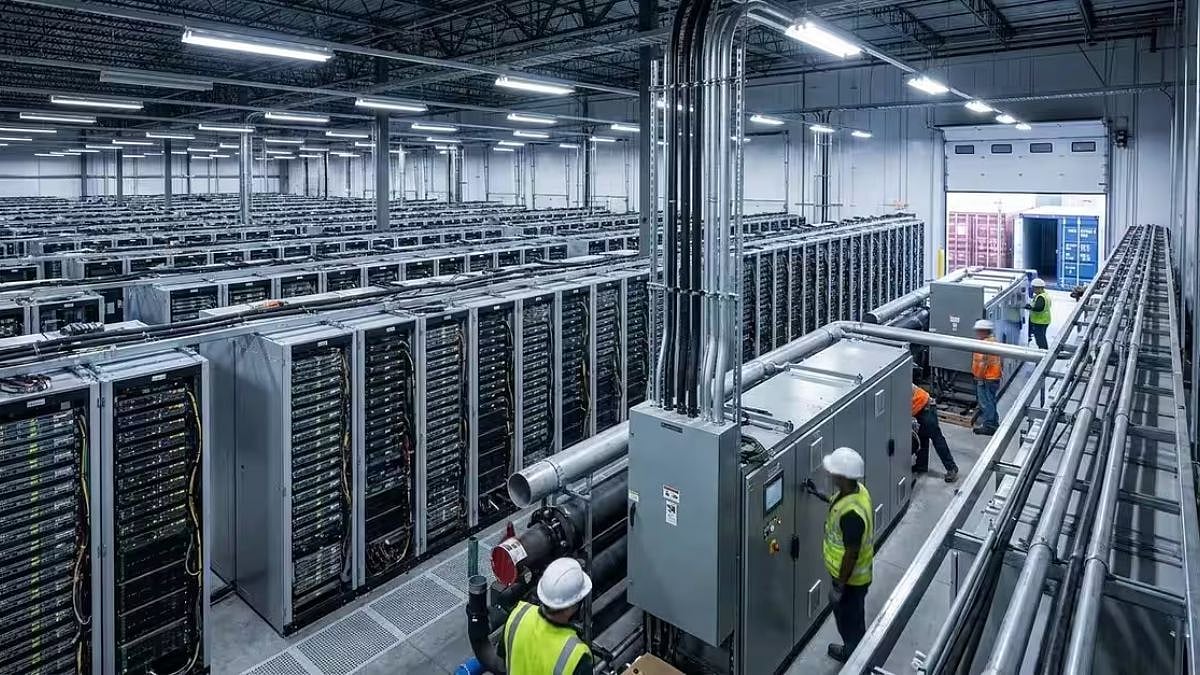
Companies are spending huge amounts of money to build computer centers for artificial intelligence.
Bain says the AI industry may need to earn $6 trillion every year by 2031 to make this investment worthwhile.
Current AI products could provide up to $1.8 trillion of that amount.
New uses for AI would need to provide the remaining $4.2 trillion.
These uses could include robots, autonomous machines, medicine, mental healthcare and energy technologies.
Bain says data centers are growing larger and more expensive very quickly.
Building them also requires lots of electricity, water and equipment that may be in short supply.
Some communities are opposing projects, while critics question whether AI companies will earn enough money to support the expansion.

Bain says global AI must generate $6 trillion in annual revenue by 2031 to justify current data-center investment.
Existing consumer and enterprise AI services could contribute up to $1.8 trillion, leaving $4.2 trillion to new applications.
Potential new markets include autonomous machines, robotics, drug discovery, mental healthcare and energy technologies.
Bain projects $5 trillion to $6.5 trillion in data-center spending by 2030 and up to $1.5 trillion annually on AI infrastructure by 2031.
Shortages of transformers, electricity and water, plus local opposition, have delayed or blocked $68 billion in U.S. projects.
- Who
- Bain & Company and technology companies investing in AI infrastructure, including Microsoft, Google, Amazon, Meta and Oracle.
- What
- Bain estimates that AI must generate $6 trillion in annual revenue by 2031 to justify the data-center boom.
- When
- The revenue target is for 2031; the report projects data-center spending through 2030.
- Where
- The investment is global, with project delays and opposition reported in the United States.
- Why
- The industry is building AI infrastructure ahead of demand and needs much more revenue to sustain the investment.
Bain's investment case
Critics' concerns
Whether AI can justify infrastructure spending
Bain's investment case
Bain says major innovations in areas such as robotics, autonomous machines, drug discovery, mental healthcare and energy could create the revenue needed to support investment.
Critics' concerns
Critics question the still-elusive returns for AI service providers and argue that interconnected technology dependencies may be reinforcing overly high expectations.
Sources of future growth
Bain's investment case
Bain says productivity gains alone will not be enough and that new AI-driven business models must create trillions of dollars in additional revenue.
Critics' concerns
The report's concern is that current discussions focused on workplace productivity do not yet demonstrate how the larger revenue requirement will be met.
Pace of infrastructure expansion
Bain's investment case
Technology companies are rapidly expanding data-center capacity to meet expected demand for AI computing resources.
Critics' concerns
Developers face shortages of transformers, electricity and water, while local opposition has delayed or blocked projects.
- Annual revenue target
- $6 trillion globally by 2031
- Existing AI revenue
- Consumer and enterprise services could generate up to $1.8 trillion
- Revenue gap
- $4.2 trillion would need to come from newer AI applications
- Data-center spending
- Projected at $5 trillion to $6.5 trillion by 2030
- AI infrastructure spending
- Could reach $1.5 trillion annually by 2031
- Additional capacity
- At least 150 gigawatts may be added
- U.S. project delays
- $68 billion in projects were blocked or delayed during the June quarter