

Archive · 23 Aug 2025
Can Straw-Fired Plants Reduce Stubble Burning in Punjab?
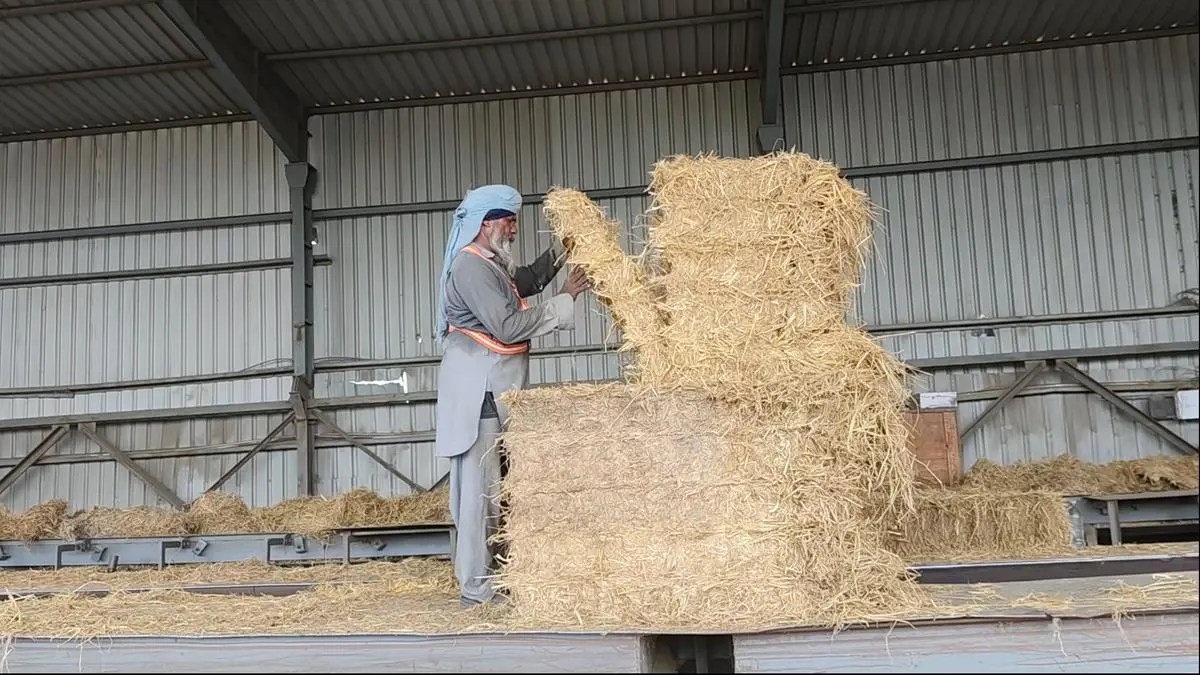
Farmers often burn leftover crop parts, which pollutes the air.
SAEL Industries uses this waste, like paddy straw, to power plants, turning it into electricity.
Farmers get paid for the straw, helping them get rid of the waste and make money.
These plants cost a lot to build.
The government needs to offer financial support to make more plants possible.
This method could help reduce air pollution and create renewable energy but needs more support to become widespread.

SAEL Industries operates a 15 MW power plant that uses paddy straw.
Farmers receive ₹1,200 per acre annually for crop stubble.
Burning paddy straw in power plants can help address stubble burning.
High costs, at ₹15 crore per MW, are a barrier to wider adoption.
SAEL Industries is targeting 1 GW capacity by 2030.
- Who
- SAEL Industries and farmers.
- What
- Using paddy straw in power plants to address stubble burning.
- When
- SAEL Industries set up a power plant near a farm a few years ago; Published on August 18, 2025.
- Where
- Punjab, India, where SAEL Industries operates.
- Why
- To address the problem of stubble burning and create renewable energy.
Proponents
Opponents
Cost Effectiveness
Proponents
Using paddy straw for energy provides a solution for waste management, prevents air pollution, and provides income for farmers.
Opponents
The main opposition here is the high costs involved.
- Power Plant Capacity
- 15 MW
- Farmers Payment per Acre
- ₹1,200 per year
- SAEL Industries Target
- 1 GW by 2030
- Cost of Plant per MW
- ₹15 crore
- SAEL Industries Revenue Increase
- Three-fold this year