8 months ago
Kerala High Court upholds 1806 royal allowance
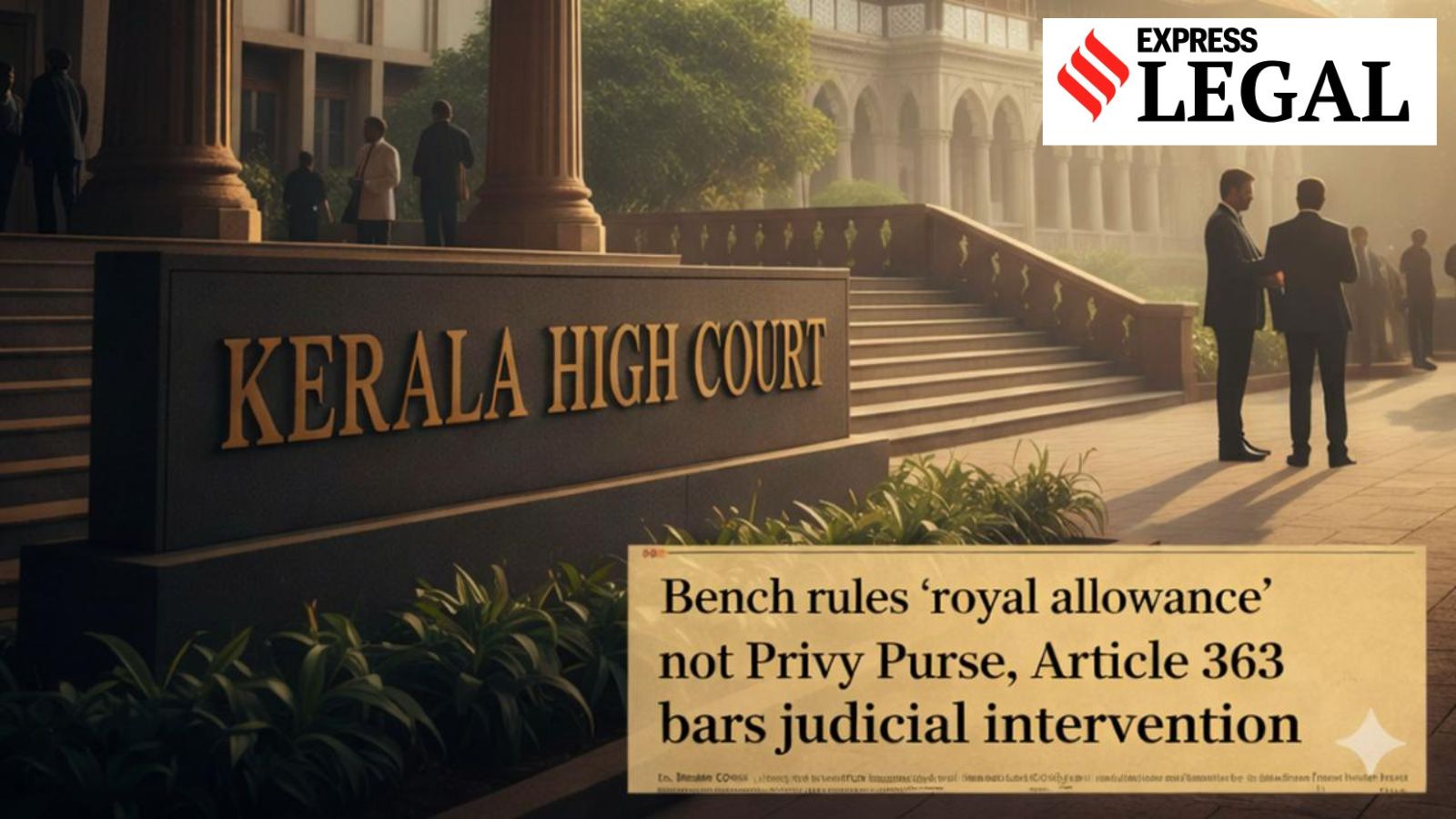
The Kerala High Court recently decided to keep giving a special allowance called 'Malikhana' to the Zamorin royal family.
This allowance has been given since 1806.
Some people challenged this in court, but the judges said that the court cannot decide on this matter because of a special rule in the Indian Constitution called Article 363.
This rule protects certain rights of former rulers.
The judges explained that only the 'Privy Purse' payments to former rulers were stopped in 1971, but the 'Malikhana' allowance is different and can still be given.

The Kerala High Court dismissed a petition challenging the 'Malikhana' allowance to the Zamorin royal family.
The court ruled that such disputes are barred from judicial scrutiny under Article 363 of the Constitution.
The allowance, established in 1806, is different from the Privy Purse payments abolished in 1971.
Justices Raja Vijayaraghavan V and K V Jayakumar heard the case.
The court held that Article 363 recognizes the rights of rulers based on historical covenants.
- Who
- The Zamorin royal family of Calicut
- What
- The continuance of the 'Malikhana' allowance
- Where
- Kerala High Court
- When
- The decision was made recently (exact date not specified)
- Why
- The court held that such disputes are barred from judicial scrutiny under Article 363 of the Constitution
Key facts
- Allowance Name
- Malikhana
- Recipient
- Zamorin royal family of Calicut
- Court
- Kerala High Court
- Judges
- Justices Raja Vijayaraghavan V and K V Jayakumar
- Constitutional Article
- Article 363
- Constitutional Amendment
- 26th Amendment Act 1971
- Year of Allowance Establishment
- 1806
Quotes

Kerala High Court
The judicial body that heard and dismissed the writ petition.
“On a scrutiny of the provisions of the Constitution (26th Amendment) Act 1971, it is crystal clear that only the Privy Purse payable to the erstwhile ruler is abolished. However, Article 363, which recognised the rights of rulers on the basis of the covenant executed between the erstwhile Rulers of Indian States and the Government of the Dominion of India or its predecessors, is retained in the Statute Book.”
 indianexpress.com